 Folk
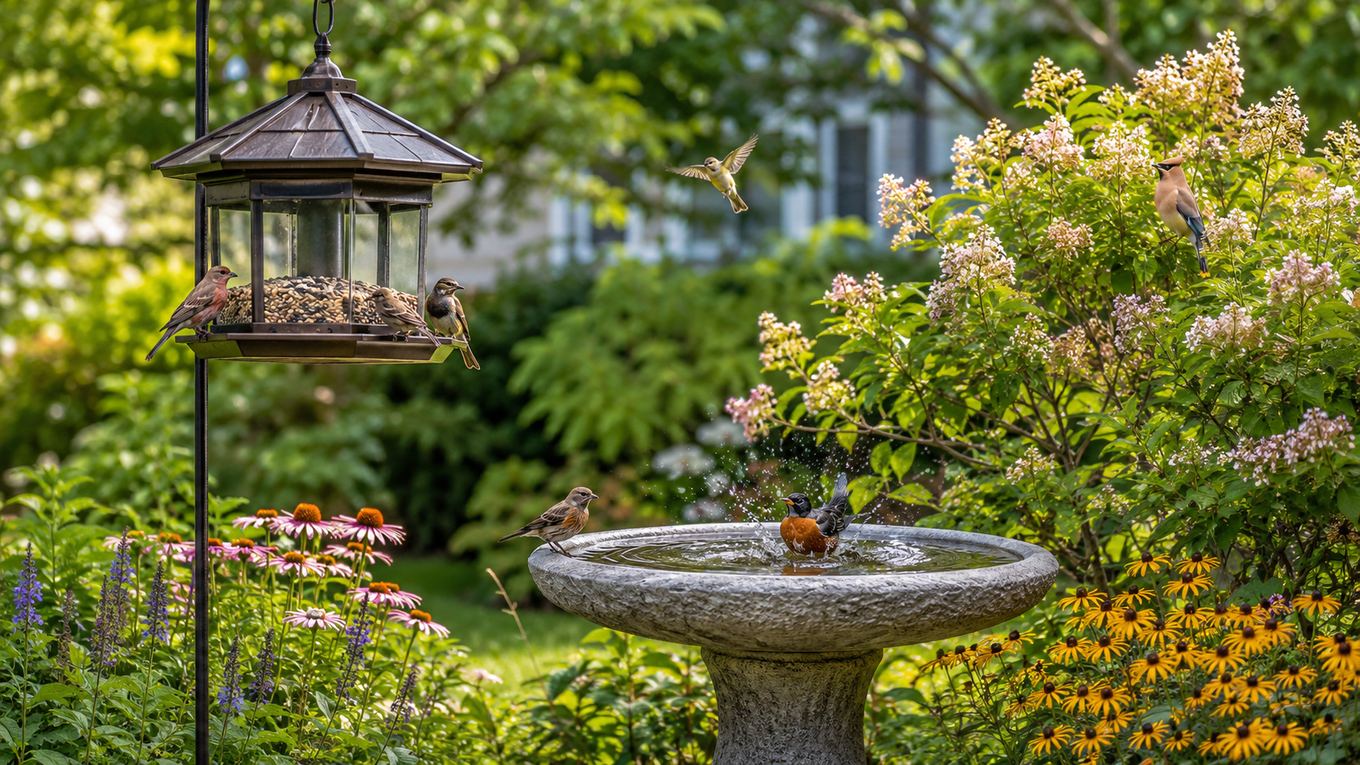
FolkHanging one feeder and hoping is the most common reason people give up on backyard birding too early. Birds choose a yard the same way they’d choose any habitat in the wild: they’re checking for food, water, a place to hide from hawks, and somewhere to eventually raise young. Get even two or three of those right and you’ll see more birds than a dozen feeders scattered without a plan. Here’s how to think about your yard the way a bird does.
The Four Things Every Bird Is Looking For
Wildlife biologists (and the National Wildlife Federation’s Certified Wildlife Habitat program) boil bird-friendly landscaping down to four elements. Miss one and you’ll cap how many species stick around, no matter how good your feeder setup is:
- Food — seed, suet, nectar, fruit, or insects, ideally more than one type
- Water — for drinking and bathing, year-round if you can manage it
- Cover — shrubs, brush, or evergreens where birds can hide from predators between visits
- Places to raise young — nesting cavities, dense shrubs, or a birdhouse, even if you’re not trying to attract nesting pairs specifically
Food: Matching What You Put Out to Who You Want to See
Black oil sunflower seed is the closest thing to a universal bird food — it’s high in fat, easy to crack, and eaten by a wider range of species than any other single seed. But if you want specific birds, it helps to know what they actually prefer:
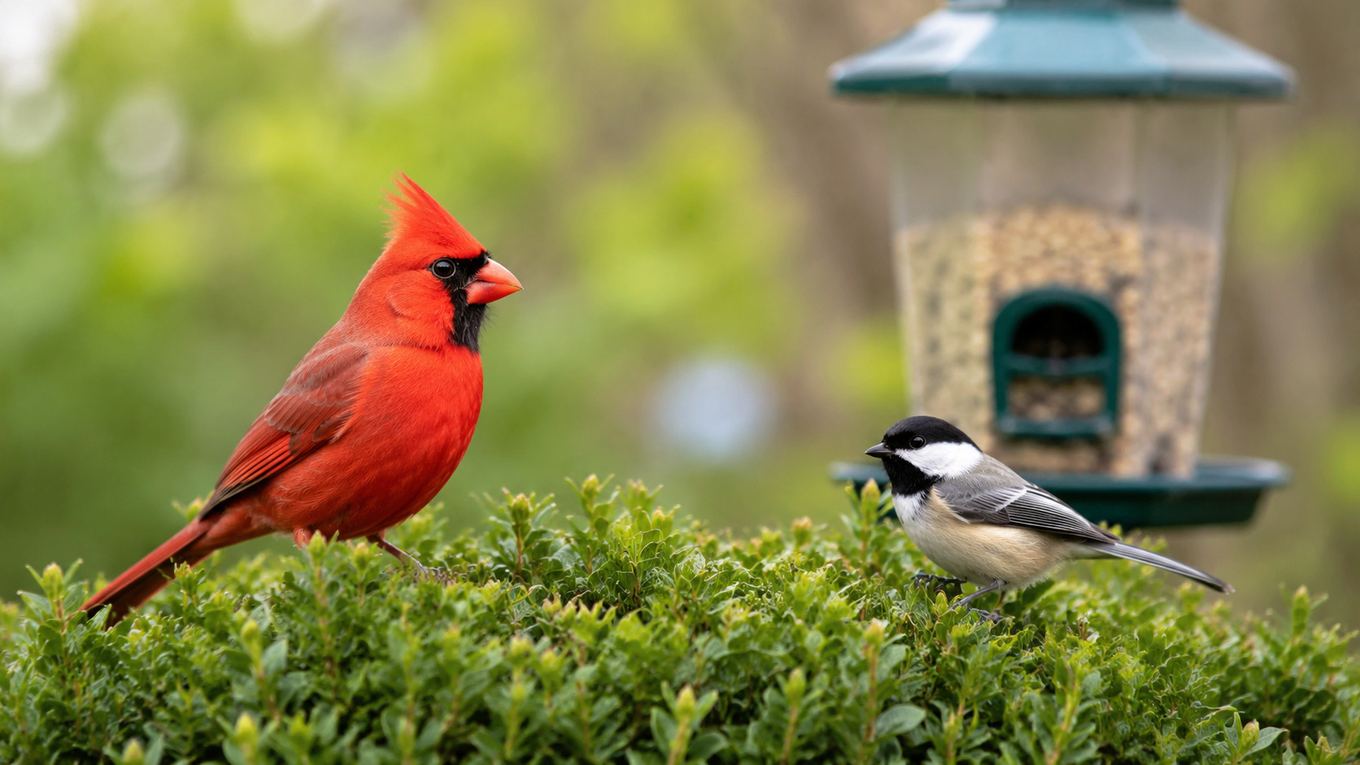
- Chickadees, titmice, nuthatches: black oil sunflower seed, suet
- Cardinals, jays: sunflower seed (in and out of the shell), safflower
- Goldfinches and other small finches: nyjer (thistle) seed almost exclusively
- Woodpeckers: suet, peanuts
- Hummingbirds: sugar-water nectar (never red dye — see our hummingbird guide)
- Orioles and tanagers: orange halves, grape jelly, nectar
- Doves, juncos, sparrows: millet and cracked corn, scattered at ground level
Example: a high-fat suet cake for woodpeckers and nuthatches
For the mechanics of which feeder shape suits which food and species, see our complete guide to feeder types.
Water: The Most Underrated Attractant
A feeder only pulls in seed-eaters. Water pulls in everything — including warblers, thrushes, and other birds that never visit a feeder at all. Moving water is the real secret here: birds key in on the sound of dripping or trickling water from a surprising distance, which is why a basic drip attachment on a bird bath consistently outperforms a still one.
Keep it simple and shallow — 1 to 2 inches deep with a gently sloped edge is plenty for most songbirds, and a few flat stones give smaller birds a place to stand without swimming. For water sources, materials, and winter heating options, see our full guide to bird baths and water features.
Cover and Nesting Sites: Why “Tidy” Yards Attract Fewer Birds
Birds won’t linger at a feeder that’s out in the open with nowhere nearby to retreat to — a hawk pass is enough to keep them away permanently if there’s no cover within a quick flight. Native shrubs, a brush pile in a back corner, or a stand of evergreens for winter wind cover all do more for bird traffic than another feeder.
The same logic applies to nesting: standing dead trees (“snags”) host cavity-nesters like woodpeckers and chickadees, and dense shrubs give cup-nesting species like cardinals and robins somewhere to build. A well-placed birdhouse or two fills the gap in yards without natural cavities — a perfectly tidy, wide-open lawn is one of the least bird-friendly landscapes there is.
What Each Common Backyard Bird Actually Eats
| Bird | Preferred food | Best feeder or method |
|---|---|---|
| Chickadees & titmice | Black oil sunflower, suet | Tube or suet feeder |
| Cardinals | Sunflower, safflower | Hopper or platform |
| Goldfinches | Nyjer (thistle) | Nyjer tube feeder |
| Woodpeckers | Suet, peanuts | Suet cage |
| Hummingbirds | Sugar-water nectar (4:1 ratio) | Nectar feeder |
| Bluebirds | Mealworms | Platform or mealworm feeder |
| Orioles | Orange halves, grape jelly, nectar | Oriole feeder |
| Doves, juncos, sparrows | Millet, cracked corn | Platform or ground scatter |
For deep dives on two of the most-requested species, see our guides to attracting hummingbirds and attracting cardinals.
Getting Started: Your First Month
- Put out one all-purpose feeder (tube or hopper) filled with black oil sunflower seed — it draws the widest range of species with the least guesswork.
- Add a water source within sight of the feeder; even a simple bird bath makes a measurable difference within days.
- Leave or plant a patch of native shrub cover within 10–15 feet of the feeder so birds have somewhere to retreat.
- Watch who shows up for a week or two, then use the table above to add a second, more targeted feeder for species you want more of.
- Once feeding is established, layer in nesting support — a birdhouse or simply leaving a dead limb standing — if you want birds sticking around into spring.
Mistakes That Quietly Keep Birds Away
- Feeding bread or other human food scraps. It fills birds up without real nutrition and can contribute to health problems in ducks and geese specifically (“angel wing”).
- Letting feeders and baths go uncleaned. Dirty feeders spread diseases like salmonellosis and House Finch eye disease; aim to clean feeders every 2 weeks and baths weekly — see our feeder cleaning schedule.
- Adding red dye to hummingbird nectar. It’s unnecessary and a possible irritant — feeders attract hummingbirds by their own red parts, not dyed sugar water.
- Placing everything in one exposed, open spot. Without nearby cover, birds treat a feeder as a quick grab-and-go rather than a place to settle in.
If your feeders have been up for a while with little activity, don’t assume your yard is a lost cause first — our troubleshooting guide walks through the most common fixable causes. And because bird activity shifts throughout the year, our year-round attracting calendar covers what to change season by season, and our squirrel-proofing guides cover the other half of the battle: keeping the food you put out for birds.