 Folk
FolkBird food isn’t one product — it’s a handful of very different foods, each aimed at a different set of species. Buying whatever bag is cheapest at the store is how people end up with a feeder full of seed nobody eats. Here’s what each major food type actually does, so you can buy based on which birds you want rather than which bag was on sale.
Sunflower Seed: Black Oil vs. Striped
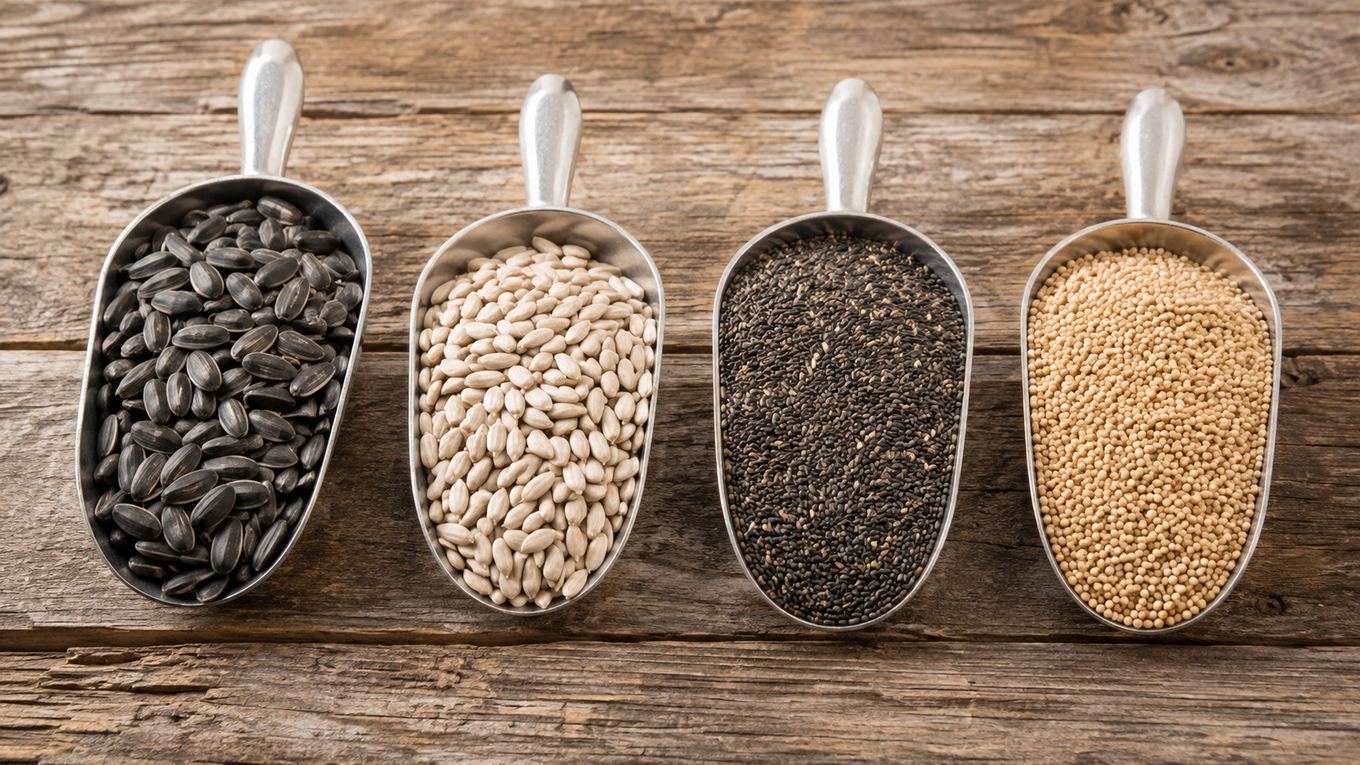
Black oil sunflower is the closest thing to a universal bird food — thin shell, high oil content, and eaten by more species than any other single seed. Striped sunflower has a thicker shell that’s harder for smaller birds to crack, which shifts who actually eats it.
- Black oil sunflower attracts: chickadees, finches, cardinals, nuthatches, titmice, and most other feeder birds
- Striped sunflower attracts: larger, stronger-billed birds like jays and grosbeaks; the tougher shell also slows down house sparrows and starlings somewhat
Safflower Seed
A hard-shelled white seed that cardinals and grosbeaks readily eat, but that squirrels, grackles, and starlings tend to avoid — its bitter taste to some species makes it a useful tool if nuisance visitors are cleaning out your feeder faster than birds can use it.
- Attracts: cardinals, chickadees, titmice, nuthatches
- Watch out for: it’s pickier eating than sunflower, so expect fewer total visitors even if the ones you get are exactly who you wanted
Example: a bag of safflower seed for cardinal-focused feeding
Nyjer (Thistle) Seed
A tiny, oil-rich seed that requires a specialized feeder with small slotted ports — see our feeder types guide for the right setup.
- Attracts: goldfinches, siskins, and other small finches almost exclusively
- Watch out for: it dries out and loses appeal within a couple of months, so buy only what you’ll use in that window
Millet, Cracked Corn, and Milo
These three get lumped together in cheap “mixed” birdseed, but they’re not equal. White proso millet is a legitimate ground-feeder food; cracked corn works the same way in moderation; milo (sorghum) is skipped by most birds in most regions and is the main reason bargain mixes look like they’re going to waste.
- Millet and cracked corn attract: doves, juncos, sparrows, and other ground-feeding species, scattered on the ground or a platform feeder
- Watch out for: milo-heavy “economy” mixes — birds pick around it, and it ends up as waste on the ground instead of food in a bird
Suet
A compressed block of beef fat mixed with seed, fruit, or insects — dense calories that matter most to insect-eating species rather than pure seed-eaters.
- Attracts: woodpeckers, nuthatches, chickadees, wrens
- Watch out for: standard suet softens above roughly 85–90°F; switch to a no-melt summer blend once temperatures climb that high
Peanuts
Offered shelled, in the shell, or as pieces in a mesh feeder — a high-fat, high-protein food that overlaps with suet’s audience but draws a few species suet doesn’t.
- Attracts: jays, woodpeckers, nuthatches, chickadees, titmice
- Watch out for: whole peanuts in the shell are also a squirrel favorite; expect competition unless the feeder is squirrel-resistant
Mealworms
Live or dried mealworms are less about seed and more about the protein spike birds need during nesting season.
- Attracts: bluebirds, wrens, robins, and other species that rarely or never visit a standard seed feeder
- Watch out for: live mealworms need a smooth-sided dish so they can’t crawl out; dried mealworms are easier to store but somewhat less attractive to picky species
Nectar and Fruit
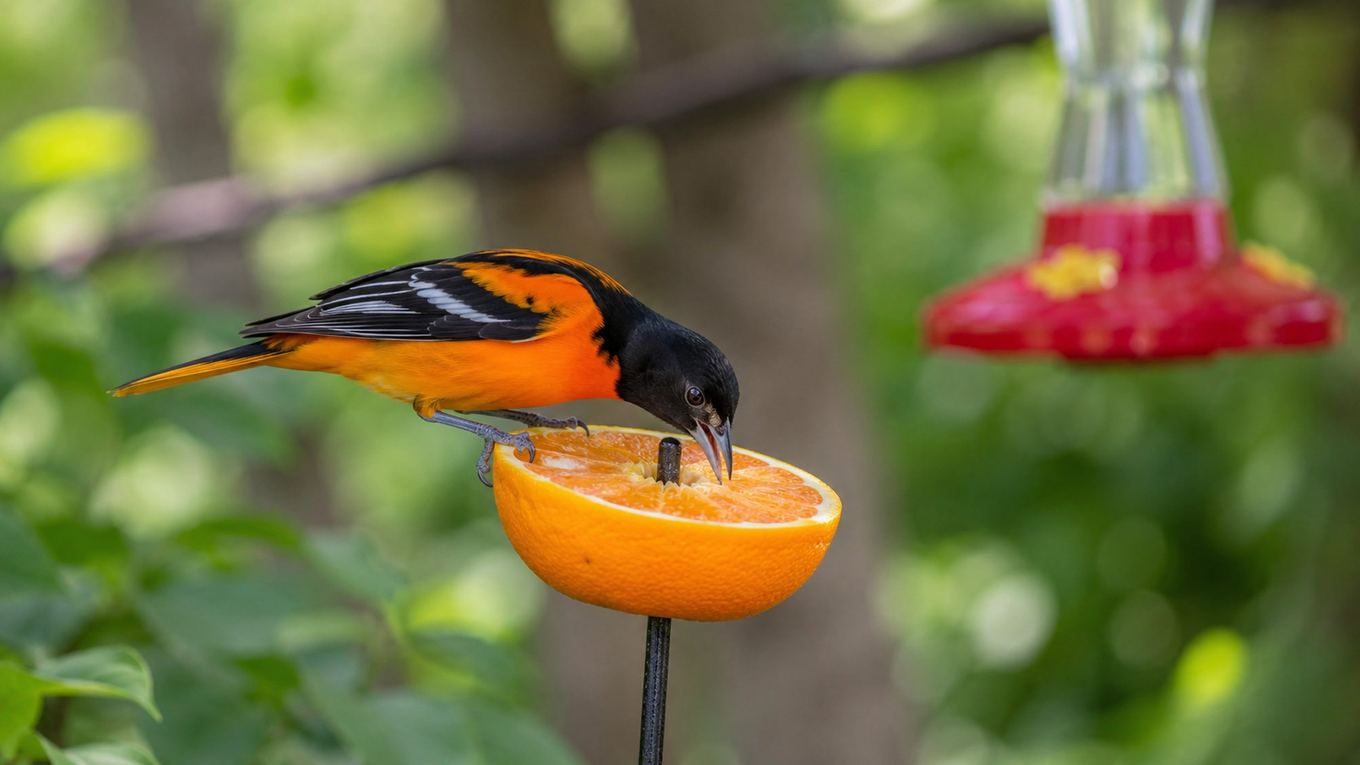
Sugar-water nectar and fresh fruit round out the list for species that eat neither seed nor suet in any quantity.
- Nectar (4:1 water-to-sugar, no dye) attracts: hummingbirds and orioles — see our hummingbird guide for the full setup
- Orange halves, grape jelly, and raisins attract: orioles, tanagers, mockingbirds, and waxwings
Food Types at a Glance
| Food | Attracts | Feeder needed |
|---|---|---|
| Black oil sunflower | Widest variety of feeder birds | Tube, hopper, or platform |
| Striped sunflower | Jays, grosbeaks | Hopper or platform |
| Safflower | Cardinals, chickadees, titmice, nuthatches | Hopper or platform |
| Nyjer/thistle | Goldfinches, siskins | Slotted nyjer tube |
| Millet/cracked corn | Doves, juncos, sparrows | Platform or ground scatter |
| Suet | Woodpeckers, nuthatches, wrens | Suet cage |
| Peanuts | Jays, woodpeckers, nuthatches | Mesh peanut feeder |
| Mealworms | Bluebirds, wrens, robins | Smooth-sided dish |
| Nectar | Hummingbirds, orioles | Nectar feeder |
How to Choose What to Buy
- Start with black oil sunflower seed in a basic tube or hopper feeder — it covers the widest range of species with the least guesswork.
- Add safflower if squirrels or aggressive blackbirds are outcompeting the birds you actually want to see.
- Add suet or peanuts if you want woodpeckers and nuthatches specifically, since sunflower alone under-attracts that group.
- Add nyjer only if goldfinches are a specific goal — it’s wasted on almost everything else.
- Skip cheap mixes with milo listed as a primary ingredient; check the label before assuming a “wild bird mix” is a good deal.
Storage matters as much as the food itself — seed that’s gone stale or damp loses its appeal fast, even the good kinds. See our guide to storing birdseed for keeping a bag usable for its full shelf life, and our guide to bird seed mixes for reading a mix label before you buy it.