 Folk
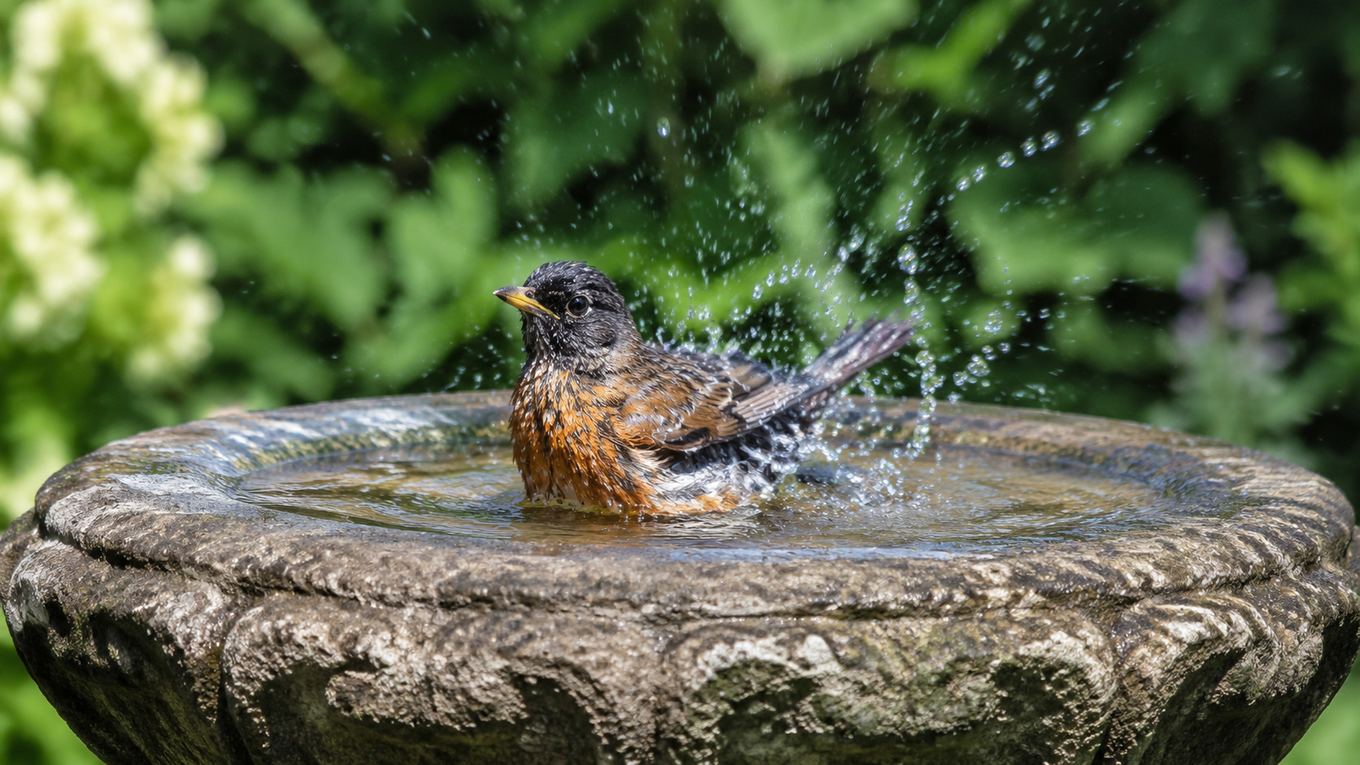
FolkSeed-only yards cap out at seed-eating birds. Add a water source and you open the door to warblers, thrushes, vireos, and dozens of other species that will never visit a feeder but will absolutely visit water — for drinking and bathing, both of which every bird needs regardless of diet.
Getting the Basics Right: Depth and Placement
Most bird bath failures come down to depth or placement, not the bath itself:
- Keep water 1–2 inches deep at most, sloping gradually from the edge — anything deeper reads as a hazard to small birds rather than an invitation
- Choose a bath with a rough or textured bottom, or add a few flat stones — smooth, slick surfaces (especially once algae builds up) make birds hesitant to land
- Place it with a clear sightline in most directions so birds can watch for predators while exposed and wet, but keep cover within 10–15 feet for a fast retreat afterward
- Avoid setting it directly under dense shrubs — that gives a stalking cat too easy an ambush position, even though some nearby cover is good
Types of Water Features
| Type | Best for | Notes |
|---|---|---|
| Pedestal bath | General variety, easy visibility | Simple to keep clean; the standard starting choice |
| Ground-level bath | Towhees, thrushes, doves, and other ground feeders | More exposed to predators; needs cover a bit closer than a pedestal bath |
| Hanging or deck-rail bath | Small yards, balconies, apartments | Limited capacity — needs more frequent refilling |
| Dripper or mister add-on | Boosting any bath type | The sound of moving water draws birds from well beyond visual range |
| In-ground pond or water garden | The widest variety, for yards with room | Needs a shallow, gently sloped entry point so birds (and anything else) can get out safely |
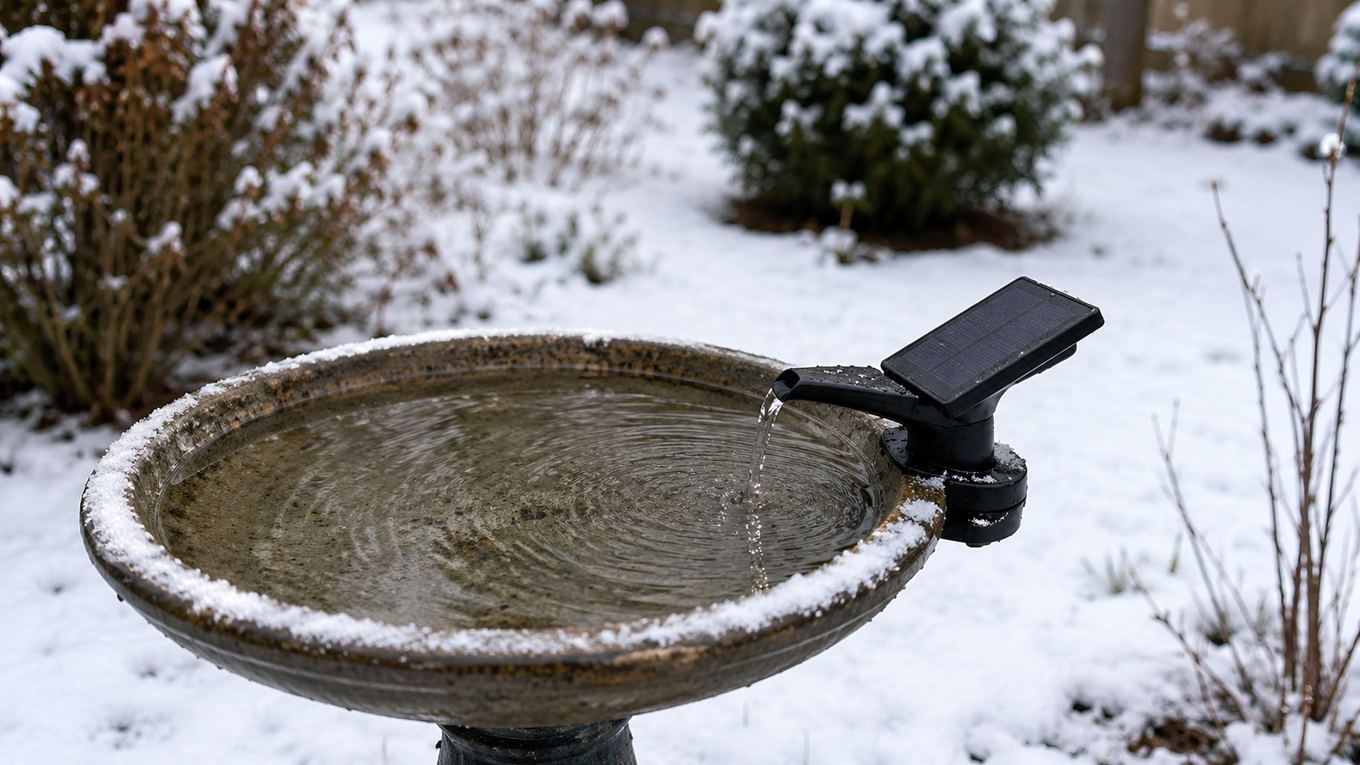
Example: a solar-powered dripper or bubbler attachment for a standard bird bath
Why Moving Water Outperforms Still Water
Birds are drawn to the sound of dripping or trickling water from a real distance, which is why a basic drip attachment or small solar fountain consistently pulls in more activity than an identical still bath. Moving water has a second benefit that matters just as much: mosquitoes need still water to lay eggs, so keeping water in motion (or changing it often) heads off a mosquito problem before it starts.
- Add a dripper, mister, or small solar bubbler if your bath sits still for long stretches
- Empty and refresh still water every 2–4 days regardless, since even a functioning dripper can leave low spots stagnant
- Use a mosquito dunk (Bti, a naturally occurring bacteria that targets mosquito larvae) in larger ponds — it’s considered safe around birds and pets when used as directed
- Never let standing water sit for a full week untouched, especially in warm weather
Setting Up Your First Bird Bath
- Pick a spot with open sightlines nearby, cover within 10–15 feet, and a location you can actually see from a window or patio.
- Choose a shallow, textured-bottom bath — pedestal style is the easiest starting point for most yards.
- Fill it to no more than 2 inches deep and place a flat stone in the middle for smaller birds to perch on.
- Add a simple dripper or mister if you want to noticeably boost activity beyond what still water alone attracts.
- Scrub the basin weekly with a stiff brush (skip soap, plain water and elbow grease work fine) and refresh the water every 2–4 days between cleanings.
Don’t Forget Winter
Birds need liquid water for drinking even when temperatures drop well below freezing, and natural sources often ice over completely. A submersible or built-in heated bird bath keeps water accessible through winter and is frequently the single most effective addition for cold-season bird activity — see our winter feeding guide for how it fits alongside seasonal feeding changes.
Water is the one habitat element that helps every bird in your yard at once, feeder visitors and non-visitors alike — see our pillar guide to attracting backyard birds for how it fits with food and cover overall.