 Folk
FolkMost backyard birders don’t start with one feeder — they end up with three or four, because no single design attracts every bird or survives every backyard. The good news is you don’t need to guess: each feeder type is built for a specific set of species and a specific set of problems (squirrels, weather, seed waste). Here’s what each one actually does, so you can pick based on what you want to see rather than what looked nice at the store.
Tube Feeders
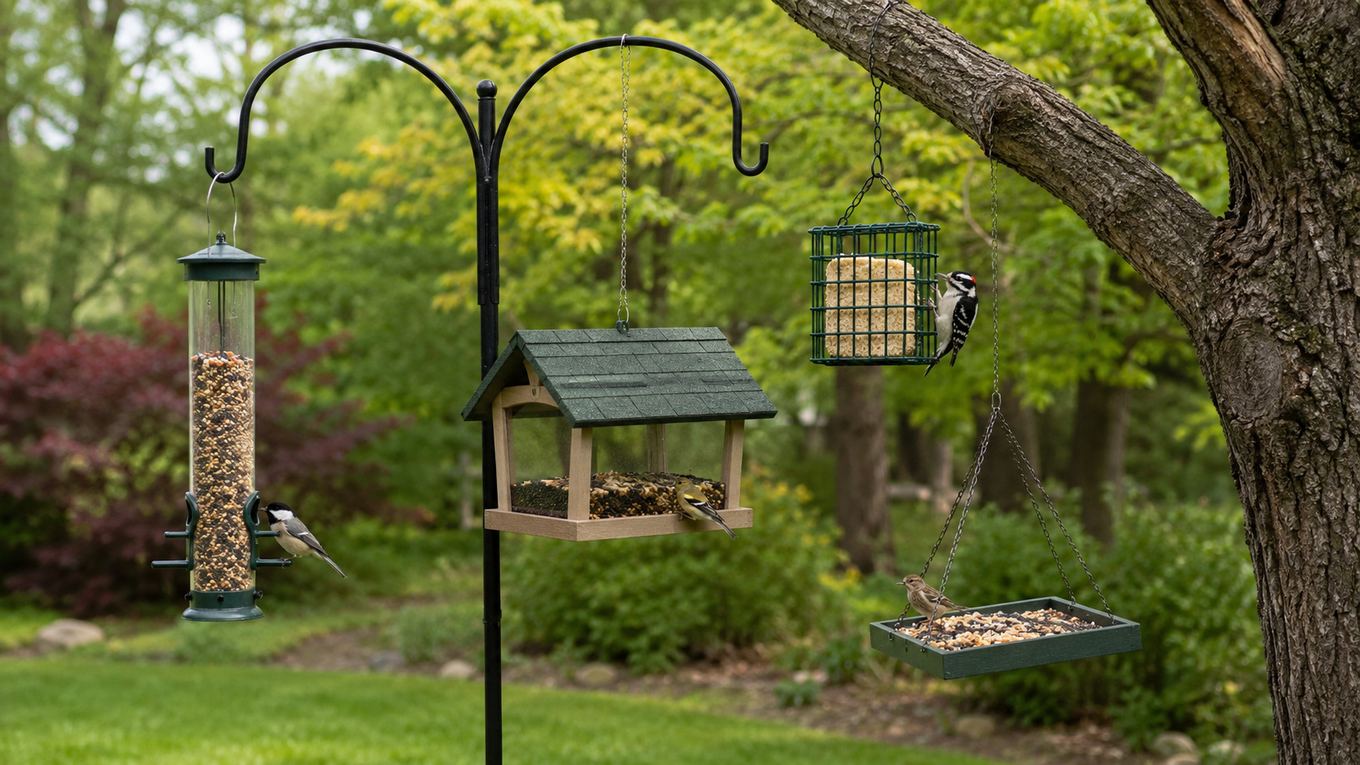
A tube feeder is a hollow cylinder — usually plastic with metal feeding ports — with multiple small perches spaced around it. Short perches are the key design detail: they’re sized for small birds, which effectively excludes larger species like grackles and jays from muscling in.
- Attracts: finches, chickadees, titmice, nuthatches, and other small perching birds
- Watch out for: seed can clump or mold in the bottom ports if it doesn’t get used up between refills, especially in humid weather
Example: a metal-ported tube feeder sized for finches and chickadees
Hopper Feeders
A hopper feeder is essentially a platform with walls and a roof built around it, forming a reservoir (“hopper”) that dispenses seed as birds eat and shields it from rain. Larger hoppers open the door to bigger species that a tube feeder screens out.
- Attracts: a broad mix — cardinals, jays, doves, sparrows, and most tube-feeder species too
- Watch out for: the wide, flat perching area makes hoppers easier for squirrels to raid than tube feeders
Platform Feeders
The simplest design: an open tray with a screened or mesh bottom for drainage, sometimes with a roof. Because there’s no port size or perch length limiting who can land, platform feeders pull in the widest range of seed-eating birds of any feeder type — including ground-feeders that rarely use hanging feeders at all.
- Attracts: the broadest variety of any feeder type, including juncos, towhees, and doves that prefer feeding at or near ground level
- Watch out for: open access cuts both ways — platform feeders are the most squirrel- and raccoon-vulnerable design, and exposed seed is more prone to getting rained on or fouled by droppings if not cleaned regularly
Suet Feeders
A suet feeder is a small wire or plastic cage that holds a compressed block of beef fat mixed with seeds, fruit, or insects. It’s less about seed and more about fat and protein — which is exactly what draws a different crowd than the feeders above.
- Attracts: woodpeckers, nuthatches, chickadees, and wrens — species that eat insects and benefit from a dense, high-fat food source
- Watch out for: standard suet softens once daytime temps climb past roughly 85–90°F; switch to a “no-melt” summer blend above that range (see our fall feeding guide for the seasonal switch-over)
Nyjer (Thistle) Feeders
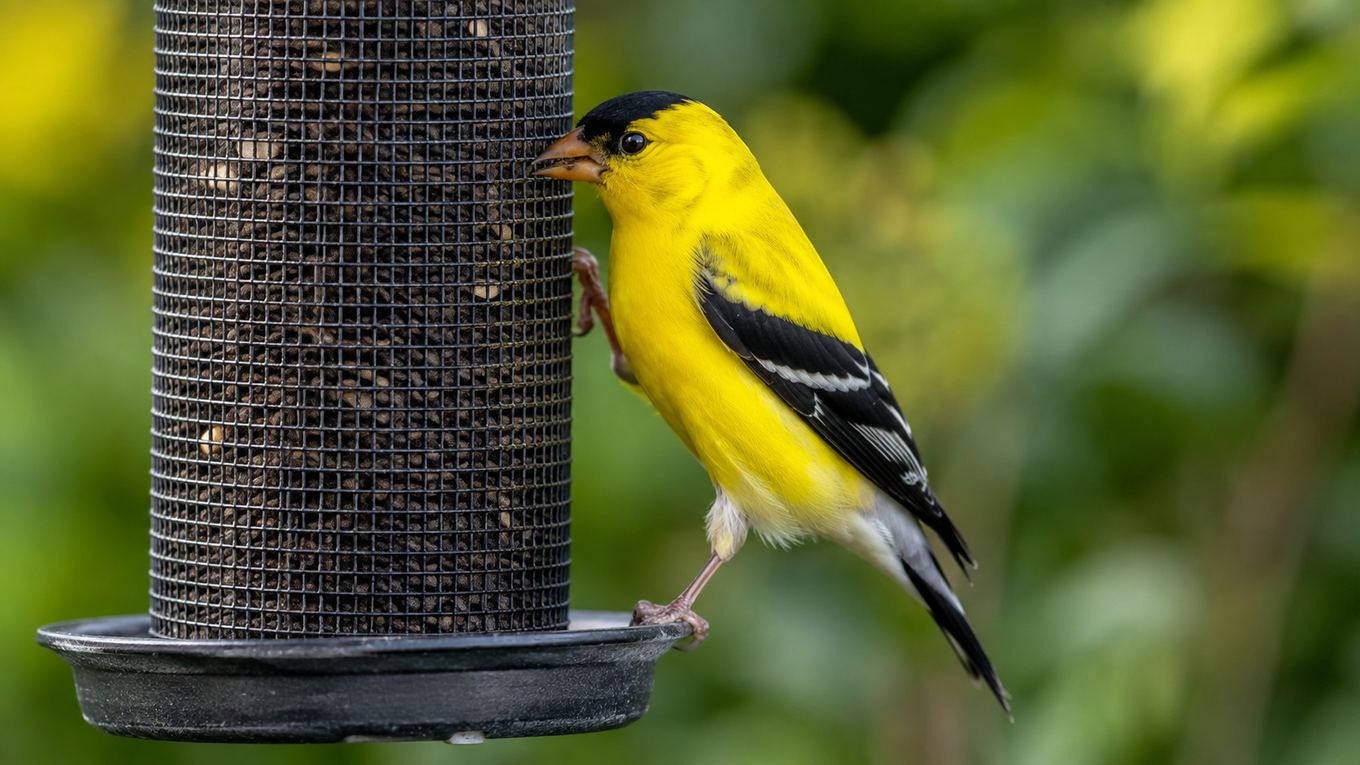
A specialized tube feeder with tiny slotted ports, sized for the small, needle-thin seed called nyjer (often still called “thistle,” though it’s not related to the weed). The tiny ports aren’t a design accident — they’re what keeps the seed from spilling, since nyjer is far smaller than sunflower or millet.
- Attracts: goldfinches, siskins, and other small finches, almost exclusively
- Watch out for: nyjer seed dries out and stops attracting birds if left too long — buy in quantities you’ll use within a couple of months
Example: a mesh or slotted-port nyjer feeder for goldfinches
Feeder types at a glance
| Feeder type | Attracts | Squirrel vulnerability | Weather protection |
|---|---|---|---|
| Tube | Finches, chickadees, titmice, nuthatches | Low–moderate | Good |
| Hopper | Cardinals, jays, doves, sparrows, most tube-feeder birds | Moderate–high | Good (roofed) |
| Platform | Widest variety, incl. ground-feeders like juncos and towhees | High | Low (unless roofed) |
| Suet | Woodpeckers, nuthatches, chickadees, wrens | Low | Moderate |
| Nyjer/thistle | Goldfinches, siskins | Low | Good |
For a closer look at how tube, hopper, and platform feeders stack up against each other specifically, see our tube vs. hopper vs. platform comparison.
How to choose your first feeder
You don’t need all five types on day one. A practical way to start:
- Decide which birds you actually want to see — a quick look at our species attraction guides will tell you which feeder type each target species prefers.
- Check how much squirrel pressure your yard has. Heavy squirrel traffic pushes you toward a tube or suet feeder over an open platform, at least until you’ve sorted out baffles and placement.
- Start with one all-purpose feeder (tube or hopper) plus one specialty feeder (suet or nyjer) rather than buying every type at once.
- Add a platform feeder later if you want ground-feeding species like juncos and towhees, once you’ve seen how squirrel-proofed your setup already is.
Placement basics that matter more than feeder choice
Whichever feeder you pick, where you put it changes how much use it gets:
- Keep feeders within 3 feet of a window (birds that hit glass from this close usually aren’t going fast enough to be seriously hurt) or more than 10 feet away — the danger zone is the distance in between.
- Place feeders within 10–12 feet of shrubs or trees so birds have quick cover from hawks, but not so close that squirrels can jump directly onto the feeder.
- Group feeders in one or two spots rather than scattering them — it concentrates activity where you can actually watch it, and makes cleaning a once-around task instead of a scavenger hunt.
For yards with heavy squirrel traffic, feeder choice matters less than baffles and pole placement — see our squirrel-proofing guides for the full setup. And if space is the real constraint rather than squirrels, our guide to feeders for small yards and apartments covers window and railing-mounted options.