 Folk
FolkProject FeederWatch’s baseline is every 1–2 weeks for a standard seed feeder, more often for anything wet. But “every 1–2 weeks” isn’t the same for every feeder type, and refilling on the wrong schedule causes its own problems — overfilling wastes seed to spoilage just as often as underfilling leaves feeders empty.
Signs it’s time to clean, regardless of schedule
- Visible mold, caked or clumped seed, or droppings on the feeder — clean immediately rather than waiting for your regular schedule.
- A noticeable drop in visits with no other explanation — birds avoid feeders that look or smell off well before it’s obvious to you.
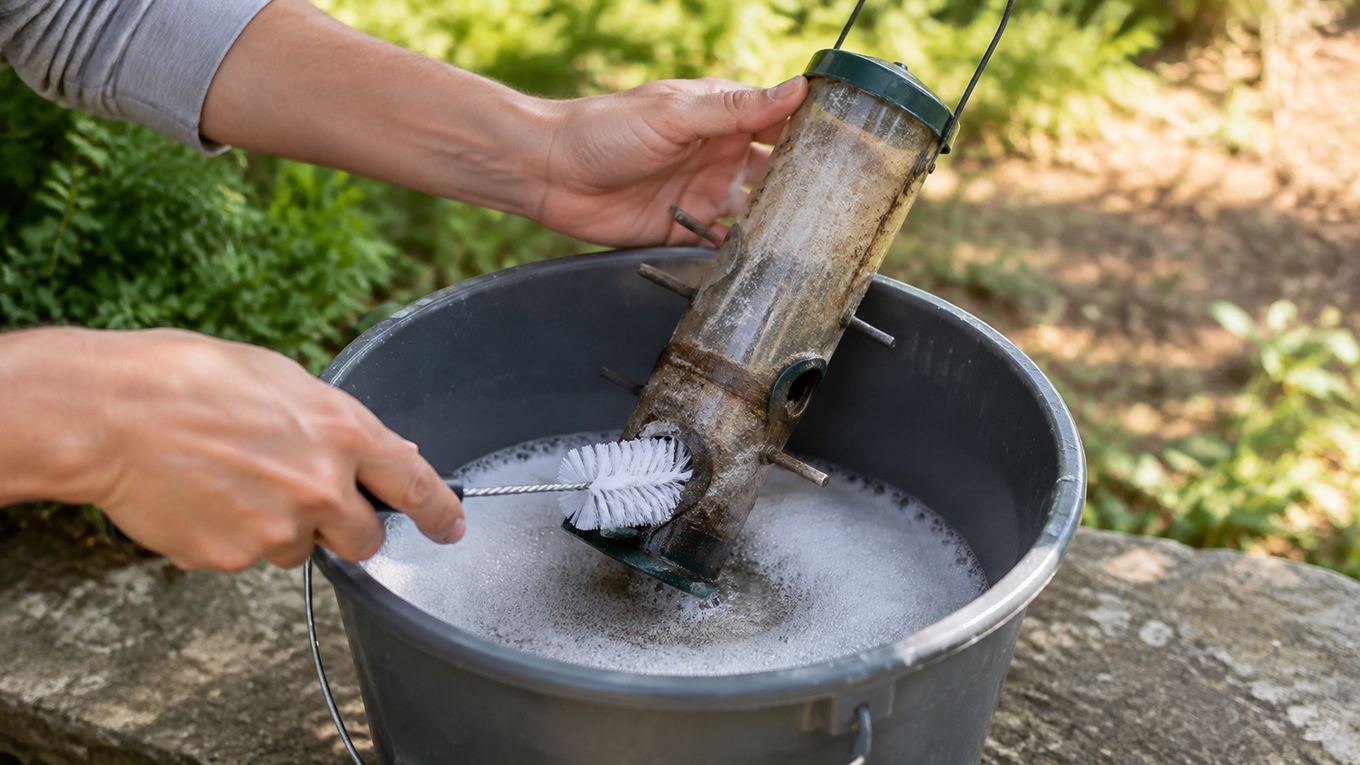
How to clean a feeder
- Empty all remaining seed and discard anything visibly clumped, moldy, or wet.
- Scrub with warm water and a stiff brush, reaching into ports and corners where residue collects.
- For a deeper clean, soak in a 1:9 bleach-to-water solution.
- Rinse thoroughly — bleach residue left on the feeder is worse for visiting birds than the buildup you’re removing.
- Let it air-dry completely before refilling; refilling a damp feeder undoes most of the point of cleaning it.
Example: a bottle-brush kit sized for hummingbird and nyjer feeder ports
Cleaning frequency by feeder type
| Feeder type | Baseline frequency | Why |
|---|---|---|
| Tube/hopper (dry seed) | Every 1–2 weeks | Standard buildup from regular use |
| Platform | Every 1–2 weeks, more if soiled | Fully exposed to rain and droppings |
| Suet | Every time you replace the cake | Fat residue turns rancid faster than seed spoils |
| Nyjer/thistle | Every 2–3 weeks | Slower consumption, but seed dries out and clogs ports |
| Hummingbird nectar | Every 3–4 days in warm weather, weekly in cooler weather | Sugar water ferments and clouds quickly, especially above 70°F |
Refilling without overdoing it
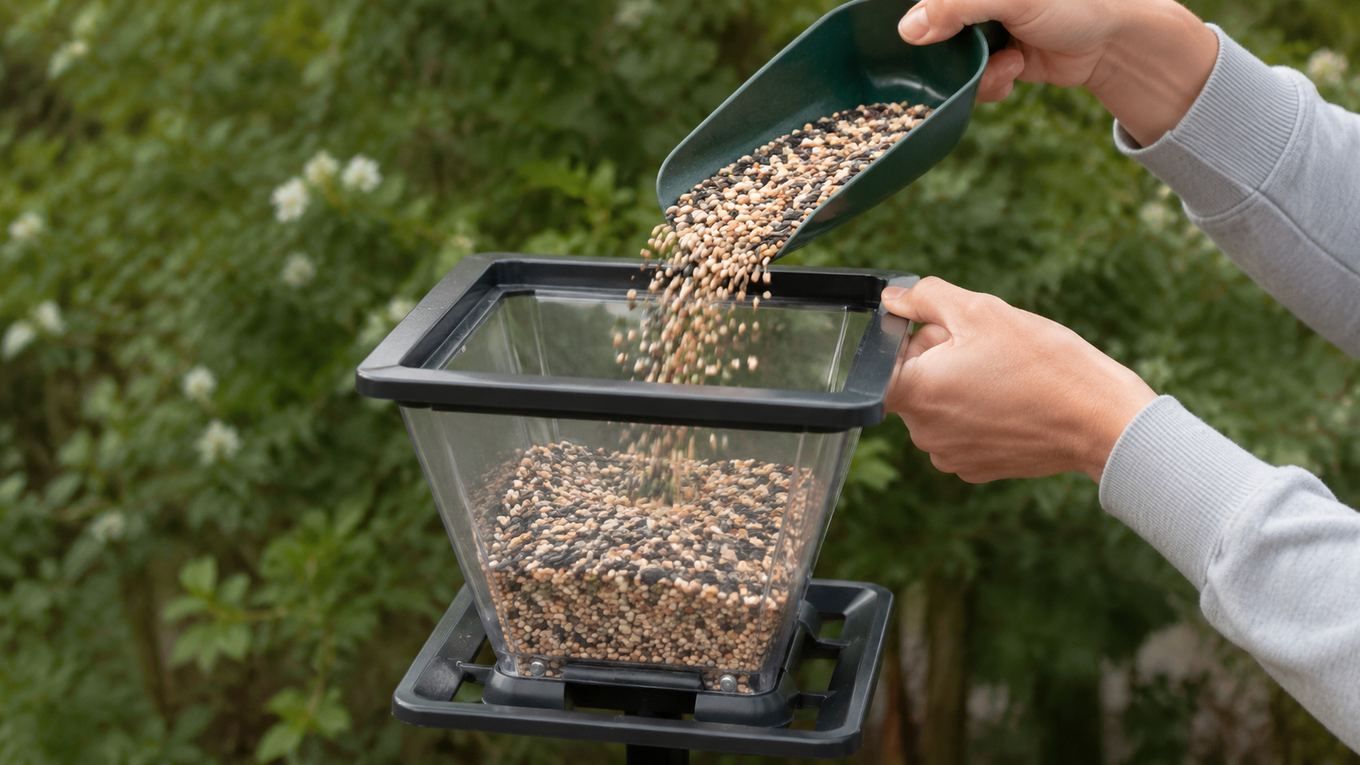
- Match the amount to consumption, not the feeder’s full capacity. A feeder topped all the way to capacity that only gets visited lightly just sits with aging seed at the bottom.
- Refill more often in smaller amounts during slow seasons, and let a feeder run closer to empty between refills rather than constantly topping it off over old seed.
Getting cleaning and refill timing right matters more for feeders with heavy traffic — see our comparison of tube, hopper, and platform feeders if you’re not sure which type fits your yard, or our feeder materials guide if buildup and cleaning difficulty are part of what you’re weighing before buying.