 Folk
FolkA birdhouse hung with good intentions but the wrong hole size usually ends up empty, or worse, taken over by a species you weren’t trying to attract. Nest boxes are far more specific than feeders — the entrance hole alone decides which birds can physically get in, and a few inches of mounting height decides whether they feel safe enough to try. Get those details right and the rest is straightforward.
Why Hole Size Matters More Than Anything Else
Entrance hole diameter is the single most important spec on a birdhouse — it’s what physically excludes birds too large to fit, including nest-competing species like house sparrows and European starlings if you size it correctly. A hole that’s even a quarter-inch too large can let in a bigger, more aggressive species that will take over the box or destroy an existing nest.
Box Specs by Common Species
| Species | Hole diameter | Floor size | Mounting height |
|---|---|---|---|
| Chickadees | 1⅛ in | 4×4 in | 5–15 ft |
| House wrens | 1 in | 4×4 in | 5–10 ft |
| Bluebirds | 1½ in | 5×5 in | 4–6 ft |
| Tree swallows | 1⅜ in | 5×5 in | 5–10 ft |
| Purple martins | 2⅛ in (multi-unit house) | N/A (gourd or compartment) | 12–20 ft, near open water |
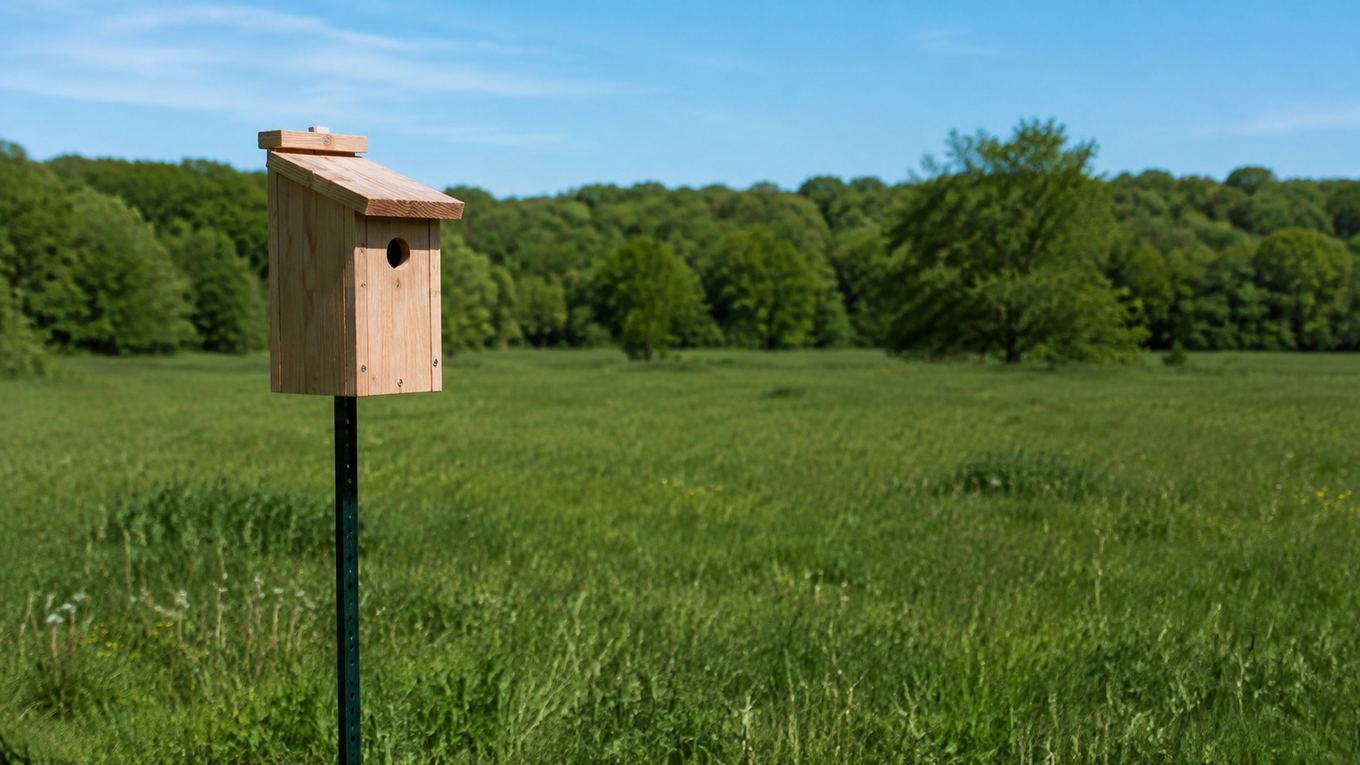
Example: a cedar bluebird nest box with the correct 1½-inch entrance hole
For the exact hole size and floor dimensions for a species not listed here, see our nest box dimensions reference.
Material and Design Basics
- Unpainted or light-colored untreated wood — cedar or pine works well; avoid metal boxes (they overheat badly) and treated lumber (chemical exposure)
- Ventilation gaps near the top and drainage holes in the floor — both prevent the box from becoming a heat trap or holding standing water after rain
- No external perch below the entrance — perches help predators and competing species more than the birds you’re trying to attract; most current guidance skips them entirely
- A hinged side or front panel — gives you access for the between-season cleaning covered in our cleaning guide
Placement: Height, Direction, and Predator Safety
- Mount on a freestanding metal pole rather than a tree trunk when possible — trees give squirrels, raccoons, and snakes an easy climbing path straight to the box
- Add a predator guard (a stovepipe or cone baffle, similar to a squirrel baffle) below the box on pole-mounted setups
- Face the entrance away from prevailing wind and harsh afternoon sun — east or northeast typically works well across most of the US
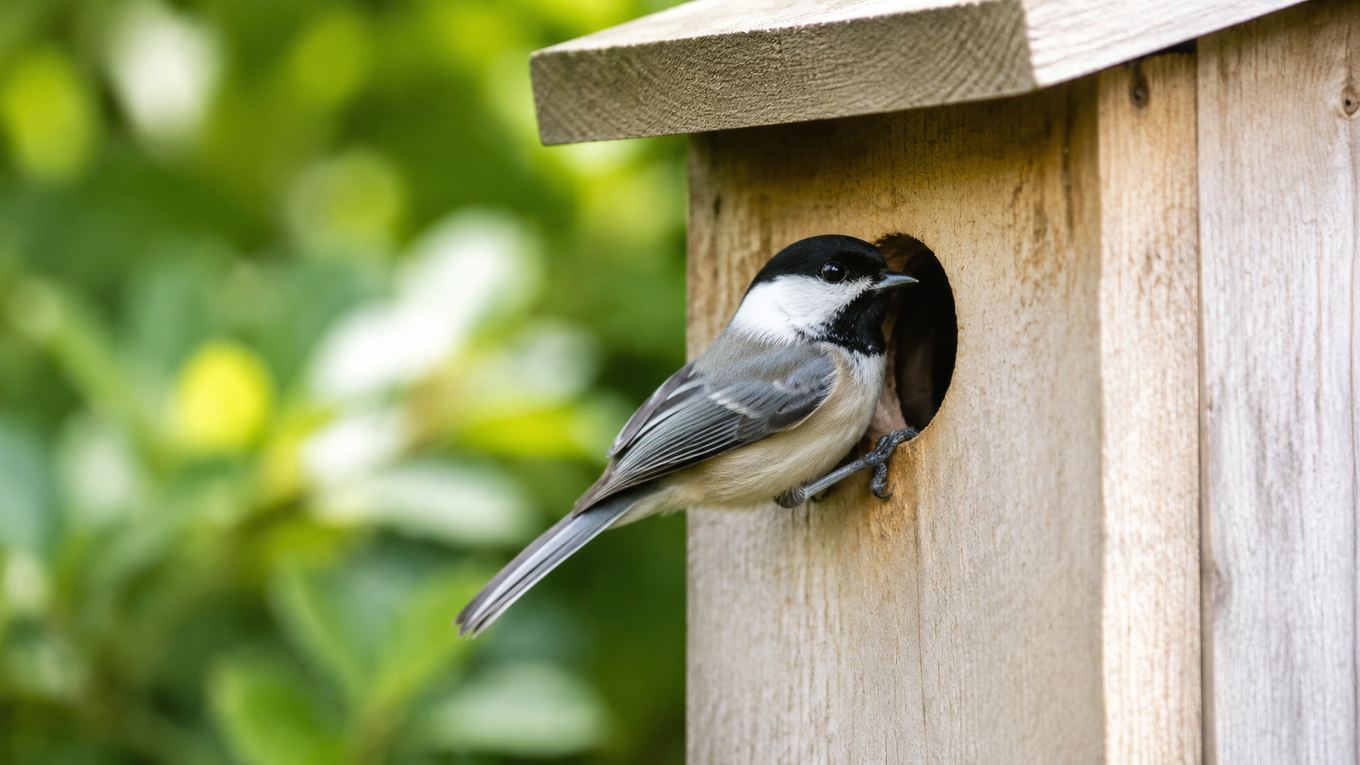
- Keep bluebird boxes in open areas away from dense tree cover; keep wren and chickadee boxes closer to some shrub or tree cover, matching each species’ natural nesting habitat
For the full predator-proofing setup, see our placement and predator safety guide.
Getting Set Up This Season
- Identify which species are common in your area and pick a box spec that matches — see the table above or our full dimensions reference.
- Choose or build a box in unpainted or light-colored untreated wood with proper ventilation and drainage — see our DIY birdhouse plans if you’d rather make one than buy it.
- Mount it at the correct height and direction for your target species, on a pole with a predator guard rather than directly on a tree.
- Put the box up before breeding season starts in your region — many species scout nest sites weeks before actually laying eggs.
- Clean it out between broods and at the end of each season to keep it usable and parasite-free for the next nesting pair.
Birdhouses work best alongside the food, water, and cover habits covered in our pillar guide to attracting backyard birds — a yard that already draws birds in gives a correctly sized nest box a much better chance of getting used.