 Folk
FolkCardinals are year-round residents across most of the eastern and central US, which means a yard set up correctly for them pays off in every season, not just one migration window. The catch is that cardinals are pickier about feeder shape than most backyard birds — get that part wrong and they’ll simply feed elsewhere, no matter how much seed you put out.
What Cardinals Actually Eat
- Sunflower seed — both black oil and striped; their thick, powerful bill is built for cracking larger seeds
- Safflower seed — a strong cardinal favorite, and useful because squirrels, grackles, and starlings tend to avoid it, cutting down on competition at the feeder
- Cracked corn — a secondary food, especially in cold weather
- Berries and fruit — eaten opportunistically in season, alongside insects during breeding season when they need extra protein
Best Feeder Types for Cardinals
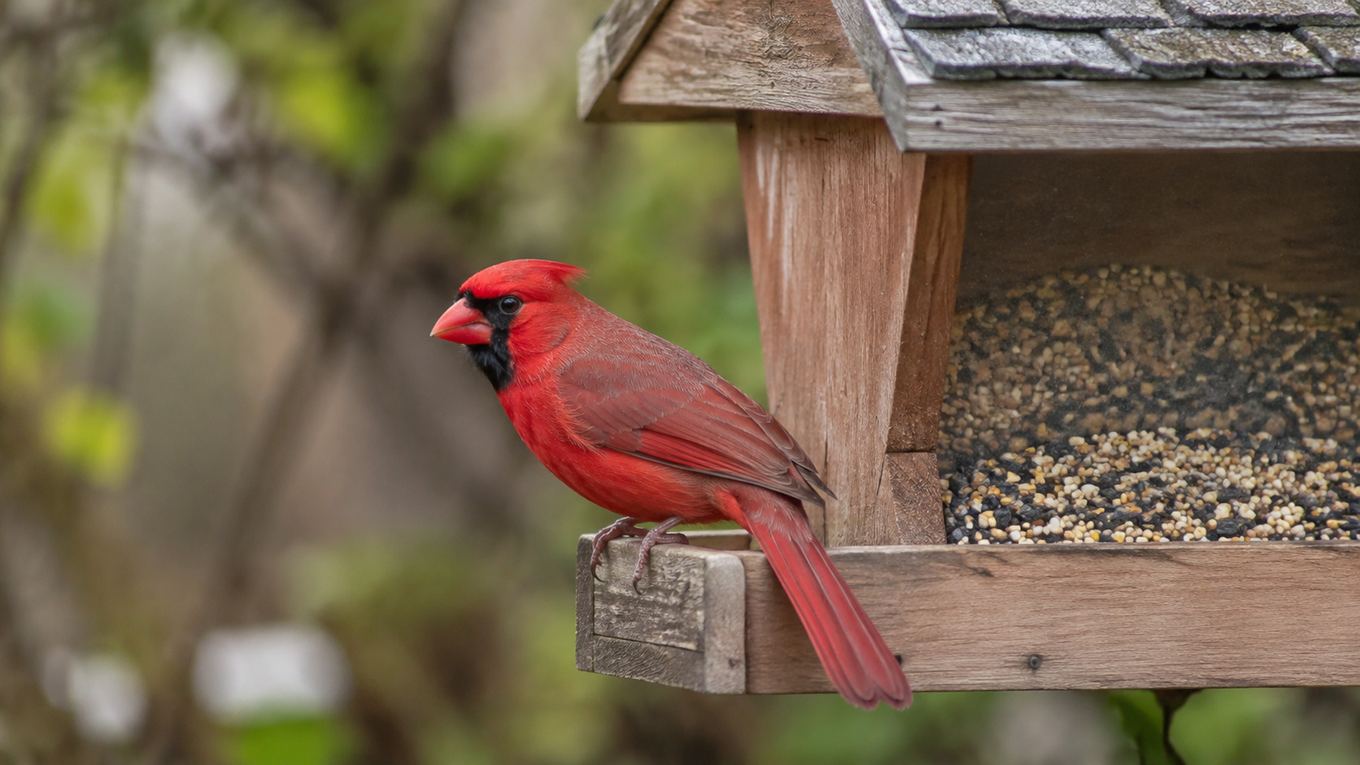
Cardinals are heavier-bodied than finches or chickadees and don’t grip small perches well, which rules out tube and nyjer feeders almost entirely — they need a wide, stable place to land:
| Feeder type | Good for cardinals? | Why |
|---|---|---|
| Hopper | Yes | Wide, roomy perches sized for a larger bird |
| Platform | Yes | Matches their preference for feeding low or near ground level |
| Tube | Rarely | Perches too short and narrow for a cardinal’s size |
| Nyjer/thistle | No | Port size and seed type are built for finches, not cardinals |
Example: a large-capacity hopper feeder sized for cardinals and other bigger birds
Timing: Cardinals Are Early and Late Feeders
Cardinals tend to be among the first birds active at dawn and the last still feeding at dusk — a crepuscular feeding pattern that’s worth knowing if you’ve assumed they’re not visiting just because you don’t see them at midday. Keep feeders filled overnight if you want to catch them at their most active windows.
Habitat and Cover Cardinals Need
Cardinals are shier than chickadees or titmice about approaching feeders in wide-open spaces — without cover nearby, they often skip the feeder rather than expose themselves:
- Dense shrubs or thickets within 10–15 feet of the feeder give cardinals a safe staging spot before and after feeding
- Cardinals nest low, typically 3–10 feet up in dense shrubs — the same cover that helps them feel safe at a feeder often doubles as nesting habitat
- A slightly “messy,” layered yard with shrub cover consistently outperforms a manicured, open one for cardinal activity
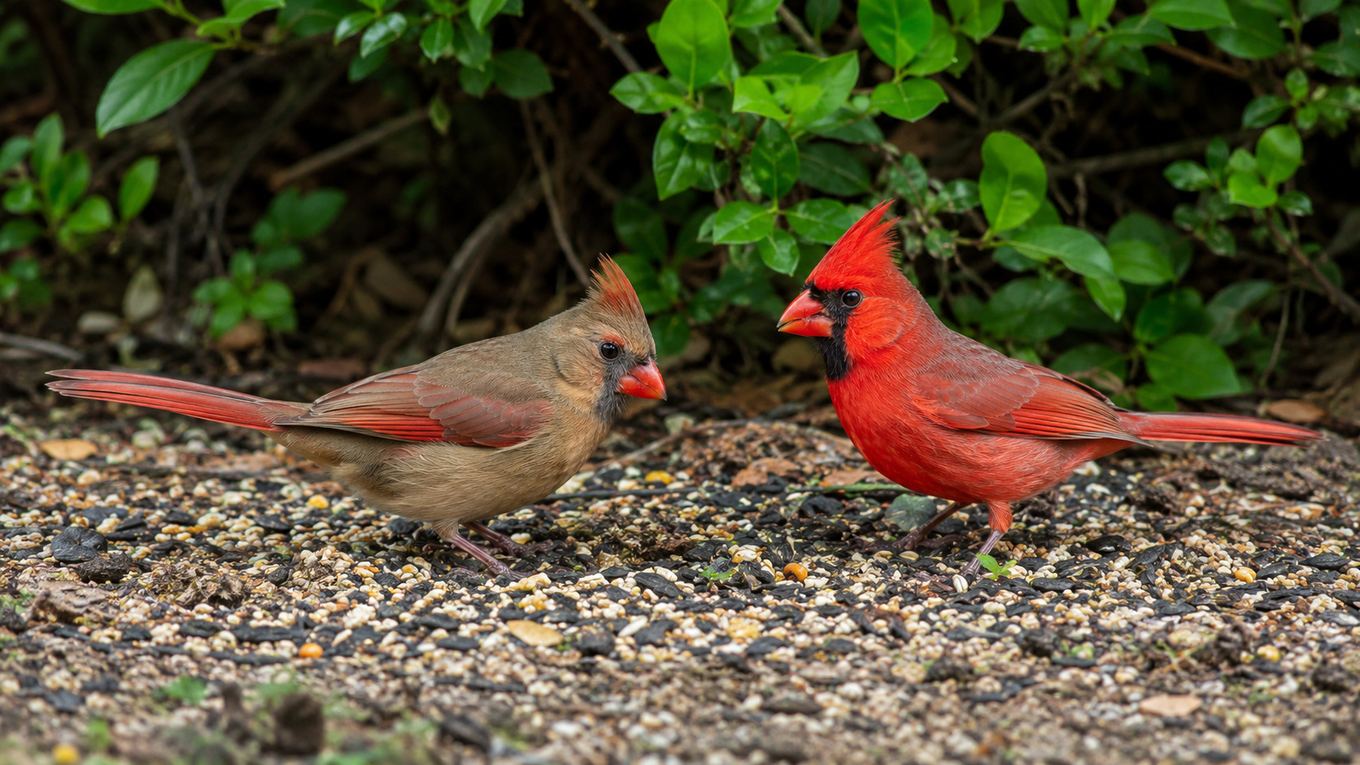
- Cardinal pairs often visit feeders together, with the male feeding the female directly during courtship — a behavior worth watching for in early spring
Setting Up a Cardinal-Friendly Station
- Choose a hopper or platform feeder — skip tube and nyjer feeders for this species specifically.
- Fill it with sunflower or safflower seed; safflower is worth trying first if squirrels or aggressive blackbirds are a problem at your other feeders.
- Place the feeder within sight of dense shrub cover, ideally 10–15 feet away, so cardinals have a safe approach and retreat.
- Add a bird bath nearby — cardinals use water sources reliably alongside feeders.
- Keep the feeder filled through early morning and evening hours specifically, since that’s when cardinal activity peaks.
One Habitat Quirk Worth Knowing: Window Aggression
During breeding season, male cardinals sometimes attack their own reflection in windows, car mirrors, or other reflective surfaces, mistaking it for a rival male. It’s not related to feeder setup and usually stops on its own once territorial hormones settle later in the season, but breaking up the reflection (a piece of tape, a decal, or temporarily covering the surface) resolves it faster if it’s happening at a window near your feeder.
Cardinals reward a properly set-up yard by sticking around all year rather than passing through — see our pillar guide to attracting backyard birds for how to layer food, water, and cover for cardinals alongside every other species you’re hoping to see.