 Folk
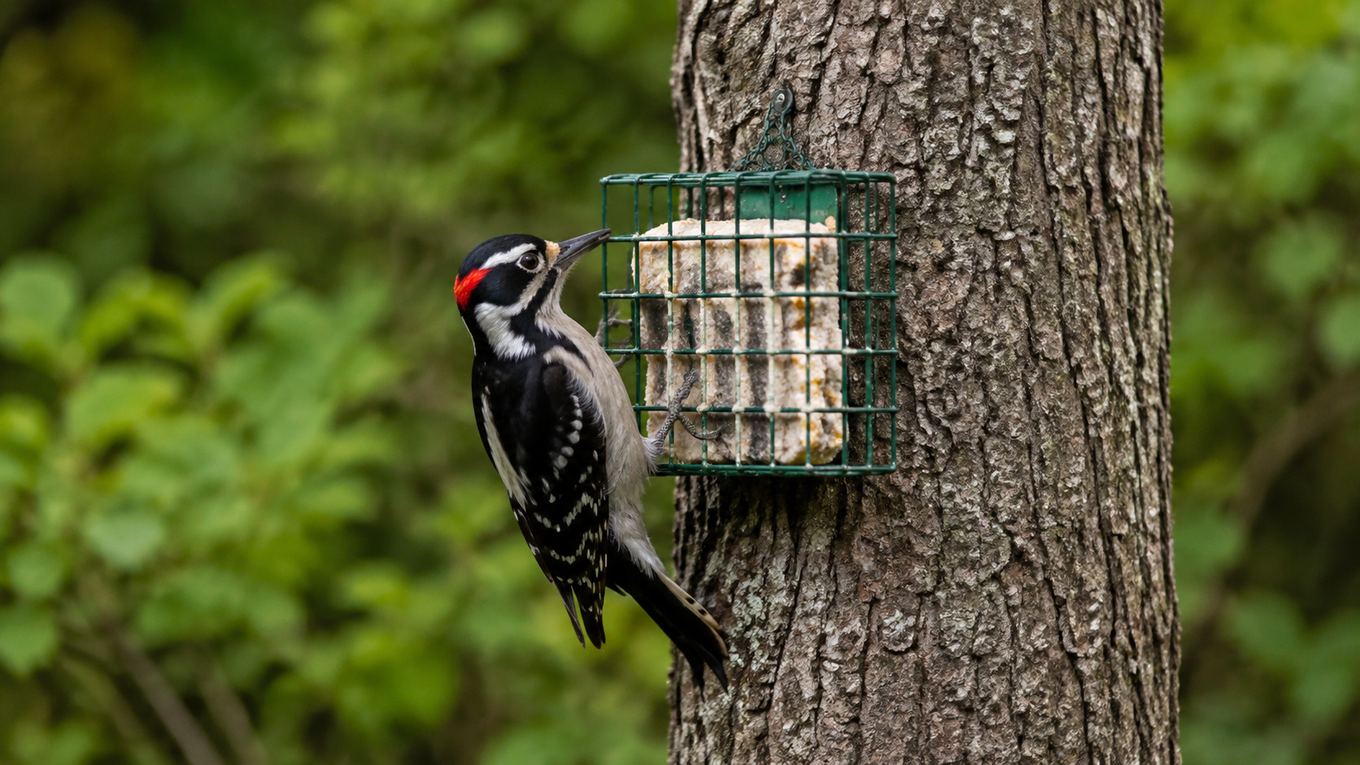
FolkSuet is rendered beef fat, sold in compressed blocks sized to fit a standard wire cage feeder. It’s less about seed and more about dense, fast-burning calories — which makes it the single best food for drawing woodpeckers and other insect-eating species that barely touch a seed feeder.
Suet Blends and What Each One Draws
- Plain suet — pure rendered fat with no additions; the purest draw for dedicated insect-eaters and the least likely to attract seed-focused birds you may not want competing at the cage
- Seed-mixed suet — fat blended with sunflower chips or millet, which broadens the audience to include chickadees and finches alongside woodpeckers
- Fruit-and-nut suet — adds dried fruit and nut pieces, a strong draw for woodpeckers and occasionally migrating warblers
- No-melt (summer) suet — reformulated with a higher melting point so it holds together in heat instead of turning to liquid grease
Example: a seed-and-nut suet cake sized for a standard wire cage feeder
Suet Type by Season
| Suet type | Best season | Primarily attracts |
|---|---|---|
| Plain suet | Fall through spring | Woodpeckers, nuthatches |
| Seed-mixed suet | Year-round | Woodpeckers, chickadees, titmice |
| Fruit-and-nut suet | Fall migration, winter | Woodpeckers, occasional warblers |
| No-melt suet | Summer, above ~85–90°F | Same species, without the mess |
Feeder Styles Worth Knowing
The cage itself changes who gets fed as much as the suet inside it does:
- Standard wire cage — the default, sized for a typical 9-by-4-inch suet cake, works for the full range of suet-eating species
- Log-style feeder — suet plugs pressed into drilled holes in a wooden log, which mimics natural foraging and appeals strongly to woodpeckers specifically
- Tail-prop feeders — include a small ledge below the feeding area that gives woodpeckers something to brace their tail against, matching how they actually feed on tree bark
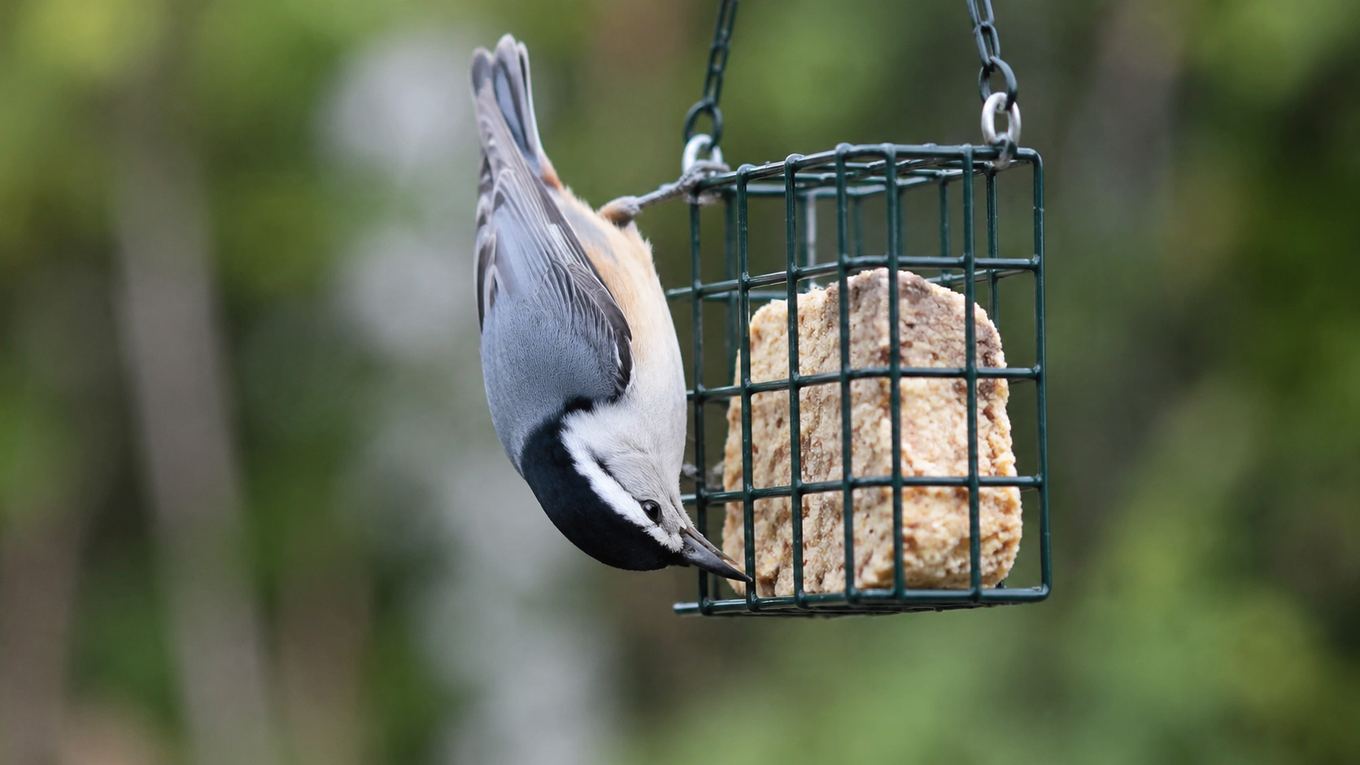
- Upside-down cage feeders — mounted so the feeding surface faces downward, forcing birds to hang upside down to eat; chickadees, nuthatches, and woodpeckers do this easily, while starlings generally can’t, which shifts traffic away from that species without excluding your target birds
Getting Suet Right Season to Season
- Use plain or seed-mixed suet through fall, winter, and spring, when temperatures stay well under 85°F.
- Switch to a no-melt blend once daytime highs regularly climb past that mark — regular suet turns to grease in real heat, which mats feathers and spoils faster.
- Check suet for a rancid smell before hanging a new block, especially anything that’s sat in storage through a warm spell.
- If starlings are dominating a standard cage, try an upside-down or tail-prop style before giving up on suet altogether.
If you’d rather make your own instead of buying pre-made blocks, see our homemade bird food recipes for a simple suet cake you can render at home. For how suet fits alongside seed, nectar, and everything else, see our pillar guide to bird seed and food types.