 Folk
FolkGood seed doesn’t stay good forever, and bad storage undoes the work of buying quality seed in the first place. Moisture, heat, and pantry pests all degrade birdseed faster than most people expect — and moldy seed isn’t just wasted money, it can genuinely harm birds.
Where to Store It
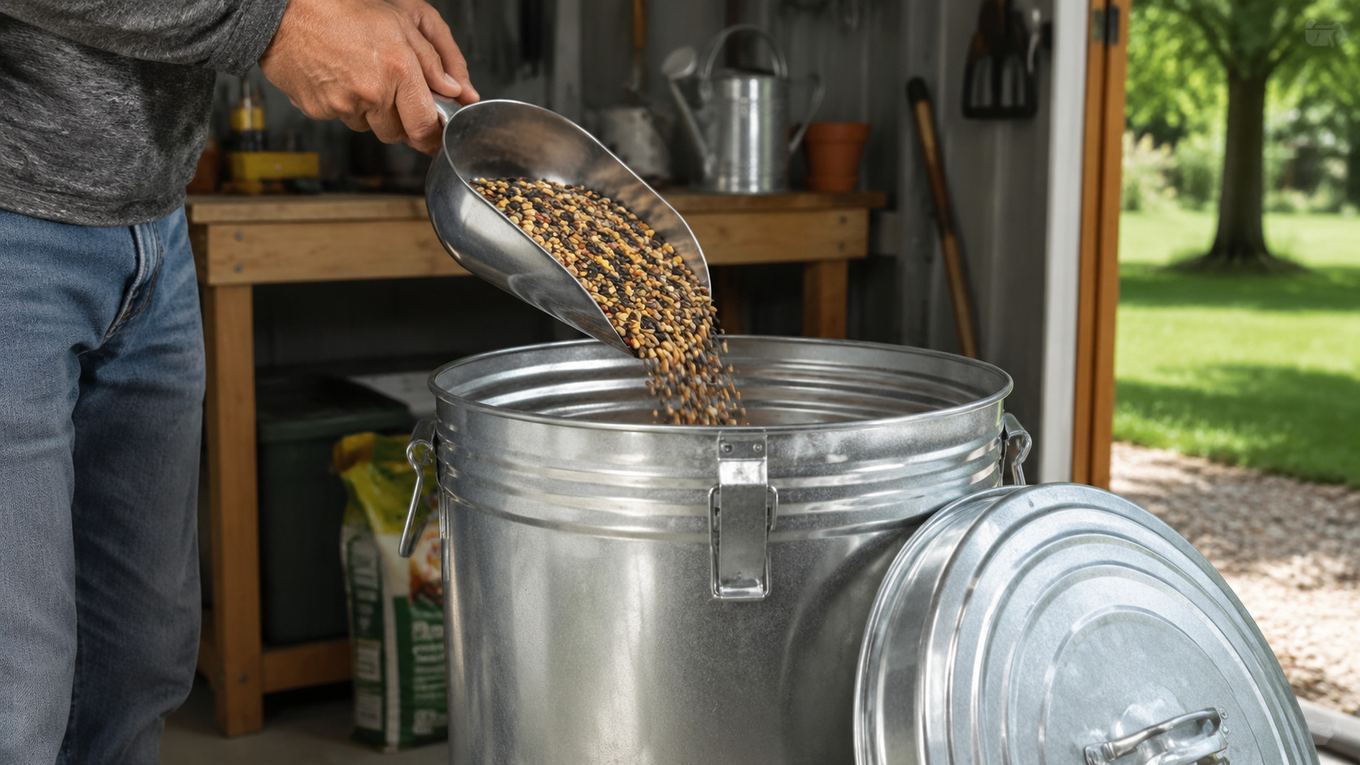
- Use an airtight container — a galvanized metal bin or a heavy plastic tote with a tight-sealing lid keeps out both moisture and rodents
- Keep it in a cool, dry spot; heat speeds up rancidity in oil-rich seeds like black oil sunflower and nyjer
- Store containers off the ground on a shelf or pallet, which makes it harder for mice to chew through from below
- Keep seed out of direct sun — UV exposure and heat both degrade oil content faster than a shaded spot would
How Long Seed Actually Stays Fresh
| Seed type | Typical shelf life (properly stored) |
|---|---|
| Black oil sunflower | 6–12 months |
| Safflower | 6–12 months |
| Nyjer (thistle) | 2–3 months — loses oil and appeal fastest |
| Suet | Use by the date on the package, typically a few months |
| Mixed blends with corn or milo | Spoils unevenly; corn and milo mold faster in humid conditions |
Example: an airtight, rodent-resistant birdseed storage bin
Warning Signs Seed Has Gone Bad
- A musty or sour smell — fresh seed shouldn’t smell like much of anything; a strong odor usually means moisture got in
- Clumping — seed sticking together is a moisture sign even before mold becomes visible
- Webbing or small holes in the bag — a common sign of pantry moths or weevils
- Visible mold or live insects — discard the batch entirely rather than trying to salvage the unaffected-looking portion; moldy corn and peanuts in particular can carry aflatoxin, a toxin genuinely harmful to birds
The Freezer Trick
Freezing a new bag for about a week before transferring it to your regular storage container kills any insect eggs already present in the seed — a common source of pantry pest infestations that seem to appear out of nowhere. It also slows oil degradation if you’re storing more than you’ll use in the next month or two.
Setting Up a Storage System That Actually Works
- Buy only as much seed as you’ll use in 4–8 weeks unless you have proper airtight, rodent-proof storage for a larger quantity.
- Freeze new bags for about a week before adding them to your main storage container, to kill any hitchhiking insect eggs.
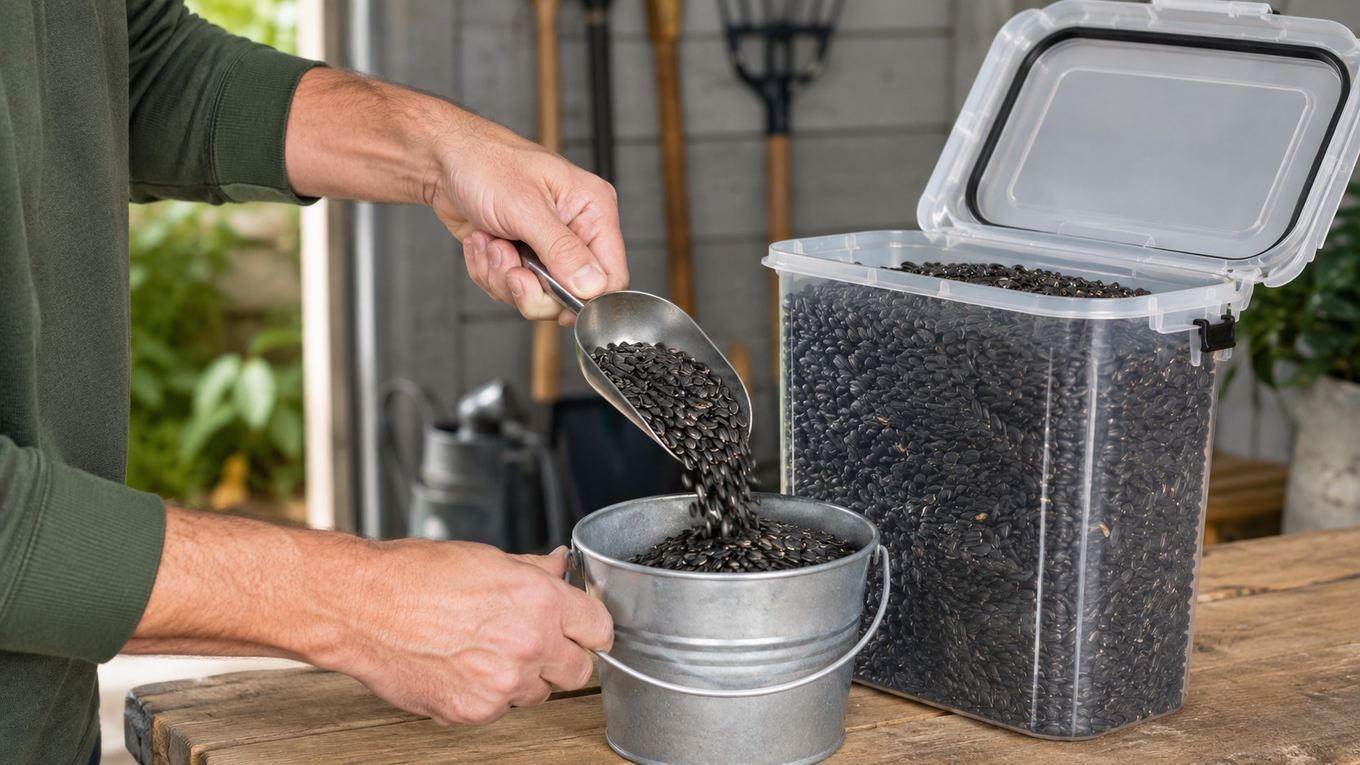
- Transfer seed into an airtight metal or heavy plastic bin rather than leaving it in the paper or thin plastic bag it came in.
- Store the bin in a cool, dry, shaded spot, off the ground if possible.
- Check seed for smell, clumping, or webbing before every refill — it takes a few seconds and catches problems before they reach the feeder.
Storing seed properly protects the investment you made choosing the right kind in the first place — see our guide to reading birdseed mix labels and our pillar guide to bird seed and food types for what to buy before you get to the storage step.