 Folk
FolkMore feeders generally means more species, but each one you add is also another thing to clean, refill, and keep squirrel-proofed. The right number isn’t really about your yard size — it’s about where your time and your species goals actually meet.
Start smaller than you think
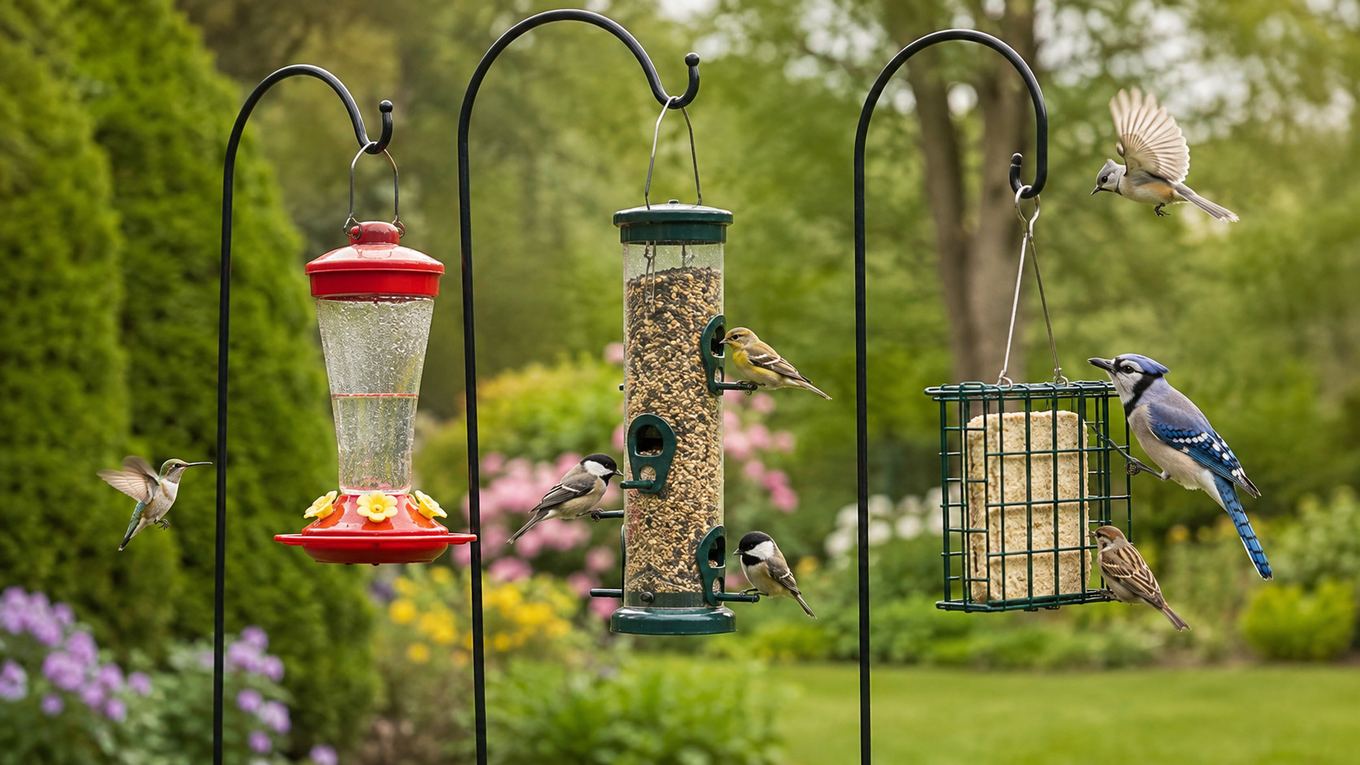
If you’re setting up your first station, one all-purpose feeder (tube or hopper) plus one specialty feeder (suet or nyjer) is enough to see what actually gets used before buying more. Watching real activity for a few weeks tells you more than guessing upfront — a nyjer feeder that sits untouched in your specific yard isn’t worth a second one just because a guide recommended it.
Signs you’re ready for another feeder
- Overcrowding at a single feeder — birds waiting, competing aggressively, or a couple of larger species monopolizing every port.
- Seed disappearing faster than you can reasonably refill a single feeder without overfilling it between visits.
- You want a species that needs a dedicated feeder type you don’t have yet — goldfinches for nyjer, woodpeckers for suet, hummingbirds for nectar.
Signs you have too many
- Cleaning and refilling starts feeling like a chore you’re behind on, rather than something you enjoy — seed sitting stale in a feeder because you haven’t gotten to it is worse than not having that feeder at all.
- You’re seeing less activity per feeder, not more, because traffic that used to concentrate in one place is now spread thin across too many spots.
A rough starting point by yard size
| Yard size | Reasonable starting mix |
|---|---|
| Balcony or small patio | 1 window or railing feeder |
| Small yard | 1 all-purpose feeder + 1 specialty (suet or nyjer) |
| Medium yard | 2–3 feeders covering different types, grouped in one or two spots |
| Large yard with varied habitat | 3–5 feeders across a couple of stations, spaced by type rather than scattered randomly |
How to decide, step by step
- Start with one all-purpose feeder and give it a few weeks before adding anything else.
- Add a specialty feeder (suet, nyjer, or nectar) based on what species you actually want to see, not what a general list suggests.
- Before adding a third or fourth feeder, check whether you’re keeping up with cleaning the ones you already have — more feeders only helps if you can maintain all of them.
- Group feeders in one or two stations rather than scattering them around the yard — it concentrates activity where you can watch it and keeps cleaning to a single circuit instead of a dozen scattered chores.
- Reassess seasonally — a setup that made sense in summer may need an extra suet feeder or fewer nectar feeders once fall and winter feeding priorities shift.
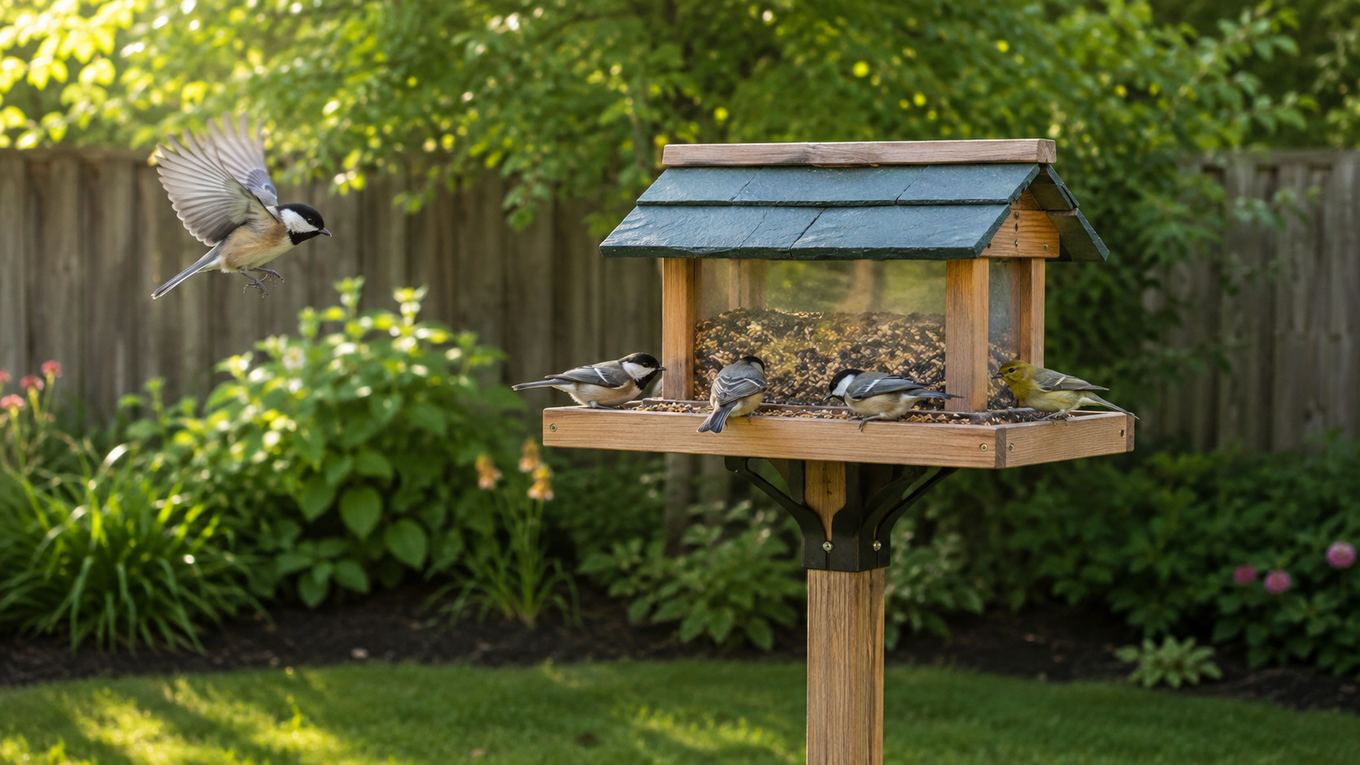
However many feeders you land on, our feeder materials guide and cleaning schedule guide both get more useful the more feeders you’re actually maintaining.