 Folk
FolkOnce your fall feeding switch-over is done, winter feeding is less about changing what’s in the feeder and more about keeping the whole station running through cold snaps, snow, and ice. Project FeederWatch (run by Cornell Lab and Birds Canada) puts it simply: birds need three things from your yard in winter — quality food, unfrozen water, and cover. Here’s how to deliver all three.
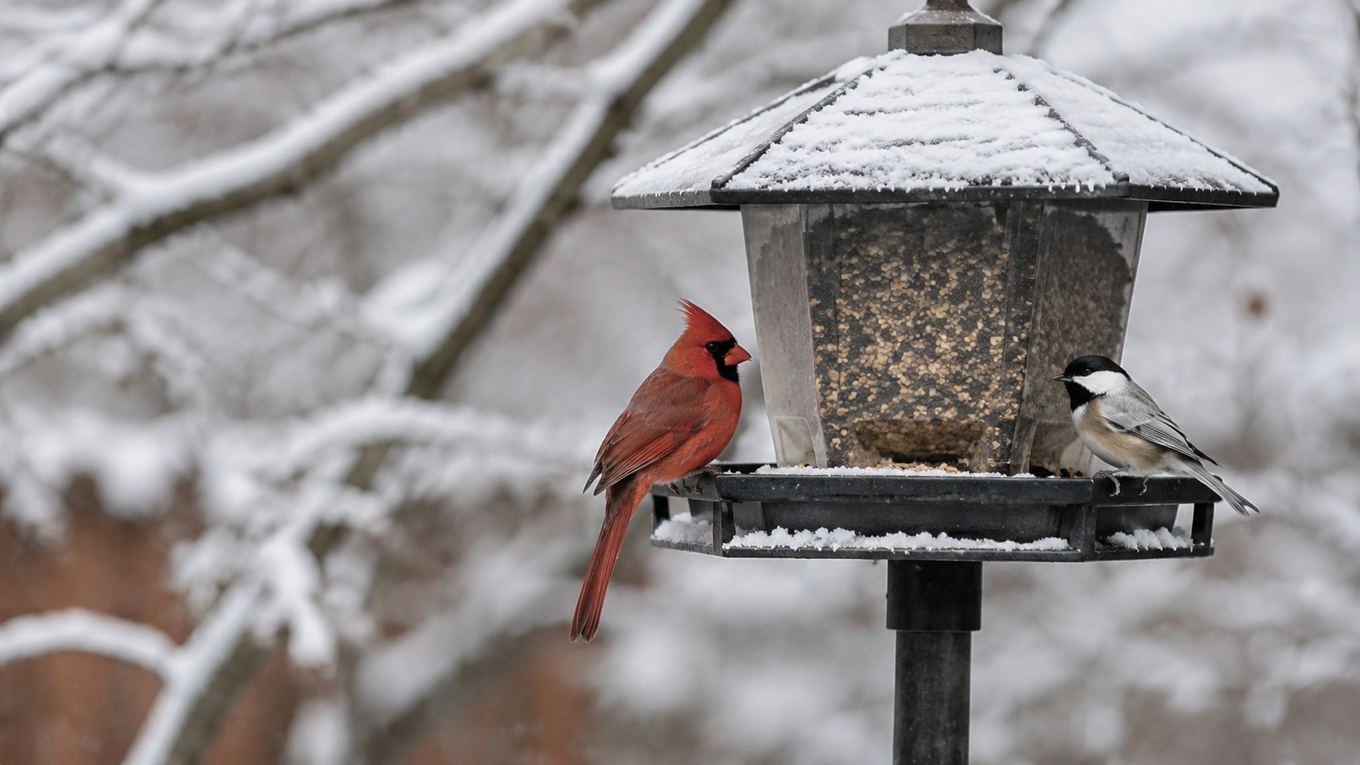
Prioritize high-fat, high-energy foods
Cold nights burn through a bird’s energy reserves fast, so winter is when fat content matters more than variety.
- Black oil sunflower seed stays the backbone of any winter mix — higher oil content than striped sunflower, and thin-shelled enough for almost every feeder bird to crack.
- Suet is a winter staple rather than a fall-only switch; standard high-fat suet performs fine once temperatures are reliably below the 85–90°F range where it would otherwise soften.
- Peanuts and nut mixes bring in woodpeckers, nuthatches, and jays, and pack even more calories per bite than sunflower seed.
Example: a high-fat winter seed mix heavy on black oil sunflower
Water matters more than food
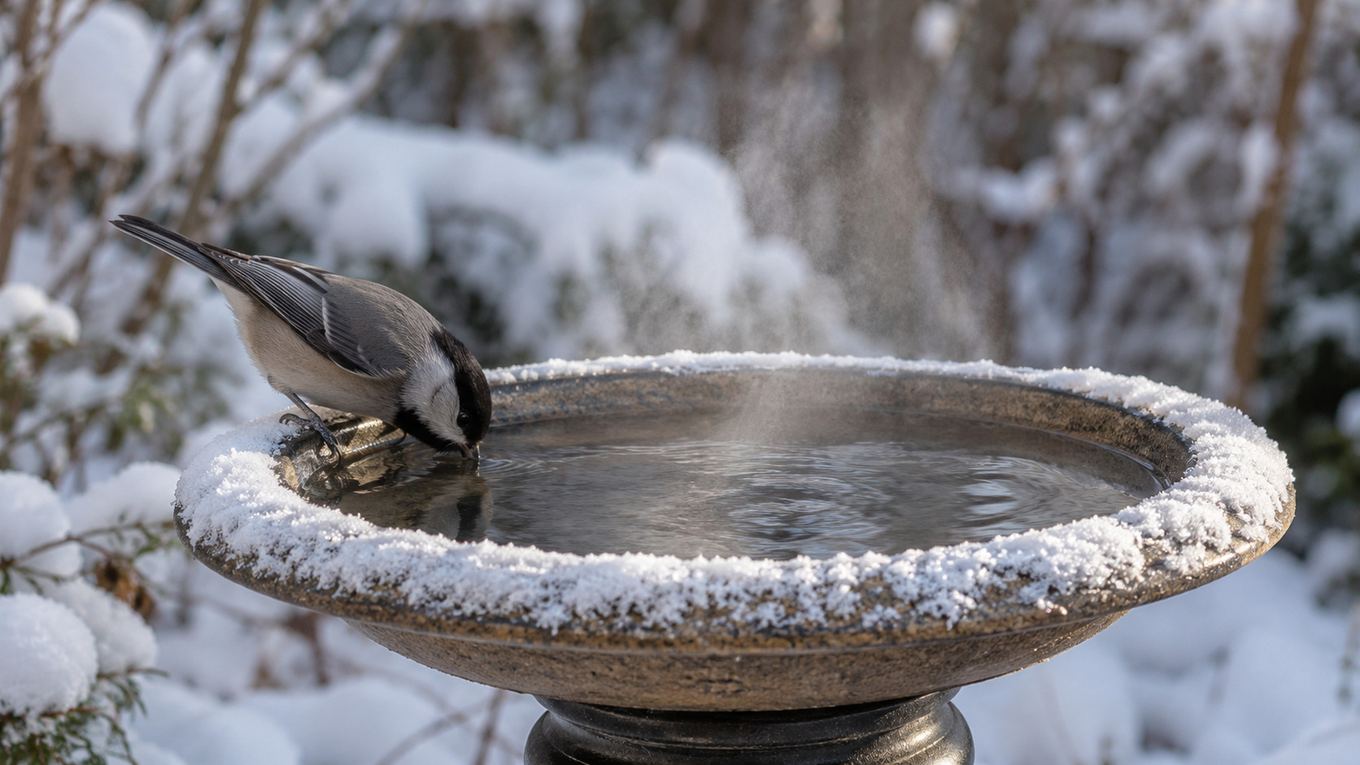
Once natural water sources ice over, unfrozen drinking water can be harder for birds to find than food — and they need it for more than drinking. Birds preen with water to align their feathers for insulation, which directly affects how well they hold body heat overnight.
- Add a heater insert to your existing bird bath, or switch to a heated bird bath, rather than relying on birds to find open water elsewhere.
- Keep the water shallow (1–2 inches) so it doesn’t take as long to freeze between refills if you’re not using a heater.
- Check it daily during hard freezes — a heater keeps water from freezing solid, but it can still ice over at the surface if it’s undersized for the temperature.
- Place the water source near cover, the same way you would a feeder, so birds aren’t exposed while they drink and bathe.
Winter feeding checklist, by ingredient
| Need | What to provide | Why it matters in winter |
|---|---|---|
| Fast energy | Black oil sunflower, suet, peanuts | Fuels overnight body-heat maintenance |
| Water | Heated bird bath or daily-refreshed shallow bath | Natural sources freeze; needed for drinking and feather insulation |
| Cover | Nearby shrubs, brush piles, evergreens | Shelter from wind and quick escape from predators |
| Consistency | Feeders kept full through storms and cold snaps | Birds pattern-learn reliable feeding spots over winter |
Don’t let feeders sit empty during a cold snap
There’s a persistent worry that feeding birds all winter makes them “dependent” and unable to cope if you stop. Cornell Lab’s research doesn’t support that — wild birds use feeders as one food source among many and keep foraging naturally regardless. The real risk runs the other way: birds do learn where reliable feeders are, and an empty feeder during the coldest week of the year is a worse look than never having put one up. If you’re feeding through winter, plan to keep it consistent through the season rather than topping off occasionally.
Keep the station itself winter-ready
- Brush snow off feeder roofs and platforms after storms so seed underneath doesn’t stay buried or get wet.
- Check hopper and tube feeders for ice bridging the ports shut after freezing rain — a quick tap usually clears it.
- Keep an eye on squirrel activity, which doesn’t stop for winter; see our squirrel-proofing guides if baffles need a cold-weather check.
For more on matching seed types to the birds you want to see, our food and seed guides cover mixes in more depth than the winter basics above.