 Folk
FolkThe feeder design matters less for longevity than what it’s actually made of. A well-designed feeder in the wrong material can crack, fade, or rot within a season or two, while the same design in a better material lasts for years.
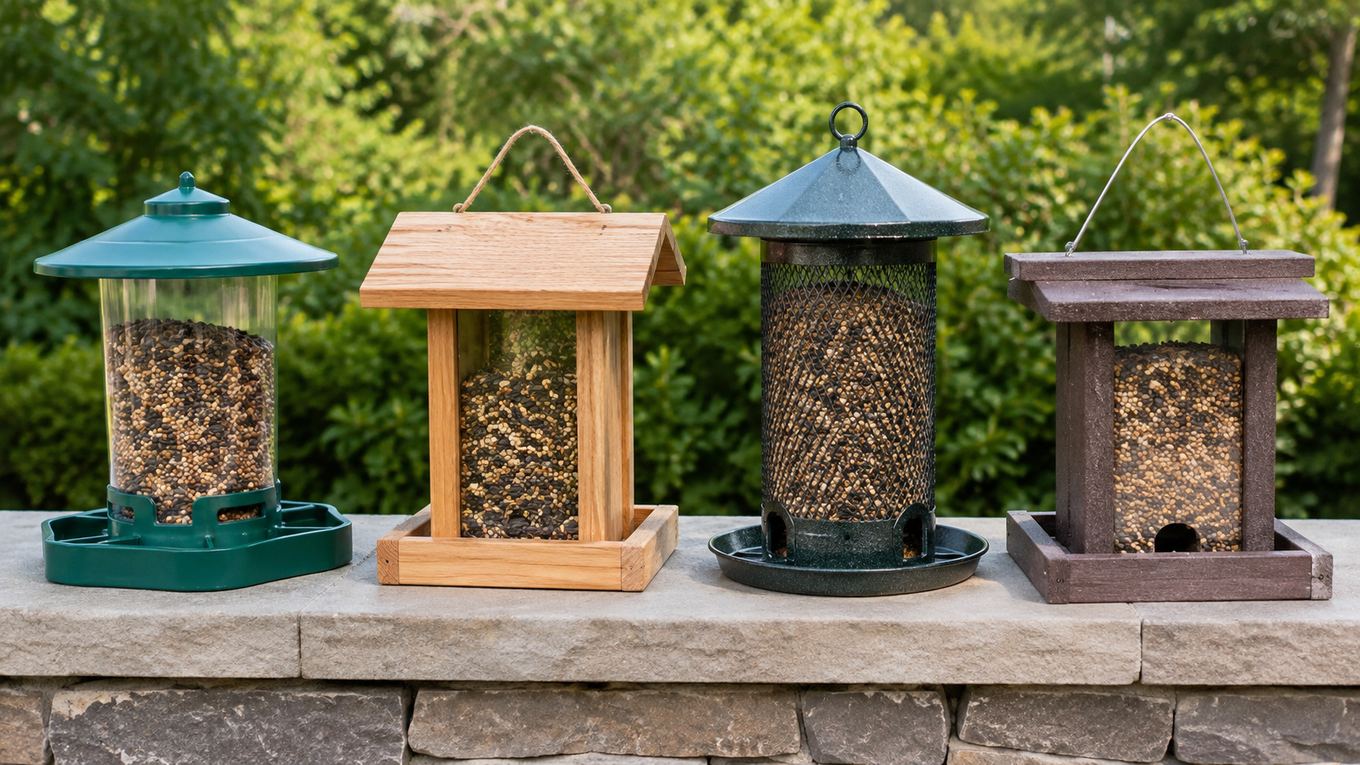
Standard plastic
The most common material on budget feeders — lightweight and cheap, but with real trade-offs over time.
- Pros: inexpensive, lightweight, often clear for easy seed-level viewing.
- Cons: standard (non-poly) plastic yellows and becomes brittle under UV exposure, and can crack in freezing temperatures.
Wood
Traditional and attractive, but it’s the highest-maintenance option of the four.
- Pros: classic look, blends into a garden setting, often more affordable than metal or poly.
- Cons: absorbs moisture, which leads to rot, cracking, and fading over time; needs periodic sealing or staining to hold up outdoors, and it’s more porous than other materials, which makes thorough cleaning harder.
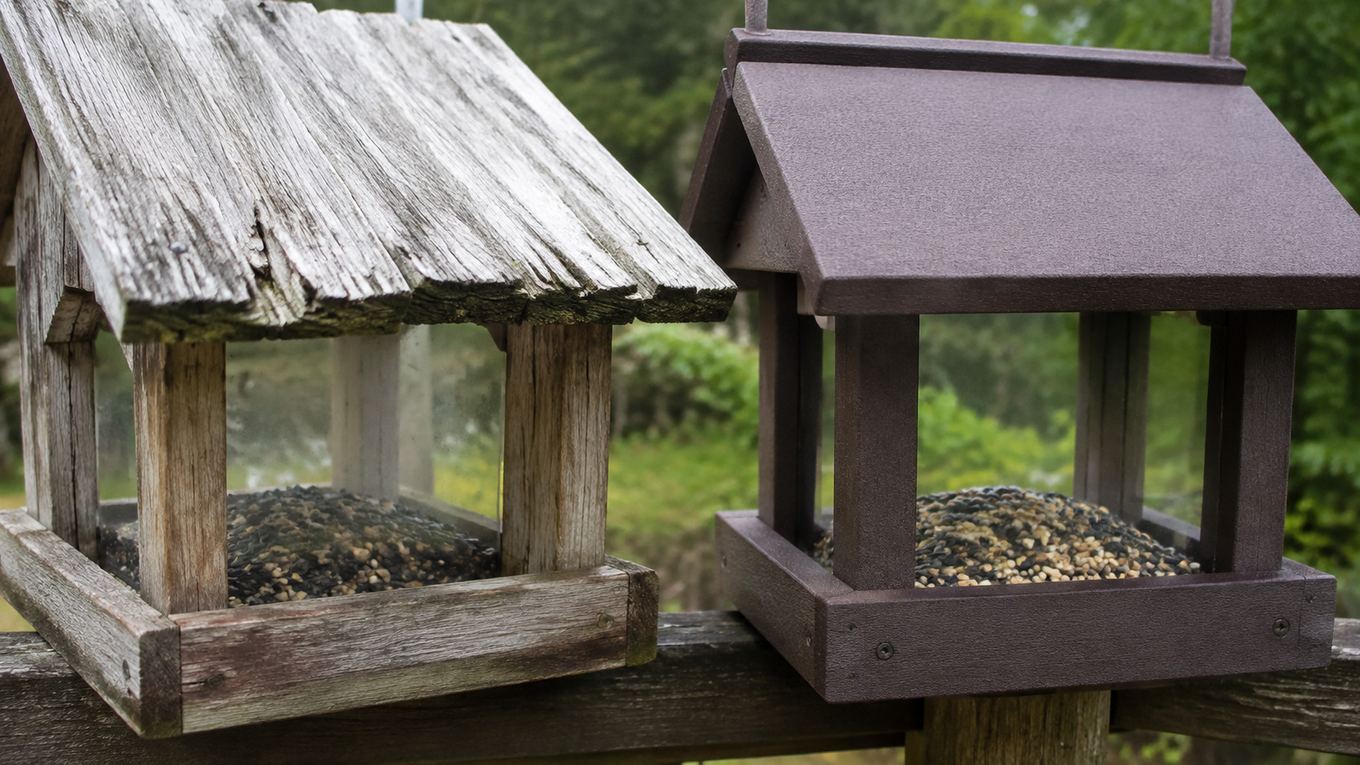
Example: a recycled poly-lumber hopper feeder
Metal
Usually seen as feeder ports, cages, or structural components rather than the whole body.
- Pros: powder-coated, heavy-duty metal resists weather and squirrel chewing far better than plastic or wood; stainless steel hardware adds rust resistance.
- Cons: heavier, generally pricier, and uncoated metal can rust over time if the coating chips.
Recycled poly lumber
Made from recycled HDPE plastic, and increasingly the standard for higher-end feeders.
- Pros: won’t split, crack, or fade the way wood does; UV-resistant so it holds its color; doesn’t dry out or turn brittle in cold weather the way standard plastic can; non-porous surface resists bacteria buildup and is easier to clean thoroughly.
- Cons: costs more upfront than basic plastic or wood.
Material comparison at a glance
| Material | Weather resistance | UV resistance | Cleaning ease | Typical lifespan |
|---|---|---|---|---|
| Standard plastic | Low–moderate | Low — yellows, gets brittle | Easy | 1–3 seasons |
| Wood | Low — absorbs moisture | Moderate (with sealing) | Harder — porous surface | 2–5 years with maintenance |
| Metal (powder-coated) | High | High | Easy | 5–10+ years |
| Recycled poly lumber | High | High | Easy — non-porous | 10+ years |
How to choose
- If budget is the main constraint and you’re fine replacing the feeder every season or two, standard plastic is a reasonable starting point.
- If you want a traditional look and don’t mind occasional resealing, wood works — just plan on more upkeep than the other materials.
- For squirrel-heavy yards, prioritize metal components at stress points (ports, latches, cage wire) regardless of what the main body is made from.
- If you want to buy once and not think about it again, recycled poly lumber is the most durable option across weather, UV, and years of use, even though it costs more upfront.
Whatever material you land on, it still performs best paired with correct placement — see our complete guide to feeder types for how design and material work together.