 Folk
FolkNot having a yard doesn’t have to mean no birds. A window feeder or a railing-mounted feeder can pull in a surprising amount of activity from a balcony or small patio — you just need to plan around two things a full-size yard doesn’t force on you: limited mounting options, and windows close enough to be a real collision risk.
Your main options
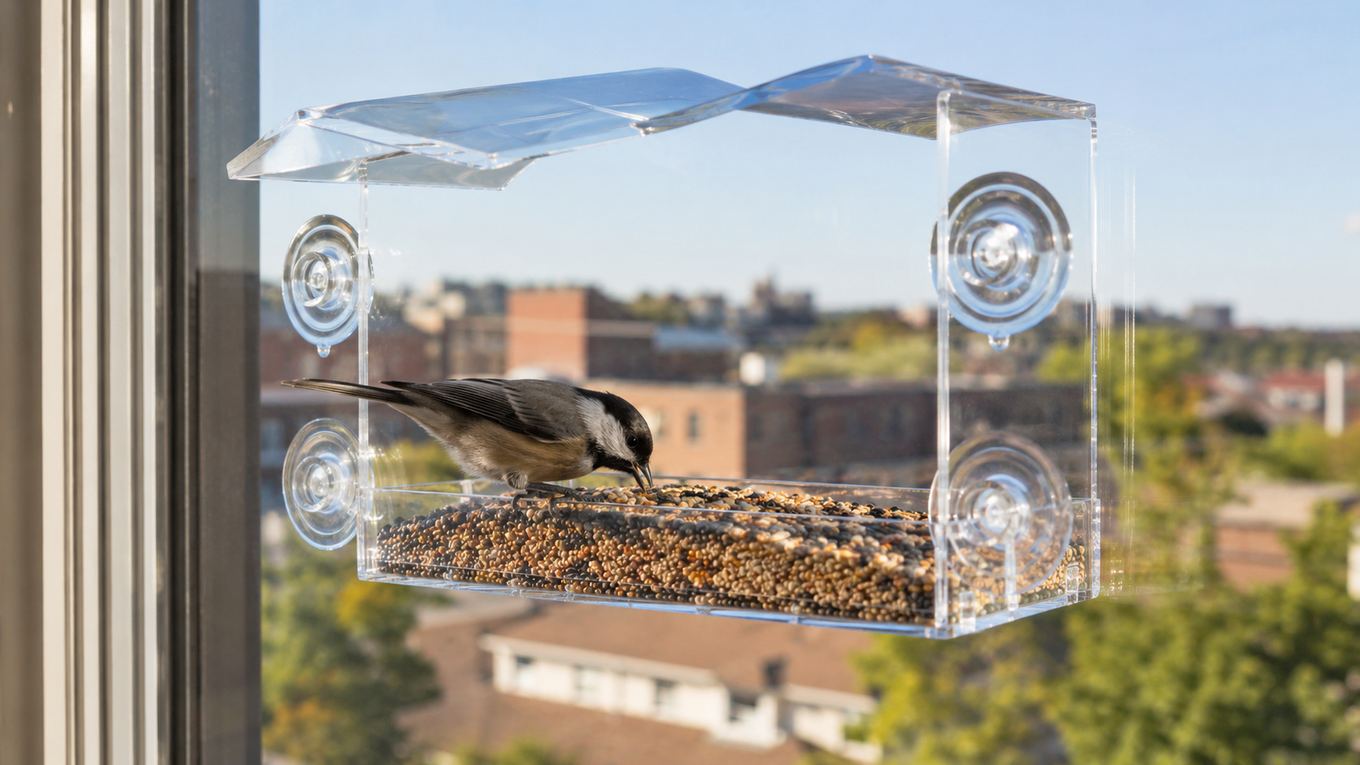
- Window feeders attach directly to the glass with suction cups and let you watch birds from inches away — the best option when you have no outdoor mounting surface at all.
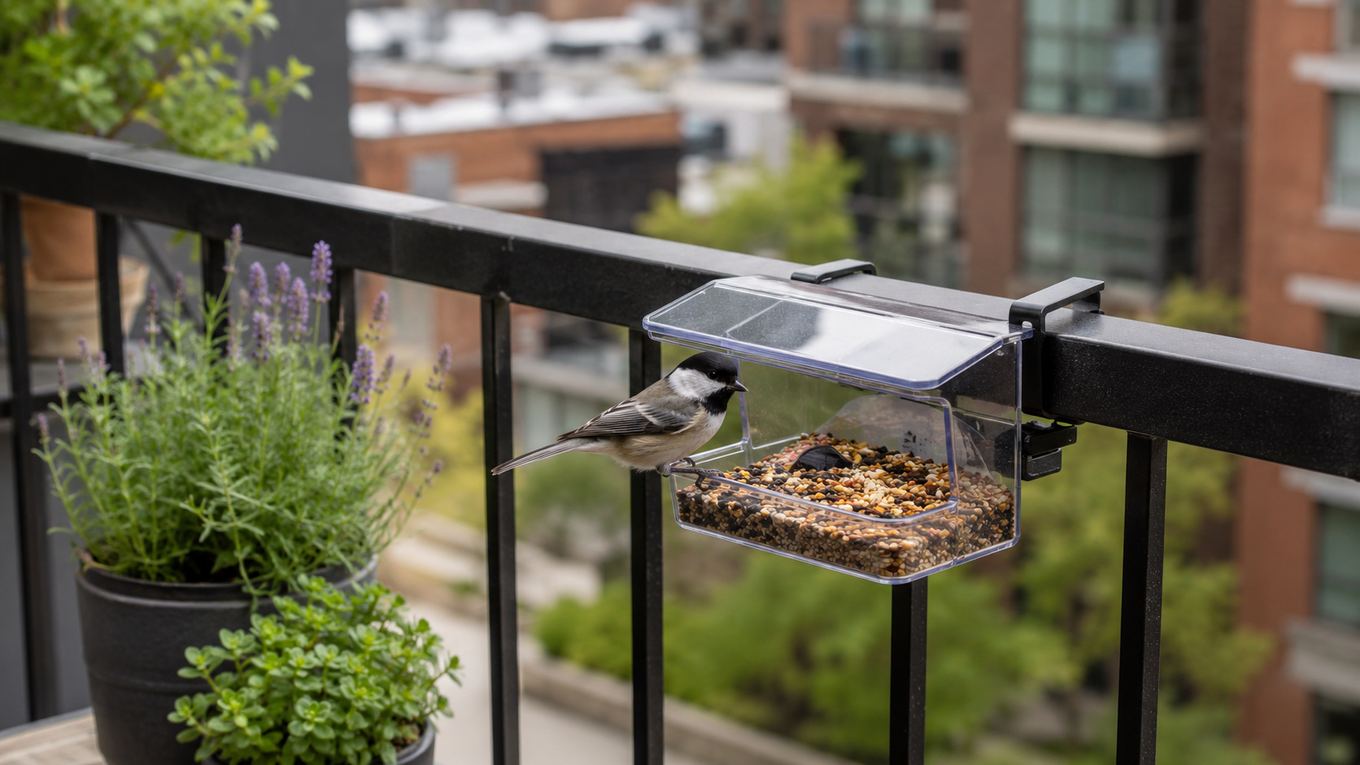
- Railing-mount feeders clamp onto a balcony rail and work like a compact version of a yard feeder, without needing a pole or hook.
- Small hanging feeders on a compact bracket or hook still work on many balconies and patios, as long as there’s something sturdy to hang them from.
Check building rules before you buy
Many apartment buildings, condo associations, and landlords restrict bird feeding — usually over concerns about seed mess, pest attraction, or droppings on the balconies below yours. It’s worth a quick check of your lease or HOA rules before mounting anything permanent, since a suction-cup window feeder is a much easier undo than a drilled railing mount.
Window feeders: the collision issue you shouldn’t skip
Window strikes are one of the biggest human-caused threats to birds — researchers estimate roughly a billion window-collision deaths a year in the US alone. A feeder mounted on the glass itself is actually one of the safer setups, but only if you also treat the rest of that window:
- Mount the feeder either right against the glass (within about 3 feet) or far from it (10+ feet) — the distance in between is the most dangerous zone, since birds leaving the feeder can pick up enough speed to be seriously hurt hitting glass nearby.
- Add collision-reducing patterns to the outside of any nearby window glass, not just the pane the feeder sits on — Cornell’s guidance is clear that exterior patterns work better than interior decals or curtains, since those don’t break up outdoor reflections.
- Space dot decals or painted patterns about 2 inches apart across the whole pane, or hang paracord strands spaced about 4 inches apart, so there’s no reflective gap large enough for a bird to fly toward.
- Recheck the setup after a few weeks — if you notice thumps or find feathers near a specific window, that pane needs more coverage, not less.
Example: a suction-cup window feeder with a see-through viewing chamber
Small-space feeder options compared
| Option | Best for | Squirrel exposure | Setup effort |
|---|---|---|---|
| Window feeder | No outdoor mounting surface at all | Low (upper floors), moderate (ground floor) | Low — suction cups only |
| Railing-mount feeder | Balconies with a sturdy rail | Depends on floor/access | Low–moderate — clamp installation |
| Small hanging feeder | Patios with an existing hook or bracket | Moderate | Low — needs something to hang from |
Start smaller than you think
- One nyjer (thistle) feeder and one small sunflower-seed feeder is enough to start — you’ll see which one gets used before investing in more.
- Refill in smaller amounts more often rather than filling a large feeder that sits half-used for weeks; small spaces mean smaller feeders, and seed can go stale before it’s eaten.
Once you know which feeder style gets the most visits, our comparison of tube, hopper, and platform feeders can help you decide what to add next — and if ground-floor squirrel traffic turns out to be a problem, see our squirrel-proofing guides.