 Folk
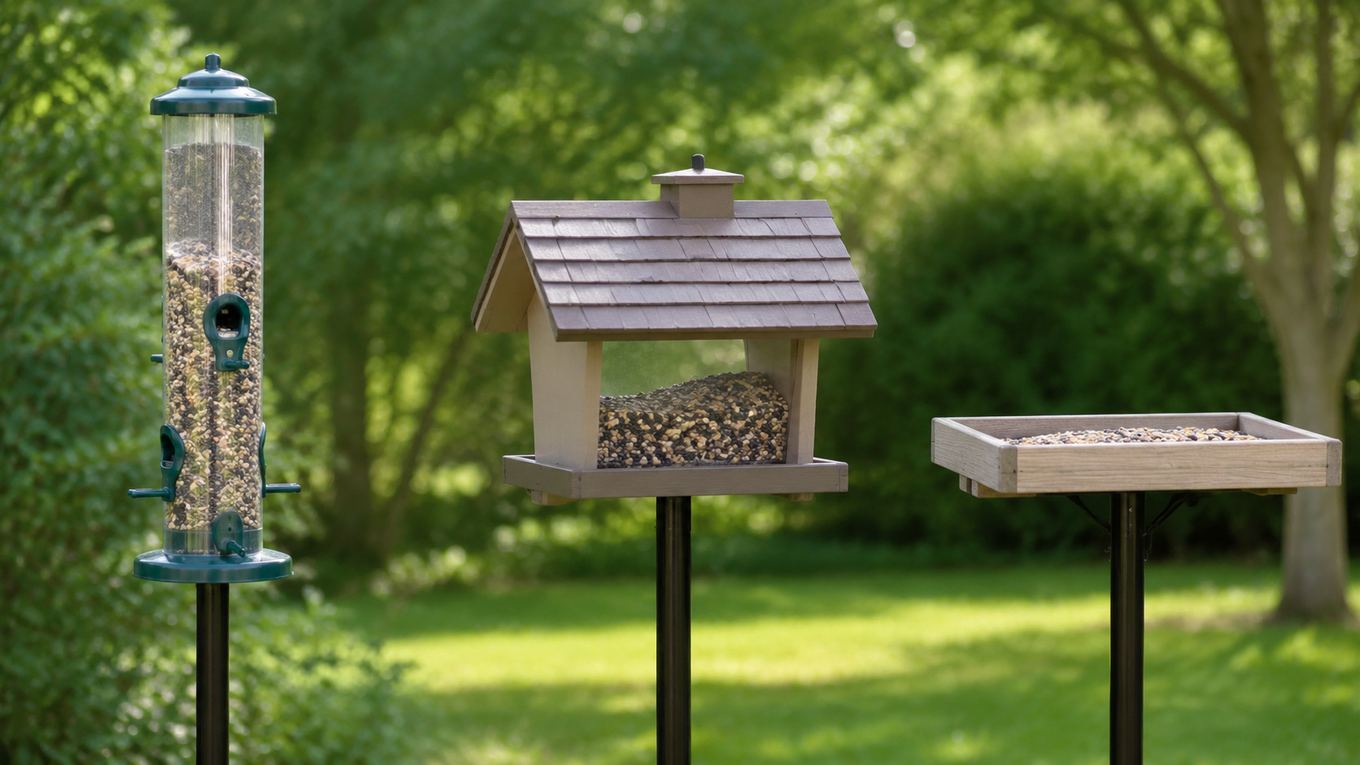
FolkIf you’ve read our complete guide to feeder types, you already know there are five common designs. But three of them — tube, hopper, and platform — cover general seed feeding and are usually the first real decision a new birder has to make. Here’s how they actually compare, side by side.
The short version
- Tube feeders are the most selective — short perches favor small birds and naturally exclude larger, seed-hogging species.
- Hopper feeders are the generalists — a roofed reservoir that protects seed from weather and welcomes a wider size range of birds.
- Platform feeders are the most open — no perch or port restricting who lands, which means the most species variety but also the least protection from squirrels and weather.
Side-by-side comparison
| Tube | Hopper | Platform | |
|---|---|---|---|
| Attracts | Finches, chickadees, titmice, nuthatches | Cardinals, jays, doves, sparrows, plus most tube-feeder birds | Widest variety, including ground-feeders like juncos and towhees |
| Squirrel vulnerability | Low–moderate | Moderate–high | High |
| Weather protection | Good | Good (roofed) | Low, unless roofed |
| Seed waste | Low | Low–moderate | Higher (open access, exposed to rain) |
| Best for | Targeting smaller species specifically | An easy all-purpose first feeder | Maximizing species variety, including ground-feeders |
How to decide, step by step
- Start with what you want to see. If you’re mainly after finches and chickadees, a tube feeder’s size-limiting perches do that filtering for you automatically.
- If you want one feeder that handles almost everything without much thought, a hopper feeder is the easiest single choice — it’s the closest thing to a default recommendation.
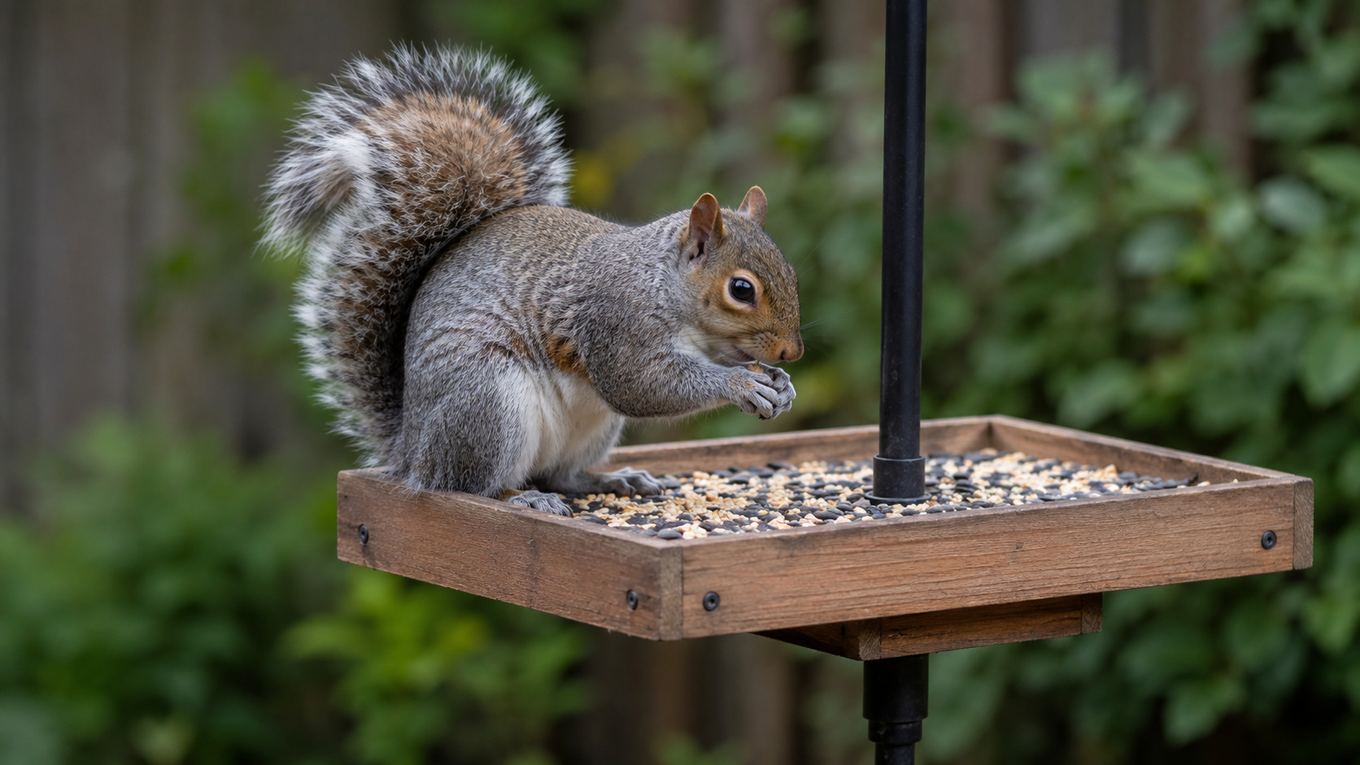
- Only choose a platform feeder first if squirrel and weather exposure aren’t a concern in your yard, since it’s the most exposed design on both fronts.
- If squirrels are a heavy presence, weight this decision alongside your squirrel-proofing setup — see our squirrel-proofing guides — rather than picking a feeder type in isolation.
Example: a roofed hopper feeder as an all-purpose starting point
Where each one struggles
- Tube feeders can clog with damp or moldy seed in the bottom ports if seed sits too long between refills, especially in humid weather.
- Hopper feeders have a wide, flat perching surface that gives squirrels an easier foothold than a tube feeder’s narrow perches.
- Platform feeders offer no barrier at all — they’re the easiest for squirrels and larger birds to dominate, and the most exposed to rain unless yours has a roof.
None of these are mutually exclusive — most established backyard setups end up running two or three feeder types at once, each doing a different job. If yard space is tight rather than squirrel pressure being the issue, our guide to feeders for small yards and apartments covers compact alternatives to all three of these.