 Folk
FolkA correctly sized box in the wrong spot fails just as often as the wrong box entirely — placement determines whether predators can reach it, whether it overheats in the afternoon sun, and whether the target species feels safe enough to move in at all.
Pole vs. Tree Mounting
Mounting directly on a tree trunk is the single most common placement mistake — it hands squirrels, raccoons, and snakes a direct climbing path straight to the entrance. A freestanding metal pole, set away from overhanging branches and fences, is far harder for a climbing predator to reach.
- Metal poles — smooth surface, hard for most predators to climb, and can be paired with a baffle for real protection
- Wooden posts — climbable by raccoons and squirrels even with effort; avoid unless paired with a baffle
- Tree trunks — the easiest access route for nearly every nest predator; avoid for ground-reachable heights
Predator Guards That Actually Work
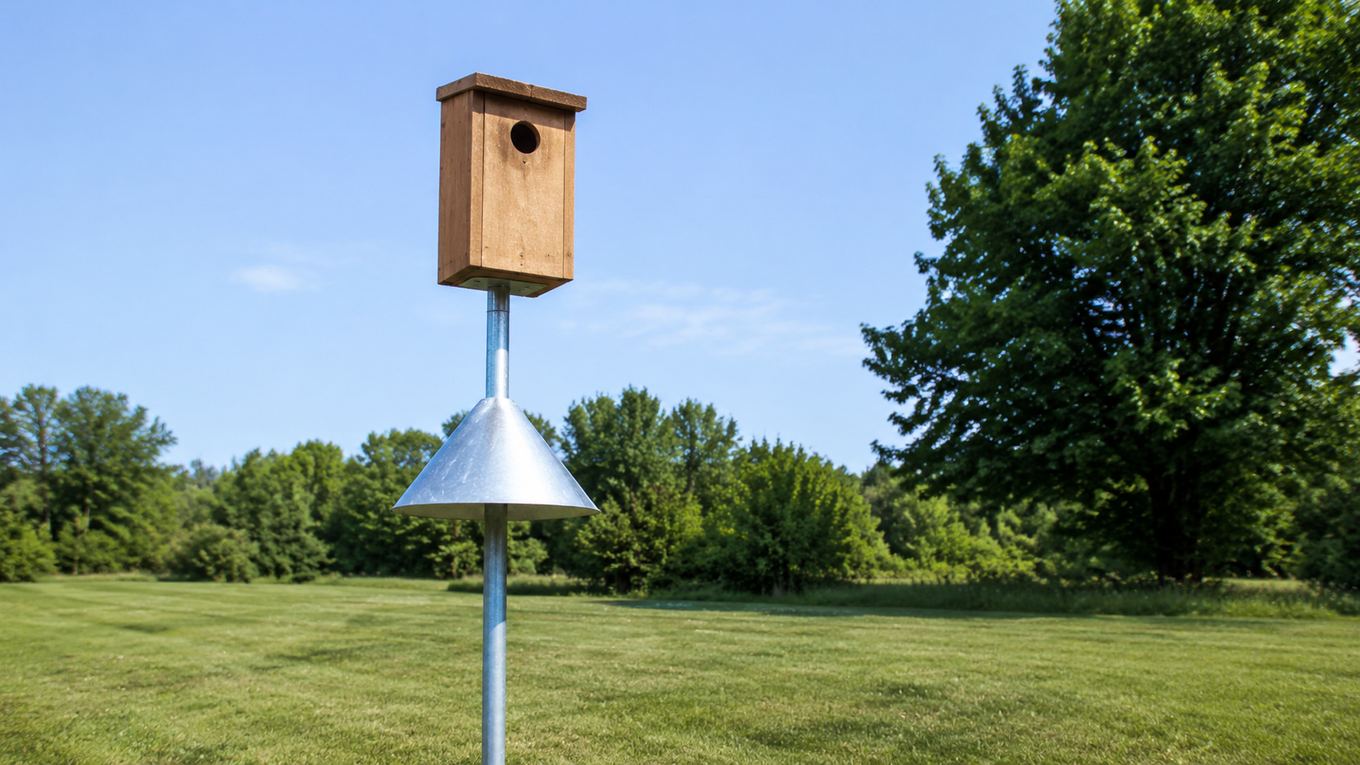
- A stovepipe or cone-shaped baffle mounted on the pole below the box blocks climbing predators the same way it blocks squirrels on a feeder pole
- Keep the box at least 10 feet from fences, overhanging branches, or rooflines — predators (and squirrels) can jump surprising distances to bypass a baffle entirely
- Avoid placing an external perch below the entrance hole — it gives predators, including cats, something to brace against while reaching in
- For ground-level threats like snakes, a wide baffle set several feet below the box is more effective than a narrow one right at the box’s base
Example: a cone-style predator baffle for a pole-mounted nest box
Direction and Height
| Factor | Recommendation | Why |
|---|---|---|
| Entrance direction | East or northeast | Avoids harsh, overheating afternoon sun and prevailing westerly weather |
| Distance from cover | 10–15 ft from dense shrubs for bluebirds; closer cover fine for wrens and chickadees | Matches each species’ natural nesting habitat |
| Height | Species-specific — see our dimensions guide | Too low invites ground predators; too high complicates monitoring and cleaning |
| Tilt | Very slight forward tilt | Helps rain shed away from the entrance instead of pooling inside |
When Placement Still Isn’t Working
If a well-placed, correctly sized box sits empty or keeps getting raided despite a baffle, a couple of overlooked details are usually the cause: a nearby perch giving predators leverage, cover close enough for a cat to stage an ambush, or a box mounted lower than the target species is comfortable with. Revisit height and distance from cover before assuming the box itself is the problem.
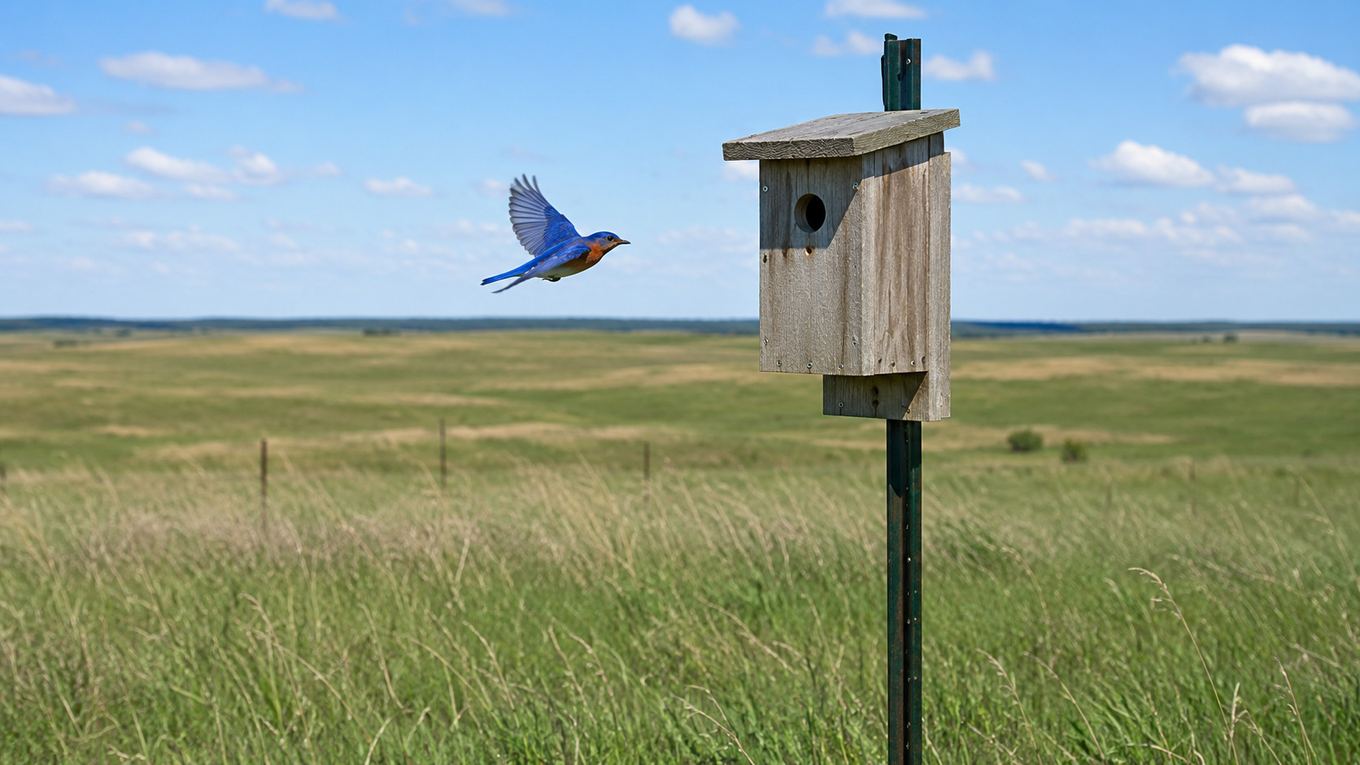
Correct placement protects what correct sizing already got right — see our nest box dimensions guide if you haven’t matched hole size and floor dimensions to your target species yet, and our pillar guide to birdhouses for the full setup process.