 Folk
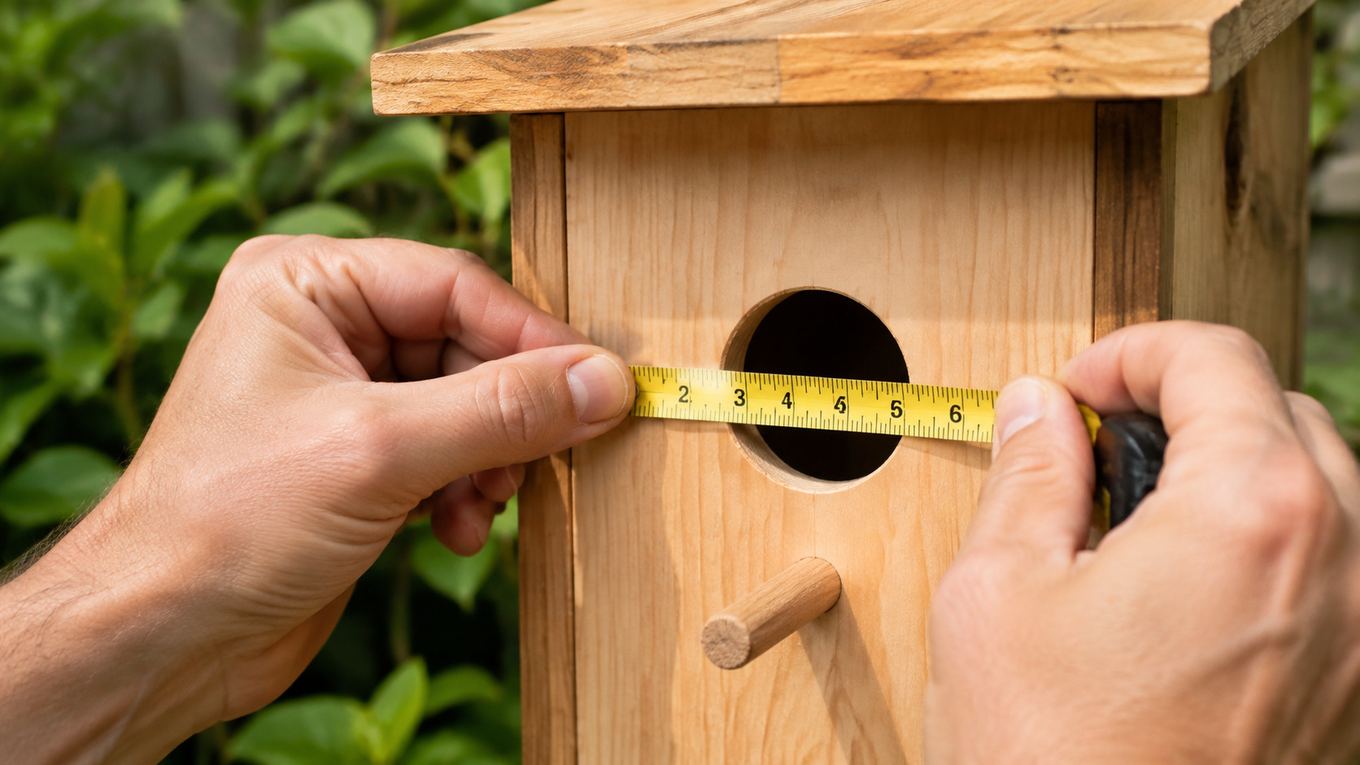
FolkEvery measurement on a nest box exists for a reason — hole size excludes the wrong species, depth below the hole keeps predators from reaching in, and mounting height matches where each species actually feels safe nesting. Here’s the full spec sheet for the cavity-nesters most likely to use a box in a US backyard.
Full Specs by Species
| Species | Hole diameter | Floor size | Depth below hole | Mounting height |
|---|---|---|---|---|
| Chickadees | 1⅛ in | 4×4 in | 6–8 in | 5–15 ft |
| House wrens | 1 in | 4×4 in | 6–8 in | 5–10 ft |
| Nuthatches | 1¼ in | 4×4 in | 6–8 in | 12–20 ft |
| Downy woodpeckers | 1¼ in | 4×4 in | 8–10 in | 6–20 ft |
| Bluebirds | 1½ in | 5×5 in | 6 in | 4–6 ft |
| Tree swallows | 1⅜ in | 5×5 in | 6 in | 5–10 ft |
| Hairy/red-headed woodpeckers | 2 in | 6×6 in | 8–12 in | 12–20 ft |
| Purple martins | 2⅛ in | Compartment or gourd | N/A | 12–20 ft, near open water |
| Screech owls/kestrels | 3 in | 8×8 in | 10–12 in | 10–30 ft |
| Wood ducks | 4×3 in (oval) | 10×18 in | 12–16 in | 10–20 ft, near water |
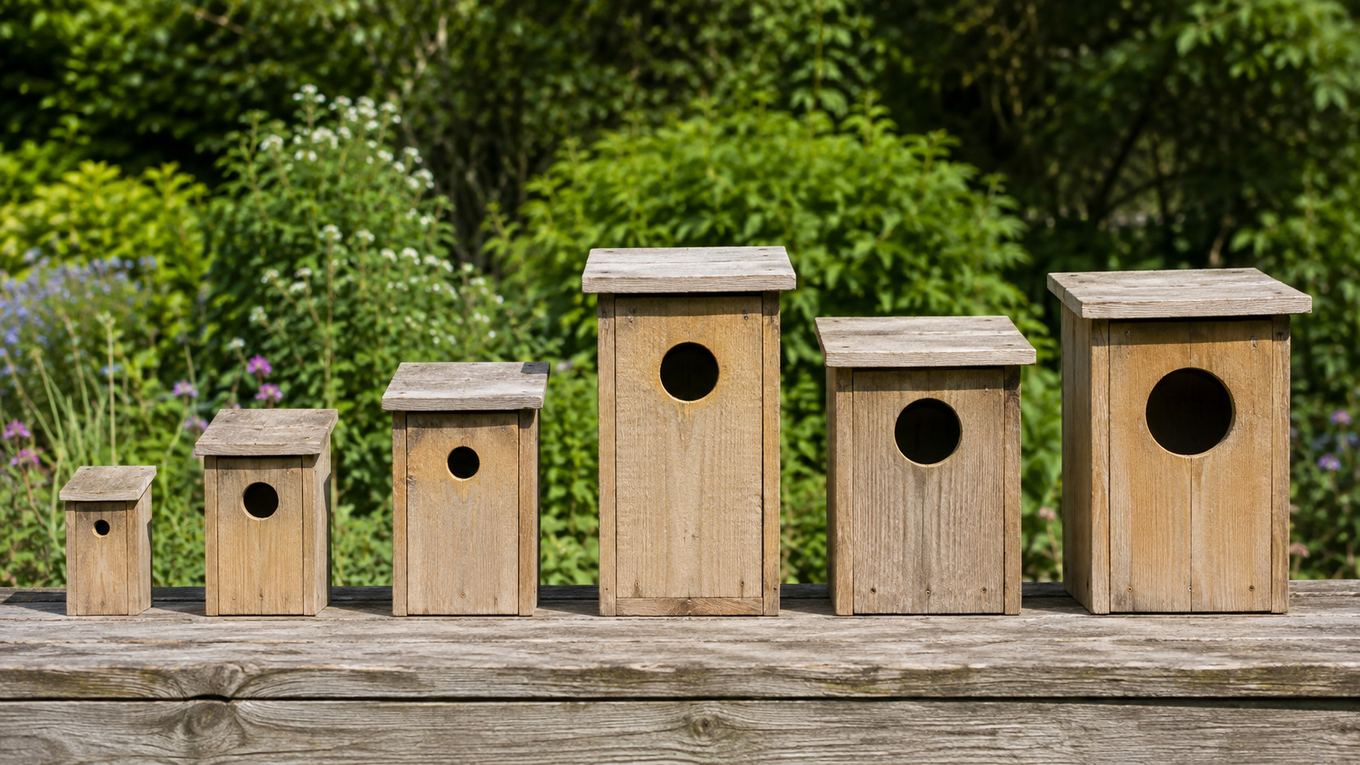
Example: an assortment of nest boxes pre-sized for common backyard species
Depth Below the Hole: Why It’s Not Optional
The distance from the entrance hole down to the nest floor isn’t just about box proportions — it’s a predator-safety measure. A shallow depth lets a raccoon, cat, or snake reach an arm or head far enough in to grab eggs or chicks even without fully entering the box:
- Small cavity-nesters (chickadees, wrens, nuthatches) need at least 6–8 inches below the hole
- Larger woodpeckers and owls need 8–12 inches or more, matching their larger predators’ reach
- Never shorten this dimension to save material — it’s one of the few specs where “close enough” genuinely isn’t
Round vs. Oval Holes
Most backyard species use a standard round hole, but a few need something different:
- Wood ducks require a horizontal oval entrance (roughly 4 by 3 inches) — their body shape doesn’t fit through a round hole sized to exclude predators
- Purple martins nesting in gourds often use a slightly different crescent-shaped or larger round opening depending on the gourd style
- Never round up a hole size “to be safe” — a slightly larger hole is exactly what lets in house sparrows and starlings, the two most common nest-box competitors
Using This Table
- Identify which species are already common in your yard or neighborhood — that’s a better guide than picking whichever species you’d most like to see.
- Match the hole diameter first; it’s the single spec most responsible for keeping out unwanted competitors.
- Check the depth-below-hole measurement on any box you’re buying or building — it’s frequently shortchanged on cheap pre-made boxes.
- Set mounting height based on the table, and see our placement and predator safety guide for direction and predator-guard details once height is sorted.
For the full setup process beyond just dimensions, see our pillar guide to birdhouses, and our DIY birdhouse plans if you’re building rather than buying.