 Folk
FolkFall migration doesn’t happen on a single date — it’s a six-to-eight week window that starts in late August for the earliest movers and stretches into October for the stragglers. Your feeding setup needs to change gradually along with it, not all at once. Here’s what to actually do, and when.
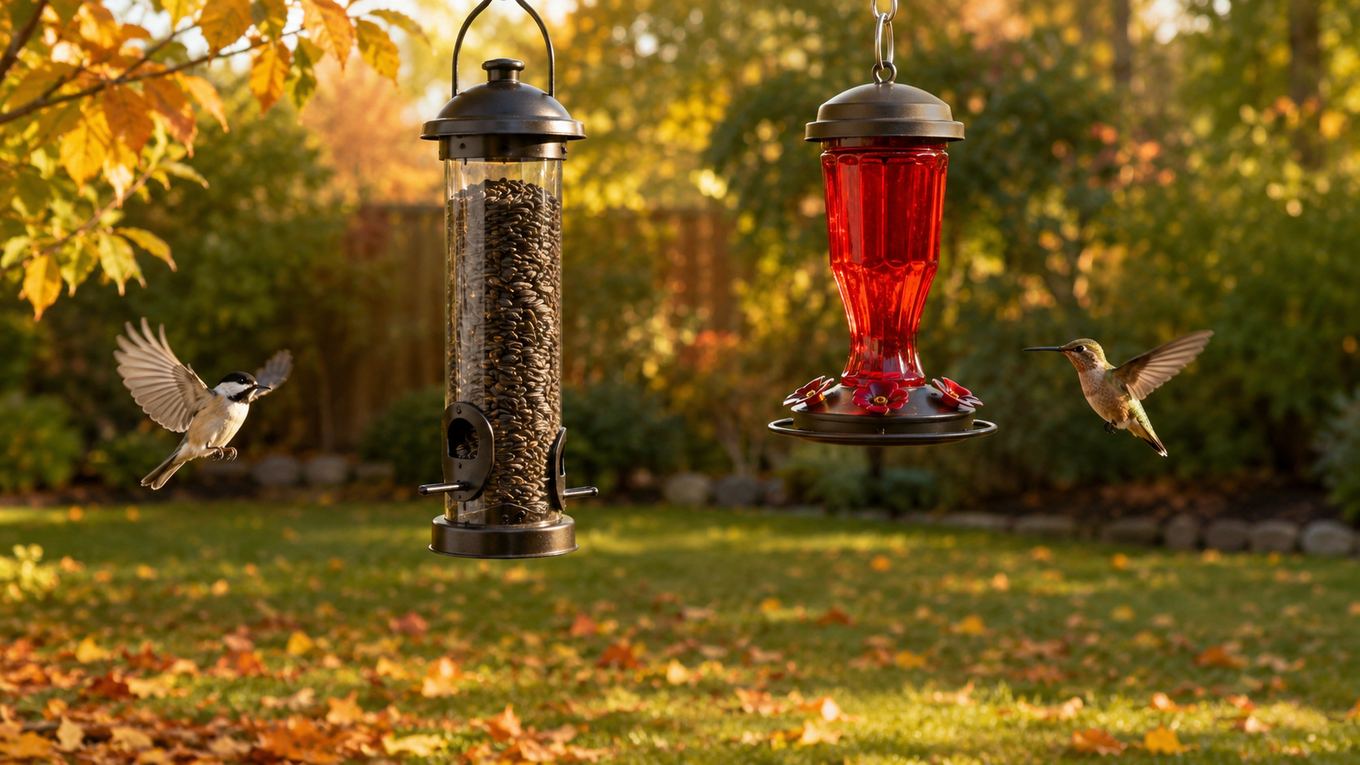
Don’t take hummingbird feeders down early
The biggest myth in backyard birding is that leaving a hummingbird feeder up too long “traps” birds and delays migration. It doesn’t. Migration timing is triggered by day length (photoperiod) and hormonal changes, not by the presence of a feeder — a hummingbird that’s ready to go will go, feeder or not.
What actually matters in fall:
- Keep the feeder up through early-to-mid October in most of the continental US (later in the Gulf Coast and Southwest, where a few individuals overwinter).
- Check nectar more often than you did in summer. Warm early-fall days spoil the standard 4:1 water-to-sugar mix faster than you’d expect, and a dip in daily visits can make it easy to forget a change is overdue.
- Take it down about two weeks after your last confirmed sighting, not on a calendar date.
Cornell Lab’s 4:1 recipe is the same one Audubon and the Smithsonian recommend — no dye needed:
- Bring 4 cups of water to a full rolling boil.
- Stir in 1 cup of white granulated sugar until fully dissolved (about 60 seconds).
- Let the mixture cool completely before filling the feeder.
- Skip the red dye — it isn’t necessary and both Cornell Lab and Audubon advise against it.
Add higher-fat foods as insects disappear
Summer feeding leans on foods that supplement a diet still rich in insects. Once insect populations crash with the first cool nights, birds need denser calorie sources to fuel migration or get through shorter, colder days.
- Suet becomes useful again once daytime temps reliably stay below 85–90°F (above that range it softens and turns rancid faster). Switch from any “no-melt” summer blend to a standard high-fat suet cake once you’re consistently under that mark.
- Black oil sunflower seed should make up the bulk of any general mix from here through winter — higher fat content per seed than striped sunflower, and easier for more species to crack open.
- Nyjer (thistle) feeders start earning their keep as goldfinches and other winter finches shift into flocking mode and search out reliable seed sources.
Example: a standard high-fat suet cake for the fall/winter switch
Fall feeding changes at a glance
| What | Summer setup | Fall switch |
|---|---|---|
| Hummingbird feeder | Up, check weekly | Stays up through Oct+, check more often, remove ~2 weeks after last sighting |
| Suet | “No-melt” summer blend | Standard high-fat suet once temps stay under 85–90°F |
| Seed mix | General mix | Shift toward black oil sunflower |
| Nyjer (thistle) | Optional | Refill as finches start flocking |
| Cleaning | Every 1–2 weeks | Every 1–2 weeks, done before fall traffic peaks |
Clean feeders before fall traffic picks up
Fall migration concentrates more birds at fewer reliable feeding spots than you’ll see at almost any other time of year, which means more beaks touching the same perches and ports in a given week. That’s a good reason to clean before the rush, not a reason to worry about any specific illness.
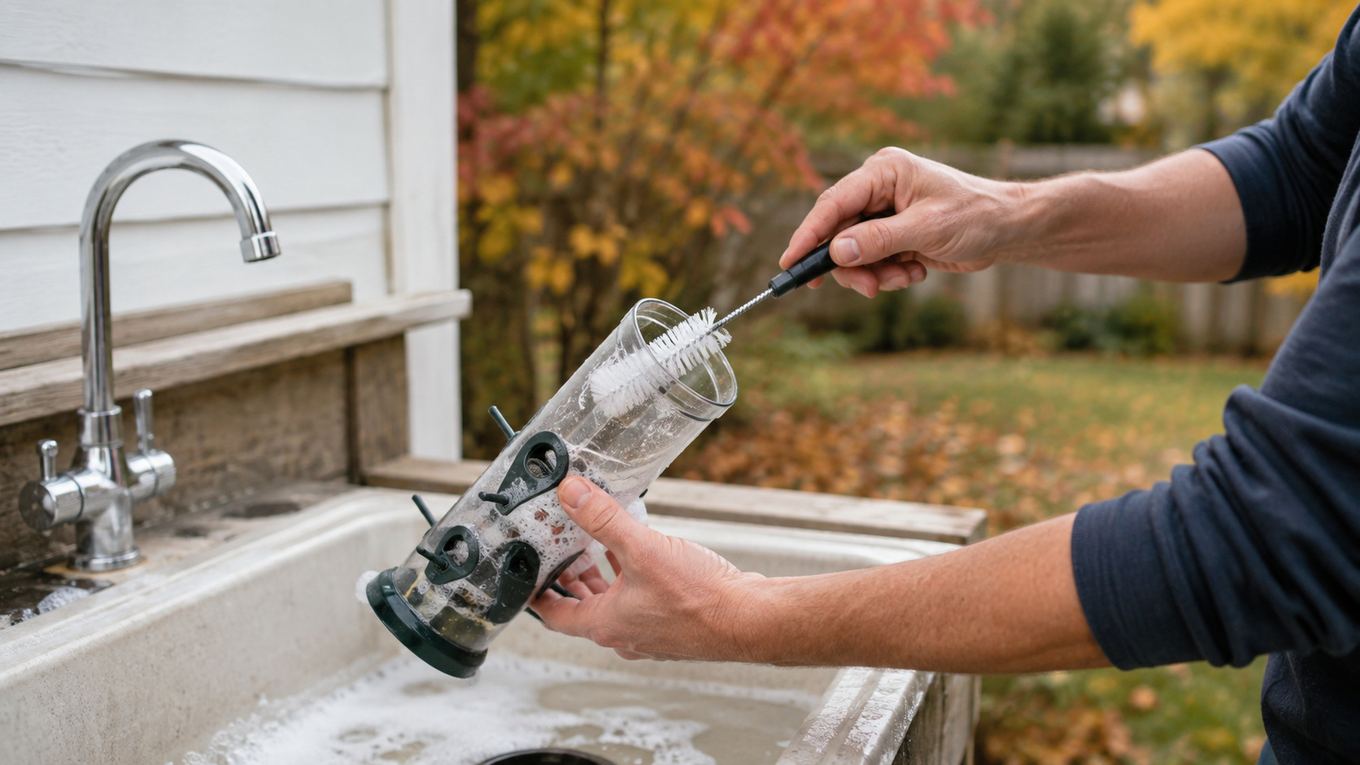
- Empty and scrub every feeder with warm water and a stiff brush; for a deeper clean, use a 1:9 bleach-to-water soak, then rinse thoroughly and let it air-dry completely before refilling.
- Do this every 1–2 weeks through the fall/winter feeding season, more often for nectar and any feeder that’s visibly soiled.
- Rotate feeders if you have multiples, so nothing sits full and stagnant while you’re mid-clean.
Example: a feeder-cleaning brush set sized for tube and hopper feeders
Expect a few unfamiliar faces
Migration brings species through your yard that never stop by the rest of the year — warblers, thrushes, and other insect-eaters passing through need quick calories and will sometimes take suet or mealworms even if they’re not regular feeder visitors. If something unfamiliar shows up at the suet cage in September, that’s more likely a migrant refueling than a new resident. (Curious what you’re looking at? See our species attraction guides.)
Get ahead of squirrels before they do
Squirrels shift into aggressive food-caching mode in fall, well before your feeders see peak bird traffic. If your squirrel-proofing setup (baffle height, pole distance from jump points, weight-activated ports) has drifted since spring, fall is the moment it gets tested hardest — fix it now rather than after seed disappears overnight for a week straight. For a full walkthrough, see our squirrel-proofing guides.
Quick fall checklist
- Keep hummingbird feeder up until ~2 weeks after last sighting; don’t take it down early
- Check nectar freshness more frequently as temperatures swing
- Switch to high-fat suet once daytime temps stay under 85–90°F
- Shift general mix toward black oil sunflower; refill nyjer feeders
- Deep-clean every feeder before fall traffic increases
- Re-check squirrel baffles and pole placement
Once fall winds down, feeding needs shift again — see our winter bird feeding guide for the next steps.