 Folk
FolkThe feeder aisle can be overwhelming — dozens of styles, sizes, and materials, all claiming to attract every bird in North America. For a first setup, none of that complexity matters. Most beginners do best with one feeder, one seed, and a good location. Here’s how to choose that first feeder without overcomplicating it.
Start with a tube feeder
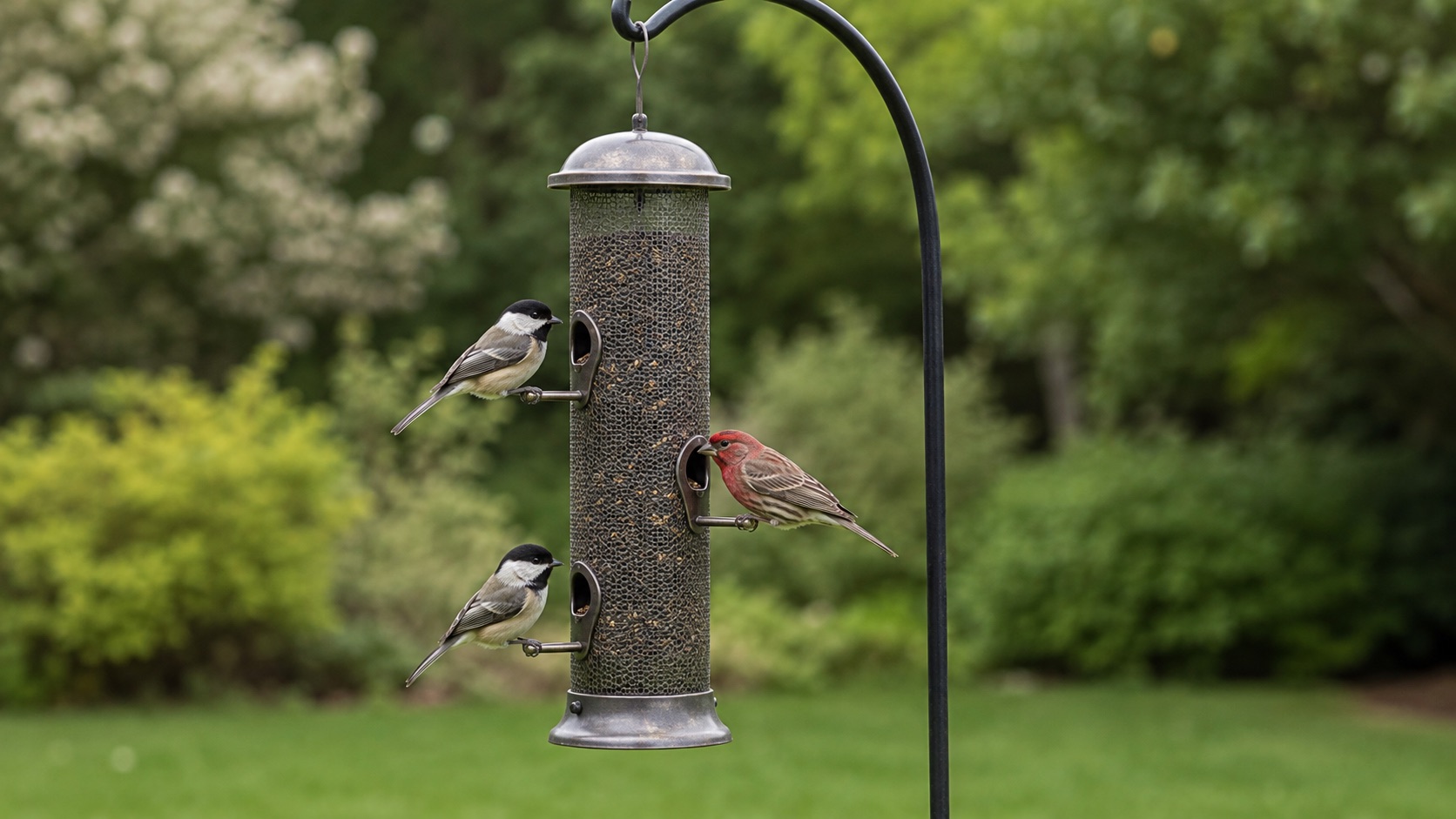
For most backyards, a tube feeder is the best first purchase. It’s the single style that attracts the widest variety of common feeder birds — chickadees, finches, nuthatches, titmice, and sparrows — while being easy to fill, easy to clean, and difficult for larger pest birds to dominate.
A basic tube feeder with 4–6 ports and a tray underneath to catch fallen seed covers the needs of most yards. Don’t buy the cheapest plastic one you can find — thin plastic cracks within a season — but you also don’t need to spend a lot. A mid-range tube feeder in the $20–40 range will outlast several cheap ones.
Recommended gearExample: tube feeders with metal-reinforced ports for durability
What to look for in a beginner feeder
Not all feeders are equally easy to live with. These four things make the biggest difference in whether a feeder stays in use long-term or ends up in a garage:
- Easy fill access — a wide lid that lifts or twists off cleanly. If refilling requires a funnel or spilling seed all over the ground, you’ll refill less often than you should.
- Removable bottom or drainage holes — wet seed is the main cause of mold; a feeder that traps water at the base is a maintenance problem from day one.
- Smooth interior surfaces — rough seams and corners inside the tube or hopper collect old seed and are nearly impossible to scrub clean. Look for seamless or two-piece construction.
- Metal ports and perches — squirrels chew through plastic ports quickly; metal-reinforced openings last far longer and keep port size consistent so birds can actually use them.
Feeder types at a glance
| Type | Best for | Maintenance | Beginner-friendly? |
|---|---|---|---|
| Tube feeder | Finches, chickadees, nuthatches | Easy | ✓ Yes — best first choice |
| Hopper feeder | Cardinals, jays, most species | Moderate | ✓ Yes — good second feeder |
| Platform/tray | Ground feeders, doves, sparrows | High (gets wet fast) | ✗ Not ideal to start |
| Suet cage | Woodpeckers, nuthatches | Very easy | ✓ Good add-on in fall/winter |
| Nyjer sock | Goldfinches only | Low | ✗ Too specialized for first feeder |
If you want a second feeder early on, a hopper feeder is the natural complement to a tube — it attracts a slightly different mix of birds including cardinals and jays that prefer a wider perch. For a full comparison of all feeder types, see our complete guide to bird feeder types.
What beginners should avoid
The feeder market is full of products that look attractive but create problems for new birders:
- Large platform feeders as a first feeder — they expose seed to rain and sun, spoil quickly, and attract every species including pigeons and starlings that can crowd out the birds you actually want to see
- Decorative feeders with complex shapes — any feeder you can’t disassemble and scrub with a bottle brush will develop mold problems within weeks
- Feeders smaller than 1 lb capacity — tiny feeders need refilling every day or two, which discourages consistent feeding; birds learn to stop checking a feeder that’s often empty
- “Wild bird mix” with filler seeds — milo, millet, and cracked corn in cheap mixes get ignored by most songbirds and pile up on the ground; stick with black oil sunflower to start
The seed matters as much as the feeder
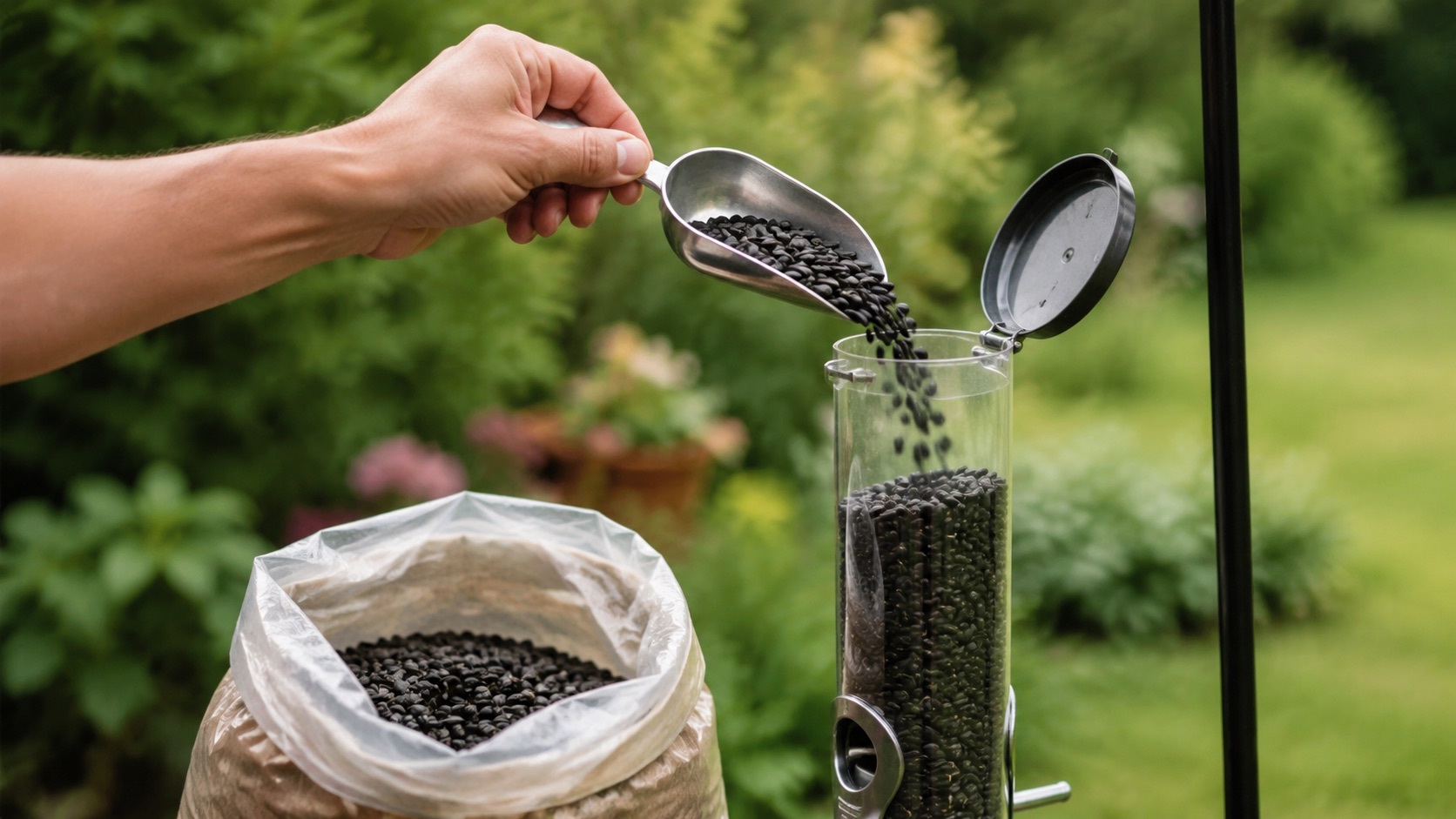
A good feeder stocked with the wrong seed will sit empty. Black oil sunflower seed is the single best choice for a first-time birder — it attracts more species than any other seed, it’s available everywhere, and almost nothing ignores it. Fill your tube feeder with black oil sunflower and you’ve covered 80% of common backyard birds.
Recommended gearExample: black oil sunflower seed for the widest species appeal
Once you have that working, bird seed mixes explained covers what the other seeds do and when they’re worth adding.
Setting up your first feeder for success
Where you put the feeder matters as much as which feeder you buy. A well-chosen location gives birds a clear line of sight to find it and cover nearby to retreat to:
- 5–6 feet off the ground — high enough to discourage cats, low enough to refill without a ladder
- Within 10–15 feet of shrubs or trees — birds need a quick escape route; a feeder in the middle of an open lawn gets used less than one near cover
- Either very close to a window (under 3 feet) or far from one (over 10 feet) — the middle distance is the danger zone for window strikes; see Cornell Lab’s window placement guidance if you’re unsure
- Away from areas with heavy squirrel traffic if possible — a baffle on the pole solves most squirrel problems once you know where to put it
Expect to wait 1–4 weeks before regular visitors appear. Birds find feeders by sight and by watching other birds — a new feeder in a new location takes time to get noticed. Don’t move it or change the seed during that window. For more on what to do (and not do) while you wait, see how to attract backyard birds.
Recommended gearExample: a feeder pole with squirrel baffle for a clean ground-level setup
Once your first feeder is working reliably, how many bird feeders do you need covers how and when to expand your setup without overdoing it.