 Folk
FolkA feeder that gets occasional visits is good. A feeder that’s busy from first light is better. The difference usually isn’t luck or location — it’s a handful of specific choices that compound: the right seed, the right place, water nearby, and cover to retreat to. Here are ten changes that reliably move the needle.
1. Switch to black oil sunflower seed
If you’re using a generic “wild bird mix,” the single highest-impact change you can make is switching to straight black oil sunflower seed. Most cheap mixes are padded with milo, red millet, and cracked corn that the majority of songbirds ignore — the appealing seeds get picked out and the rest piles up on the ground. Black oil sunflower works for chickadees, finches, nuthatches, titmice, cardinals, jays, woodpeckers, and most other common feeder birds. For a deeper look at what the other seeds attract, see our bird seed mixes explained guide.
Recommended gearExample: black oil sunflower seed in bulk for consistent refills
2. Add a second feeder type
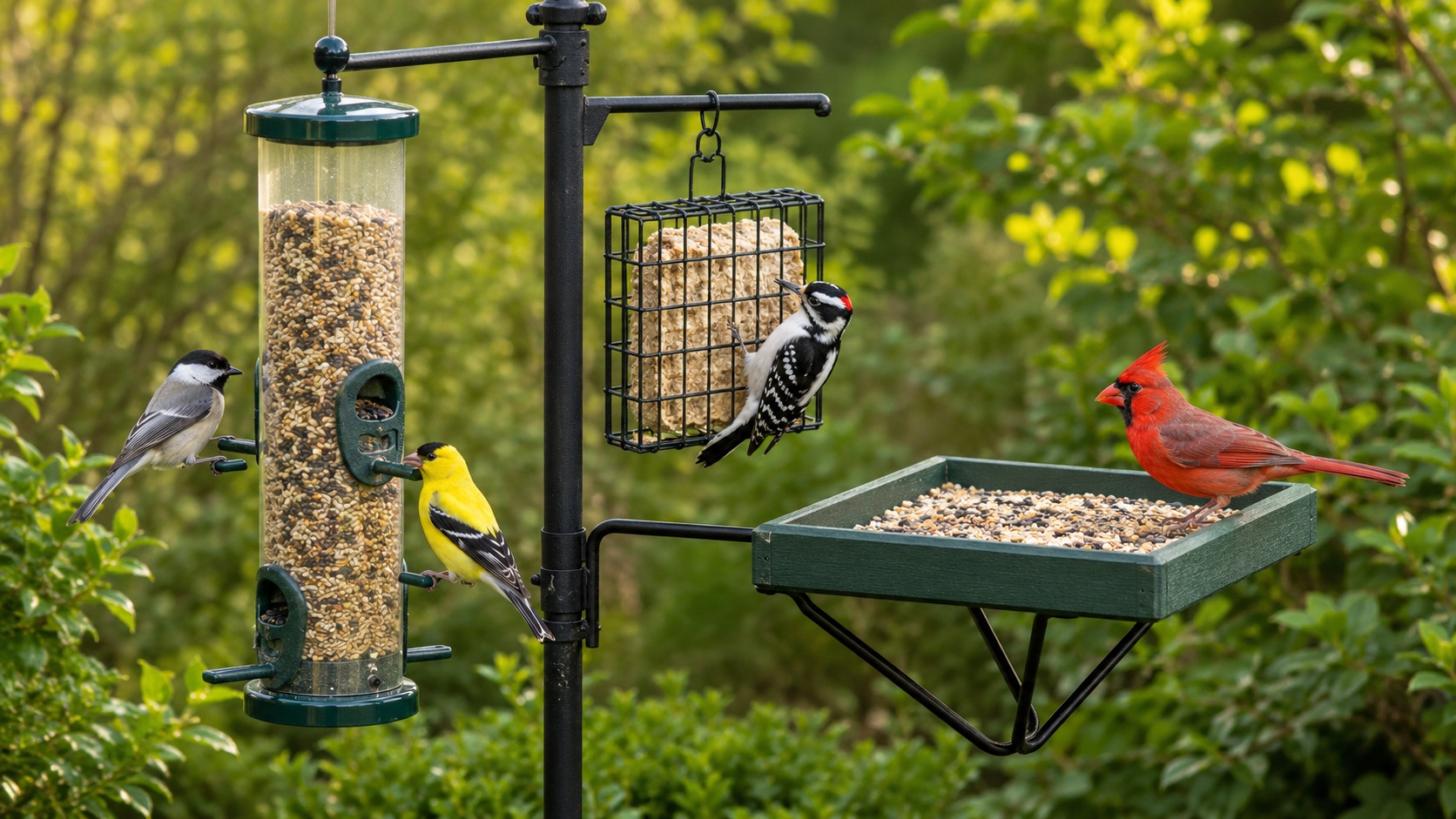
Different birds feed differently. A tube feeder draws clinging birds like chickadees and finches; a hopper or platform draws ground-feeding species like cardinals, sparrows, and doves that prefer a wider, more stable perch. Adding a suet cage in fall and winter brings in woodpeckers and nuthatches that tube feeders rarely attract. Two feeders of different types consistently outperform two feeders of the same type.
3. Move the feeder closer to cover
Birds visit feeders more frequently when shrubs or trees are within 10–15 feet. Cover provides a staging area — birds perch briefly to assess safety, then dash to the feeder and back. A feeder in the middle of an open lawn feels exposed and gets fewer visits than an identical feeder near a hedge, a dense shrub, or a tree line. If your current location is very open, try moving the feeder 10 feet closer to your nearest shrub or fence line and observe the difference over the following week.
4. Add a birdbath with moving water
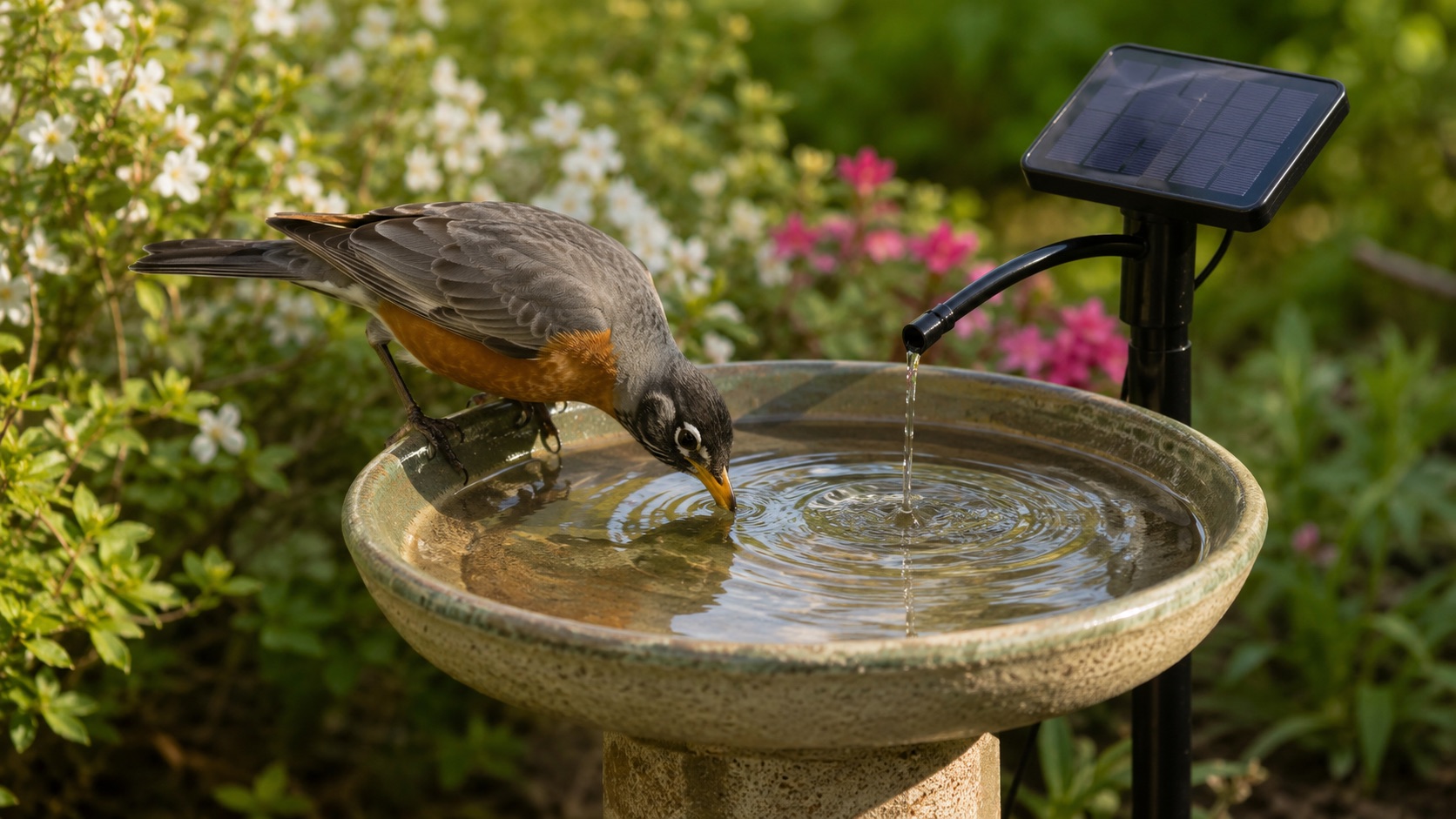
Water is the single most underrated attractant in backyard birding. Many birds that never visit seed feeders — warblers, thrushes, catbirds — will reliably come to water, especially if it moves. A dripper, mister, or recirculating pump creates sound and ripple that birds detect from a surprising distance.
- Change birdbath water every 1–2 days — stale water smells and looks unappealing, and becomes a mosquito breeding site within 72 hours.
- Place the bath within sight of shrubs so birds can perch, check safety, and move in.
- Keep depth at 1–2 inches — most songbirds are reluctant to use deep baths.
Example: solar-powered birdbath dripper for moving water without wiring
5. Keep the feeder consistently full
Birds learn reliable food sources through repeated positive experience. A feeder that’s frequently empty — especially at peak morning feeding times — gets dropped from the daily route. Refill before it runs out rather than after. If you’re away, a larger-capacity feeder buys more buffer time than a small one; a feeder that holds 4–5 lbs of seed keeps birds coming through a long weekend without going empty.
6. Clean the feeder more often than you think necessary
A dirty feeder drives birds away faster than an empty one. Wet seed, mold, and droppings accumulate in ports and at the base, and birds avoid feeders that smell or look wrong. A 1:9 bleach-to-water soak every 1–2 weeks, followed by a thorough rinse and complete drying, keeps visits consistent. For the full routine, see how often to clean and refill your bird feeder.
7. Add a nyjer feeder for goldfinches
American Goldfinches rarely use standard tube feeders — they prefer smaller ports sized for nyjer (thistle) seed. A dedicated nyjer sock or tube draws goldfinches, pine siskins, and common redpolls that you’d otherwise miss entirely. The seed is more expensive than sunflower but lasts a long time because finches eat it slowly. A single nyjer feeder often becomes the busiest feeder in the yard during spring and fall when finches are actively flocking.
8. Use hulled (no-mess) sunflower
Standard sunflower seed leaves piles of hulls under the feeder — hulls contain a compound that inhibits plant growth, kills grass over time, and creates a cleanup problem. Hulled sunflower (also called sunflower chips or hearts) eliminates the mess entirely and attracts the same birds, often more of them because even species that can’t crack shells — like house sparrows, song sparrows, and some warblers — can eat the exposed kernel directly. See our no-mess hulled birdseed guide for what to look for.
9. Plant native shrubs and trees nearby
The most durable way to increase bird activity is to improve the habitat around the feeder. Native shrubs — serviceberry, elderberry, viburnum, and native hollies — provide berries in fall that supplement seed feeders, and host the insects that birds need during nesting season. Birds that visit your native plantings often also visit the nearby feeder; the two reinforce each other. Native plants that attract birds are covered in detail in our guide to plants and flowers that attract birds.
10. Be patient after any change
Bird activity at feeders follows a learning curve — birds discover new food sources gradually, by watching other birds as much as by finding it themselves. After moving a feeder, switching seed, or adding a new feeder type, allow at least one to two weeks before judging the result. Activity typically builds slowly and then accelerates once a few regulars establish the habit and others follow.
Quick reference: what each change attracts
| Change | Birds it adds |
|---|---|
| Black oil sunflower | Most songbirds: chickadees, finches, nuthatches, cardinals |
| Nyjer feeder | Goldfinches, siskins, redpolls |
| Suet cage | Woodpeckers, nuthatches, creepers |
| Platform feeder | Cardinals, doves, sparrows, juncos |
| Moving water | Warblers, thrushes, catbirds — birds that skip seed feeders |
| Native shrubs | Broader variety, especially during nesting season |
For a deeper dive into attracting specific species, see our complete guide to attracting backyard birds.