 Folk
FolkA squirrel baffle sized to stop a 1-pound gray squirrel doesn’t do much against a 15–20 pound raccoon with hands strong enough to bend wire mesh. Raccoons need a different approach than squirrels — mostly because they’re nocturnal, and partly because they’re just bigger and more dexterous than anything else raiding your feeders.
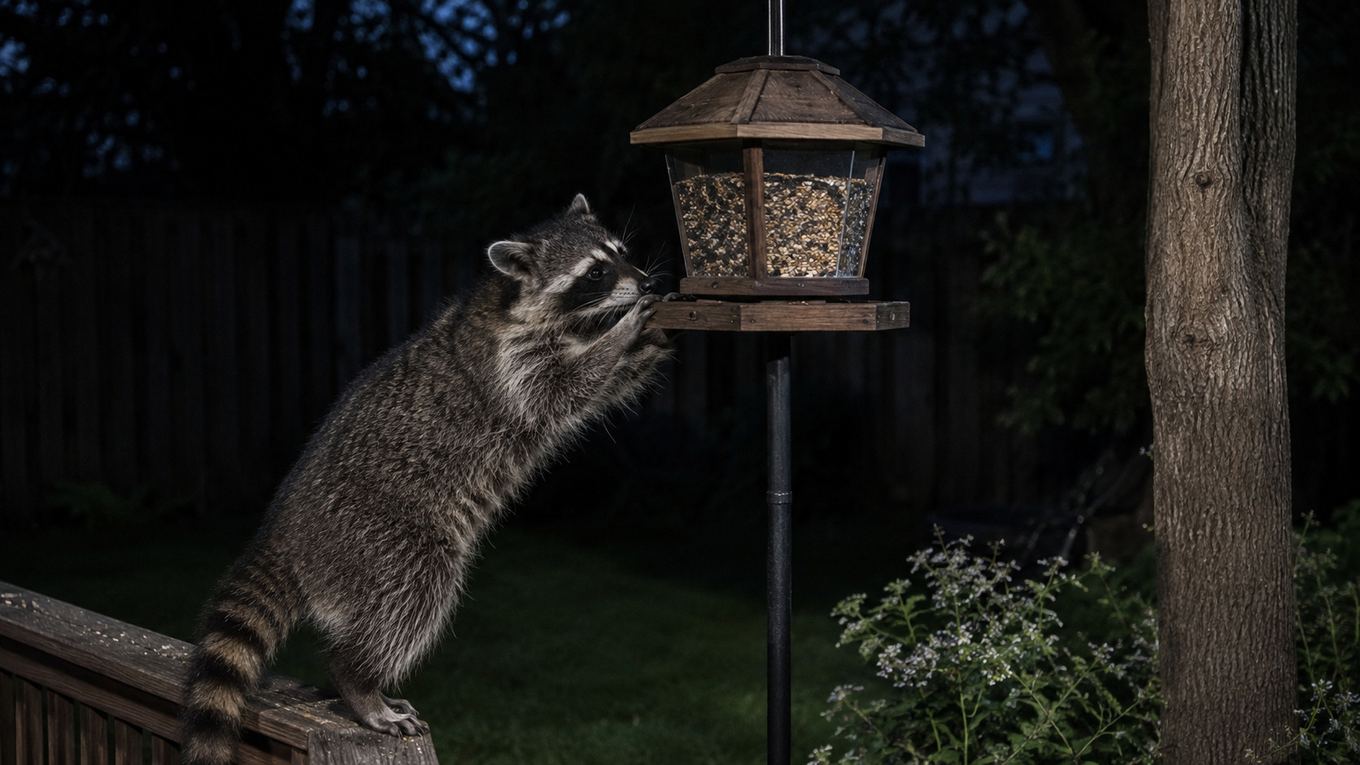
Why raccoons beat standard squirrel defenses
- They’re active at night, so you won’t see the damage happen — you’ll just find a knocked-over feeder or an empty one in the morning.
- They’re strong enough to bend or pry lightweight wire cages and plastic latches that stop squirrels without issue.
- They can climb almost anything a squirrel can, plus they’re heavy enough to bend thin poles that would hold a squirrel’s weight fine.
What actually works
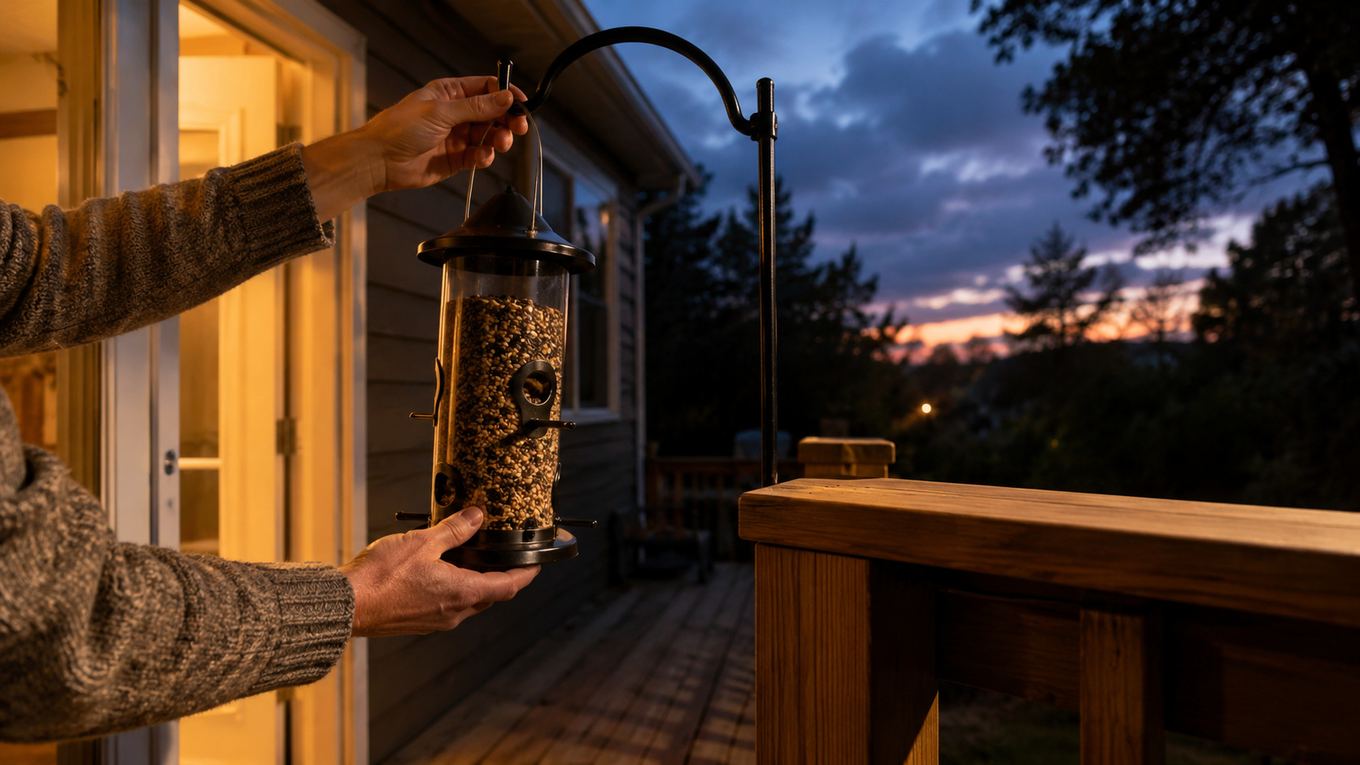
- Bring feeders in at night. This is the single most effective and lowest-effort fix — raccoons are primarily nocturnal, so a feeder that isn’t there after dusk simply can’t be raided. Bring feeders in roughly 30 minutes after sunset and put them back out in the morning.
- Motion-activated lights or sprinklers. These startle raccoons during their peak nighttime activity hours and work well as a first line of defense, though raccoons can habituate to a light alone if nothing else backs it up.
Example: a motion-activated yard light for nighttime deterrence
Raccoon deterrent methods compared
| Method | Effort | Effectiveness | Notes |
|---|---|---|---|
| Bring feeders in at night | Low (daily habit) | High | Most reliable single fix |
| Motion-activated lights/sprinklers | Low (one-time setup) | Moderate | Raccoons can habituate over time |
| Heavy-duty metal baffle (not standard squirrel size) | Moderate (one-time) | Moderate–high | Needs a larger, sturdier baffle than squirrel-rated ones |
| Removing other food sources (pet food, open trash) | Low | High, as a supporting step | Doesn’t stop feeder visits alone, but removes what draws them into the yard in the first place |
Set up your nighttime routine
- Pick one consistent time each evening — about 30 minutes after sunset — to bring hanging or removable feeders inside.
- Store any remaining seed in a sealed metal or thick plastic container; raccoons (and rodents) can chew through thin bags left in reach.
- Check your yard for other attractants: pet food left outside overnight, uncovered trash cans, or fallen seed under feeders all pull raccoons into the area even if the feeder itself is secured.
- If you can’t bring feeders in every night, add a motion-activated light near the feeding station as a supplementary deterrent — it won’t be perfect alone, but it reduces visits.
- For pole-mounted setups you can’t remove nightly, upgrade to a heavier-gauge metal baffle rated for raccoon weight rather than a standard squirrel dome baffle, which can bend or be climbed around by something that size.
A quick note on other nighttime visitors
Raccoons are the most common heavy nighttime feeder pest in most US backyards, and the same bring-it-in-at-night approach works just as well against opossums. If you’re in bear country, treat that as a separate, more serious issue — nightly removal isn’t enough on its own, and local wildlife agencies typically recommend pulling feeders entirely for the season rather than just overnight.
None of this replaces daytime squirrel-proofing — raccoons and squirrels are different problems that happen to share a feeding station, and most yards eventually need defenses against both.