 Folk
Folk“Squirrel-proof” gets printed on a lot of packaging that doesn’t earn it. Before buying anything with that label, it helps to know which two or three mechanisms actually hold up, so you’re evaluating the feeder itself rather than trusting the box.
The designs that actually work
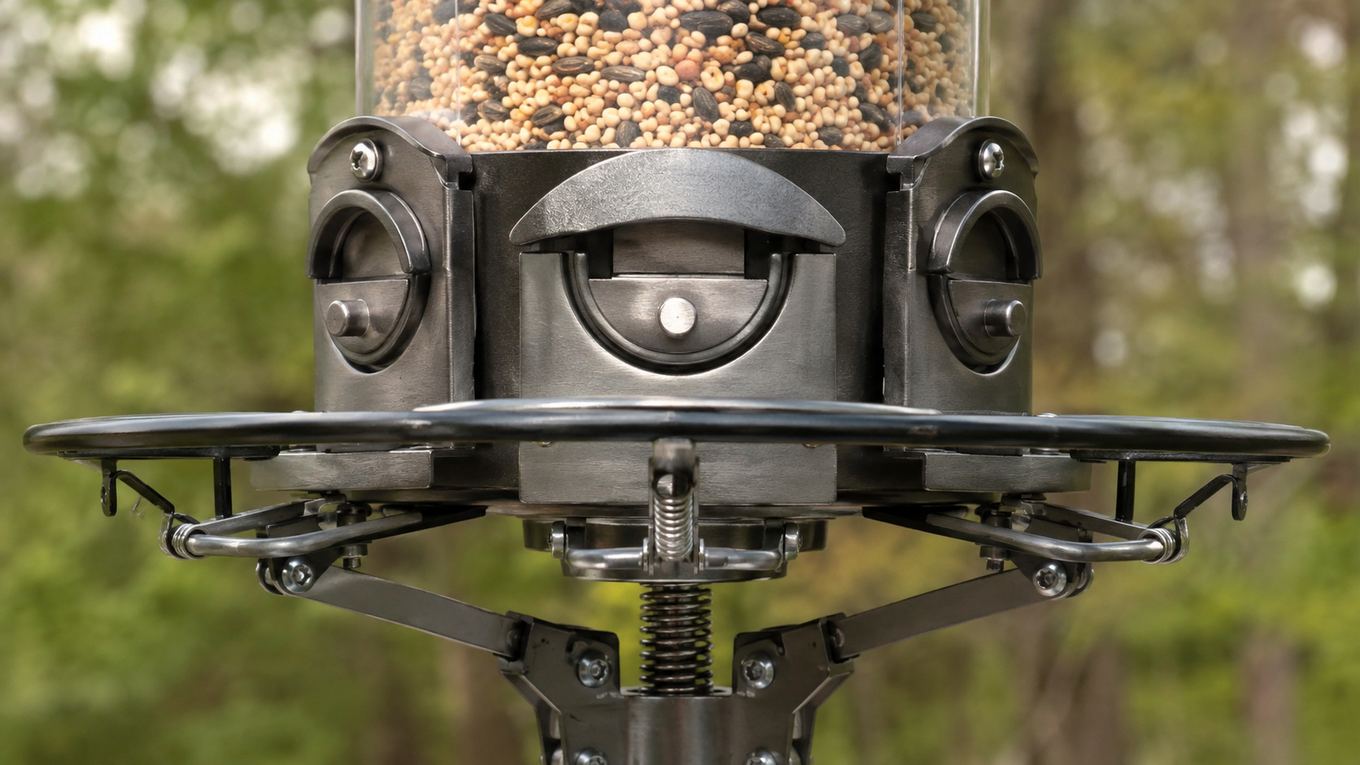
- Weight-activated feeders use a spring-loaded perch ring or cage that drops down and closes the seed ports the moment something heavier than a typical songbird lands on it. Most are adjustable, so you can tune the trigger weight for your local bird species.
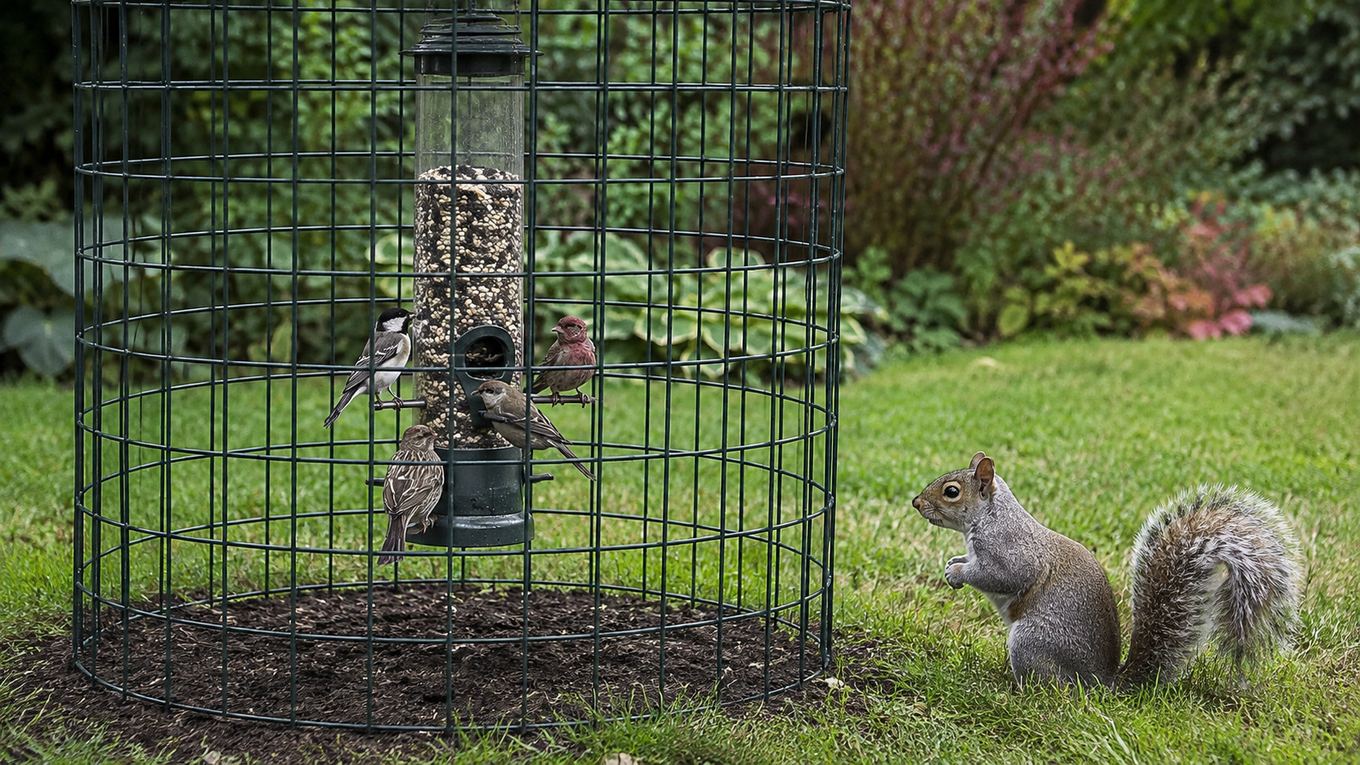
- Cage or mesh-enclosed feeders surround a standard tube or hopper feeder with a wire barrier sized to let small birds pass through to feed while keeping a squirrel’s body out entirely.
Both are mechanical solutions — they work regardless of pole placement, which makes them a good second layer even if your baffle and pole setup is already solid.
Recommended gearExample: a weight-activated feeder with an adjustable trigger
Feeder mechanisms compared
| Design | How it blocks squirrels | Best for | Watch out for |
|---|---|---|---|
| Weight-activated | Closes ports under excess weight | Yards with one main feeder | Trigger weight needs occasional readjustment |
| Cage/mesh-enclosed | Physical barrier around the feeder | Retrofitting an existing feeder | Mesh size must be small enough — check specs |
| Baffled hopper (pole-mounted) | Relies on correct baffle height/distance | Whole-station squirrel-proofing | Only as good as the pole setup around it |
| “Squirrel-resistant” claims with no mechanism | Marketing only | Nothing reliably | Common on budget feeders — read the actual design, not the label |
What to check before buying
- Look for a stated trigger weight (for weight-activated designs) or mesh gauge (for cage designs) in the product specs — if neither is listed, the “squirrel-proof” claim is likely just marketing.
- Check that the mechanism is metal, not plastic, at the stress points — plastic springs and latches wear out or get chewed through within a season or two.
- Confirm the feeder is still easy to clean with the cage or mechanism in place; a squirrel-proof design that makes refilling and cleaning a hassle tends to get skipped, which defeats the point.
- Read a handful of real buyer reviews specifically mentioning squirrels, not just the product description — squirrel behavior varies enough regionally that real-world reports are more reliable than the spec sheet alone.
Signs a feeder is genuinely well-designed
- The mechanism (spring, cage, or latch) is visible and explained, not just implied by the word “proof” in the name.
- Replacement parts (springs, cages) are sold separately, which signals the maker expects the feeder to be used for years, not one season.
Red flags to skip
- “Squirrel-proof” claimed on an otherwise standard open hopper or platform feeder with no added mechanism at all.
- Reviews mentioning squirrels chewing through the housing within weeks — usually a sign of plastic at stress points.
However good the feeder, it still performs best paired with correct pole distance and baffle height — the mechanism is a backup layer, not a substitute for getting the setup right in the first place.