 Folk
FolkWhere you put a feeder matters as much as what you put in it. The same tube feeder stocked with black oil sunflower will get dramatically different traffic depending on whether it’s 8 feet from a hedge or 30 feet from the nearest cover. Placement affects how quickly birds find a feeder, how often they return, and how many problems — window strikes, squirrel raids, spoiled seed — you’ll deal with long-term.
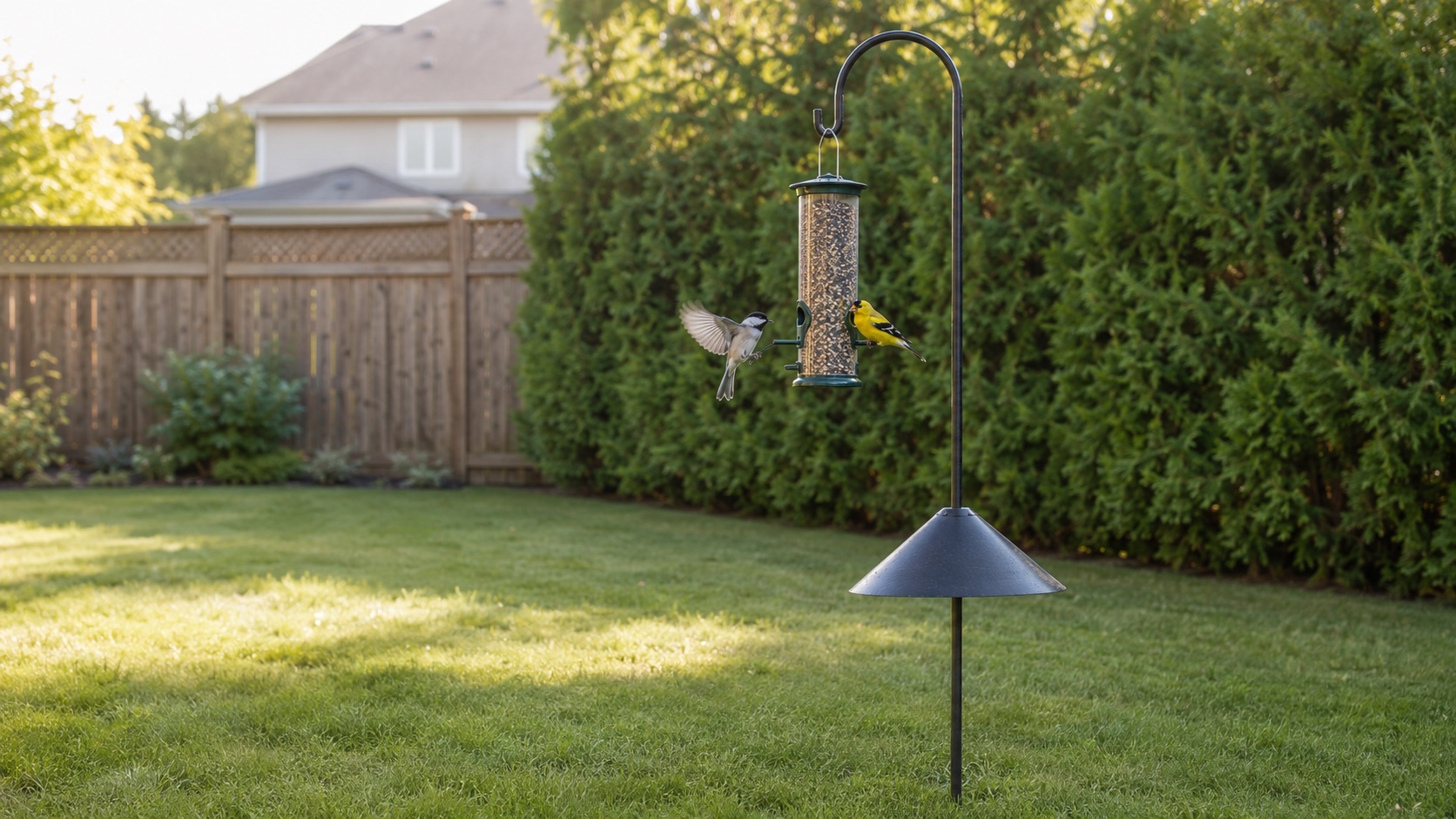
Height: 5–6 feet off the ground
For most feeder types, 5–6 feet is the practical sweet spot:
- High enough to keep the feeder out of reach of most ground predators (cats, raccoons) and reduce the temptation for children or dogs to disturb it.
- Low enough to refill comfortably without a step stool, and to watch birds at eye level from a window or sitting position.
- Within the comfort zone of most common feeder birds — chickadees, finches, cardinals, and nuthatches are all accustomed to feeding at this height in the wild.
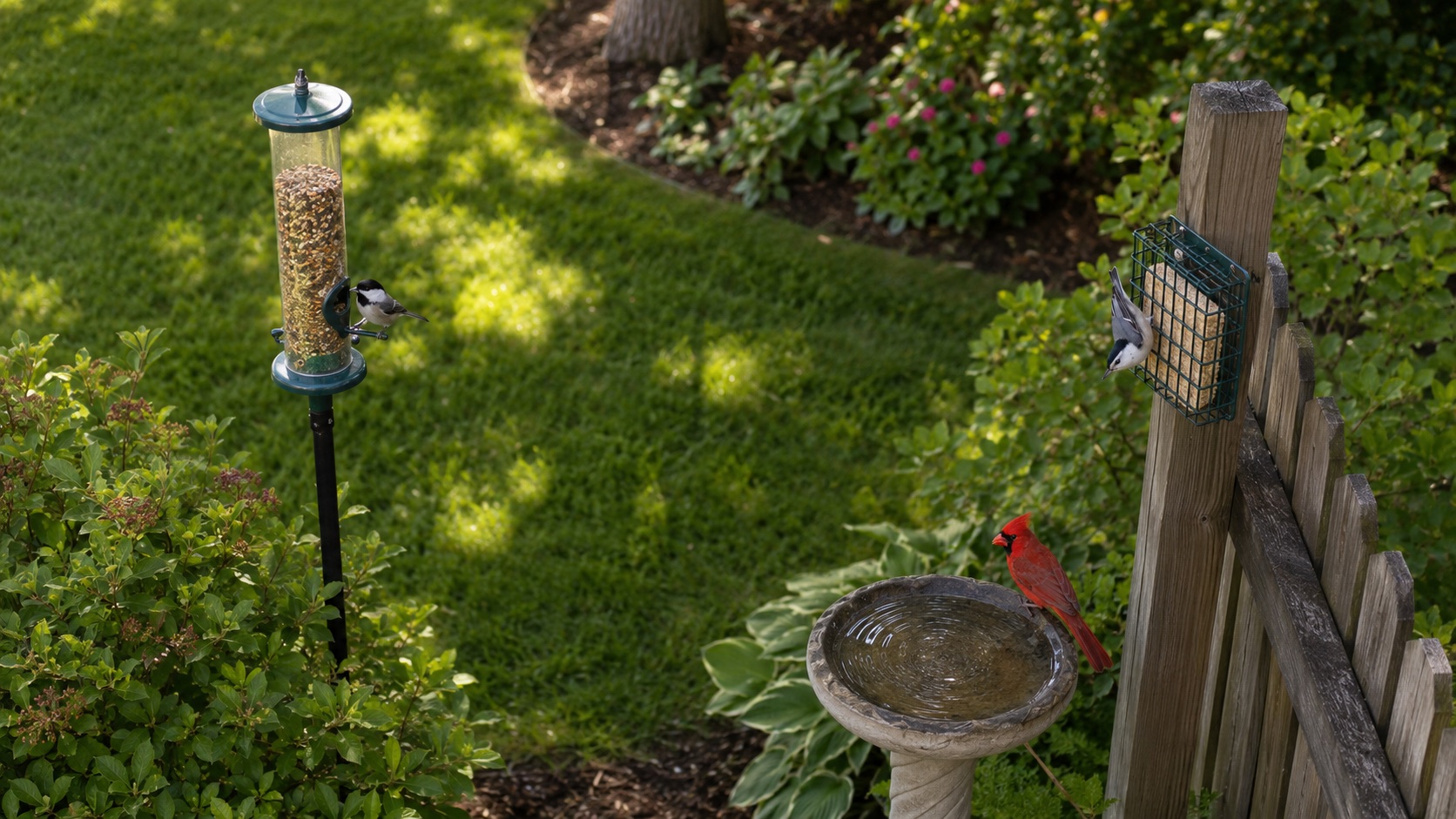
Suet cages are the exception: mounting one on or near a tree trunk at any height — from 4 to 8 feet — works well because woodpeckers and nuthatches associate vertical bark with safety. Platform feeders are often lower, at 3–4 feet, to accommodate ground-feeding species like doves and sparrows.
Recommended gearExample: shepherd’s hook poles for freestanding feeder setups
Distance from cover: 10–15 feet from shrubs or trees
Birds don’t fly straight to a feeder — they approach in stages, landing briefly in nearby cover to assess safety before moving in. A feeder with a clear staging area nearby gets more visits per hour than one placed in the open.
The ideal setup:
- Position the feeder 10–15 feet from the nearest dense shrub, hedge, or tree with branches.
- Make sure the cover is thick enough to provide real shelter — a single sapling doesn’t count.
- Leave open space between the cover and the feeder so cats can’t use the shrubs as ambush cover (a gap of 8–10 feet between the last branch and the feeder is enough).
- If your yard has limited cover, native shrubs like viburnum, serviceberry, or elderberry establish quickly and improve both bird diversity and feeder traffic.
More than 20–25 feet from cover and activity drops noticeably. Birds still find the feeder, but they visit less frequently and in smaller numbers.
Window strikes: the 3-foot and 10-foot rules
Window collisions kill hundreds of millions of birds in North America each year, and feeder placement is directly linked. Birds flushed from a feeder can hit a nearby window before they have time to turn.
- Under 3 feet from a window: safe. A bird launching from this distance doesn’t build enough speed to cause serious injury if it hits the glass.
- 3–10 feet from a window: the danger zone. This is far enough for a bird to reach full speed and close enough that a window is directly in the flight path. Avoid placing feeders in this range.
- More than 10 feet from a window: safe. Birds have enough space to redirect before reaching the glass.
If the only viable location is in the 3–10 foot zone, window decals or tape patterns break up the reflection and reduce strikes significantly.
Squirrel-proofing geometry
A feeder on a pole with a baffle is the most reliable squirrel solution, but the baffle only works if the pole is positioned correctly:
- At least 10 feet from any surface a squirrel can jump from: fences, deck rails, tree trunks, overhanging branches.
- At least 5 feet off the ground to the bottom of the baffle — squirrels can jump roughly 4 feet straight up from a standing position.
- The baffle should be at least 17 inches in diameter — smaller baffles can be gripped around the edge.
Moving an existing feeder that squirrels are raiding is often more effective than adding a new baffle to a badly positioned pole. For a full walkthrough of squirrel-proofing options, see our complete squirrel-proofing guide.
Recommended gearExample: pole-mounted squirrel baffles sized for standard feeder poles
Sun vs. shade
Feeders in direct afternoon sun have shorter windows before seed and nectar spoil, suet melts faster, and birdbaths heat to uncomfortable temperatures. Partial shade — dappled light under a tree, or a spot that gets morning sun but is shaded by afternoon — extends the life of every food type and reduces cleaning frequency.
Avoid placing feeders directly under a tree canopy where squirrels can drop down, branches create mess, and bird droppings from overhead birds foul the seed. Just outside the drip line of a tree is usually the best balance.
How to space multiple feeders
Multiple feeders close together create competition that drives away the more timid species. Spacing them out reduces conflict and draws a wider variety of birds.
- Keep feeders for the same food type at least 10–12 feet apart so dominant birds can’t guard both at once.
- Different feeder types (tube + suet cage, or hopper + nyjer) can be closer together — birds feeding on different foods don’t compete for the same resource.
- A second feeding station on the opposite side of the yard, out of sight of the first, effectively doubles your capacity without triggering territorial behavior.
For guidance on how many feeders to run simultaneously, see how many bird feeders do you need.
Placement at a glance
| Factor | Recommended | Avoid |
|---|---|---|
| Height | 5–6 ft (most types); on trunk for suet | Under 3 ft (predator access) |
| Distance from cover | 10–15 ft from dense shrubs/trees | More than 20–25 ft (low traffic) |
| Window distance | Under 3 ft or over 10 ft | 3–10 ft (strike zone) |
| Squirrel jump clearance | 10 ft from any structure | Near fences, decks, branches |
| Sun exposure | Morning sun, afternoon shade | Full afternoon sun |
| Feeder spacing (same type) | 10–12 ft minimum | Same pole or within 5 ft |
Common placement mistakes
Once a feeder is up it tends to stay where it is, which is how placement problems persist for years without being noticed. The most common ones:
- Placing the feeder against a window “for a better view” and landing in the 3–10 ft strike zone
- Setting up a pole 5 feet from a fence and wondering why the baffle doesn’t work
- Putting a seed feeder directly under a dense tree that gives squirrels a drop-down route
- Placing the feeder so far from cover that it gets occasional visits but never becomes a daily stop for a reliable flock
A well-placed feeder with average seed often outperforms a poorly placed feeder with premium seed. If your current setup is quiet, try adjusting position before changing what’s in it — movement is disruptive short-term but often fixes the underlying problem. For a full look at what else affects traffic, see how to attract more birds to your feeder.
Recommended gearExample: window feeders designed for safe close-range viewing under 3 feet