 Folk
Folk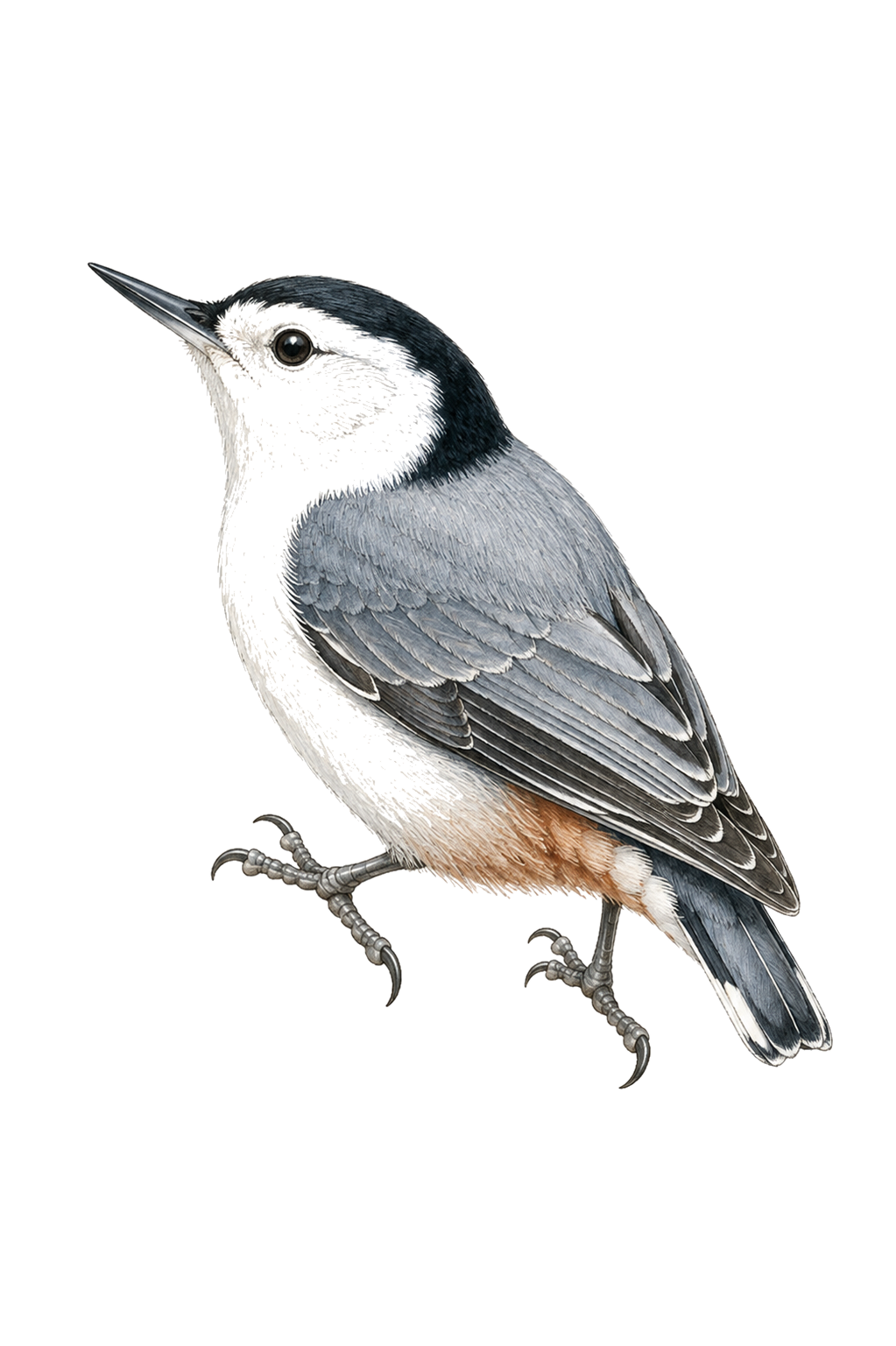
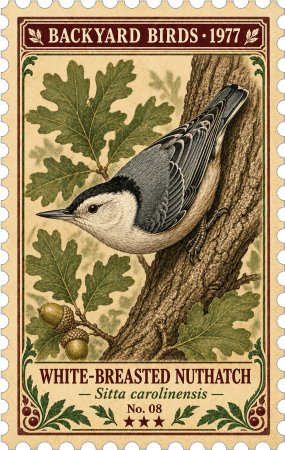
White-breasted Nuthatch
Sitta carolinensis
A compact, agile bird that descends tree trunks headfirst and visits suet cages and peanut feeders year-round with a distinctive nasal call.
Attracting White-breasted Nuthatch
White-breasted Nuthatches are confident, reliable visitors to suet and peanut feeders. They move fast, take one item at a time, and cache most of what they collect — expect them to make many quick visits throughout the day.
Hang a Suet Cage on or Near a Tree
A basic wire suet cage near a large tree is the most reliable way to attract nuthatches. They feel most comfortable when the feeder mimics the vertical surface of a tree trunk.
Add a Peanut Mesh Feeder
Whole or halved unsalted peanuts in a mesh feeder are a nuthatch favorite. They grip the mesh, extract a nut, and fly off to wedge it into bark — returning many times per session.
Try a Log Feeder with Peanut Butter
A short section of log with holes drilled and packed with plain peanut butter draws nuthatches that enjoy probing behavior rather than open-tray feeding.
Best Foods for White-breasted Nuthatch
- SuetRendered suet cake in a vertical wire cage; high fat for active year-round birdsBest choice
- Peanuts (unsalted)Whole or halved peanuts in a mesh feeder; carried away one at a time and cachedBest choice
- Black oil sunflowerHulled seeds taken from tube feeders between suet visitsExcellent
- Peanut butter (plain)Smeared into drilled holes in a log feeder or packed into bark crevicesGood
Skip the seed mix
White-breasted Nuthatchs do not typically eat nyjer/thistle, or cracked corn. Standard backyard seed blends will not do much to attract them.
Ideal Feeder Setup
Best choice
A wire suet cage or peanut mesh feeder
Nuthatches forage by probing bark and wedging food into crevices — feeders that let them cling vertically and work a surface with their bill feel most natural to them.
- Vertical hanging or mounting (cage or mesh)
- Positioned on or near a tree trunk
- Clinging surface (wire, mesh, or textured wood)
- Away from feeders dominated by larger aggressive species
- Shaded to slow suet spoilage in summer
- Easy to unhook and clean


Make Your Yard Bird-Friendly
Do
- Mount the suet cage on a tree rather than a pole — nuthatches associate vertical bark with safety and comfort
- Leave dead snags standing — nuthatches excavate nest cavities and cache food in bark crevices
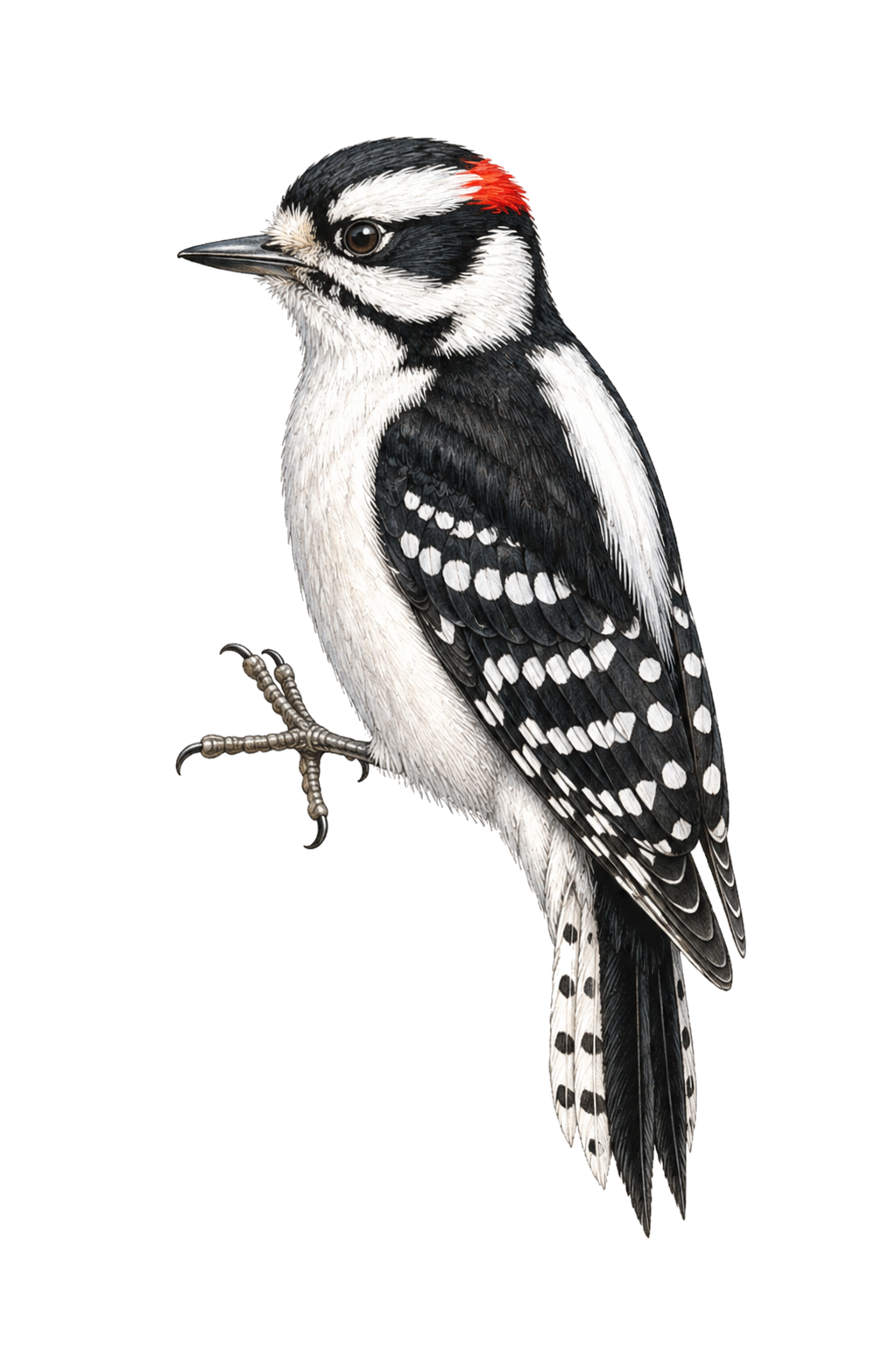
- Add a second feeder with peanuts if competition with Downy Woodpeckers is heavy at the suet cage
- Switch to a no-melt or bark-butter suet in hot weather — regular suet goes rancid quickly above 60°F
Avoid
- Placing food only on open flat platforms — nuthatches rarely use them
- Offering salted peanuts or seasoned nuts — sodium is harmful to small birds
- Hanging the suet cage in full afternoon sun — it melts and becomes rancid quickly
- Removing dead trees and large dead limbs from your yard — they are critical nesting and caching habitat
When You'll See Them
White-breasted Nuthatches are year-round residents and do not migrate. They are equally active at feeders in every season, though their loud nasal honking call makes them easy to hear even when they are foraging away from the feeder. Pairs tend to stay together on a permanent territory through the winter.