 Folk
FolkNot every yard has room for a freestanding pole, and a lot of feeders just hang from a deck hook or a tree branch instead. The 5-7-9 pole rule doesn’t directly apply when there’s no pole — but the same physics-over-willpower approach still works with two low-cost tricks.
The taut line trick
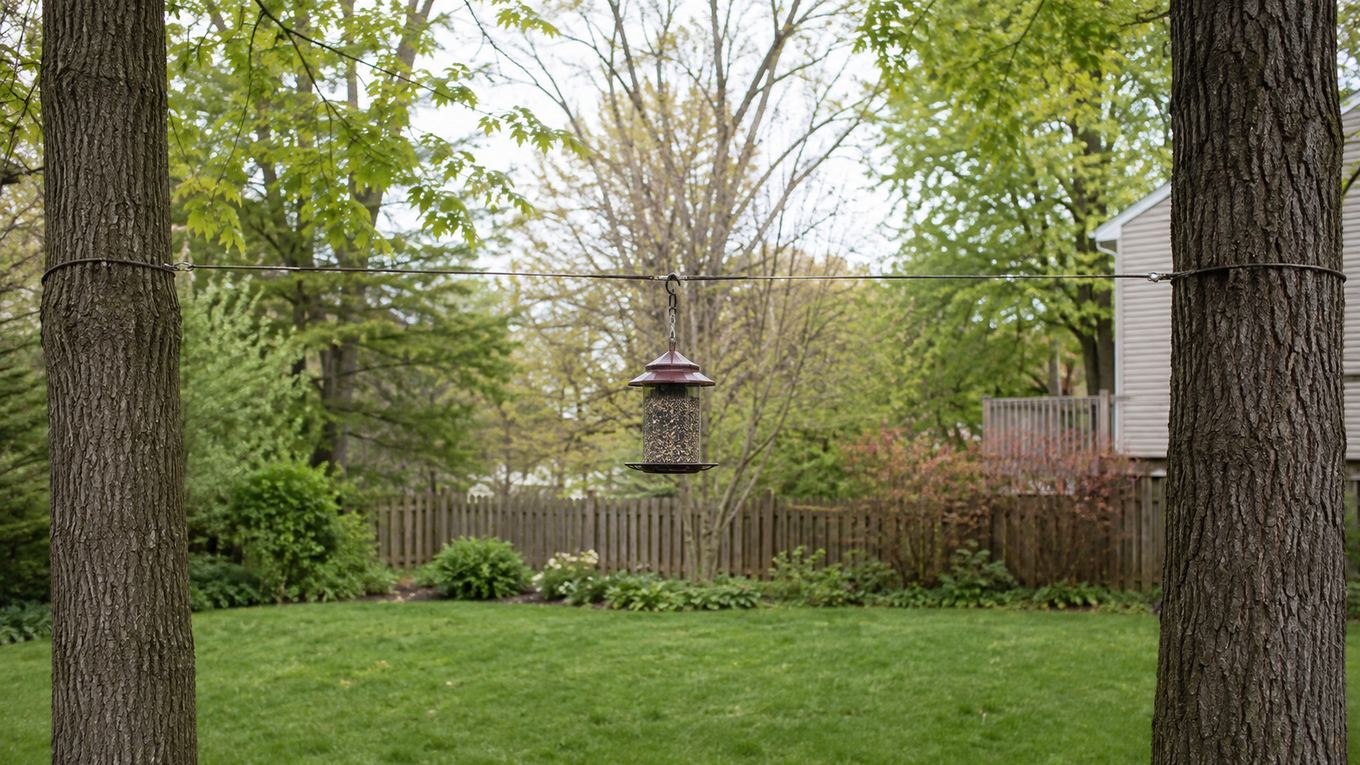
Instead of hanging a feeder from a solid hook, run a length of strong fishing line or thin wire tightly between two anchor points — two trees, or a tree and a post — and hang the feeder from the middle of that line.
- A thin, taut line gives a squirrel nothing to grip; unlike a branch or a solid hook, there’s no stable surface to balance on while shimmying toward the feeder.
- The line needs real tension. A loose or sagging line just becomes a wobbly bridge a determined squirrel can still cross.
- Keep the feeder itself at least a few feet from either anchor point, so a squirrel can’t lean or stretch from the tree trunk or post to reach it directly.
The slinky trick
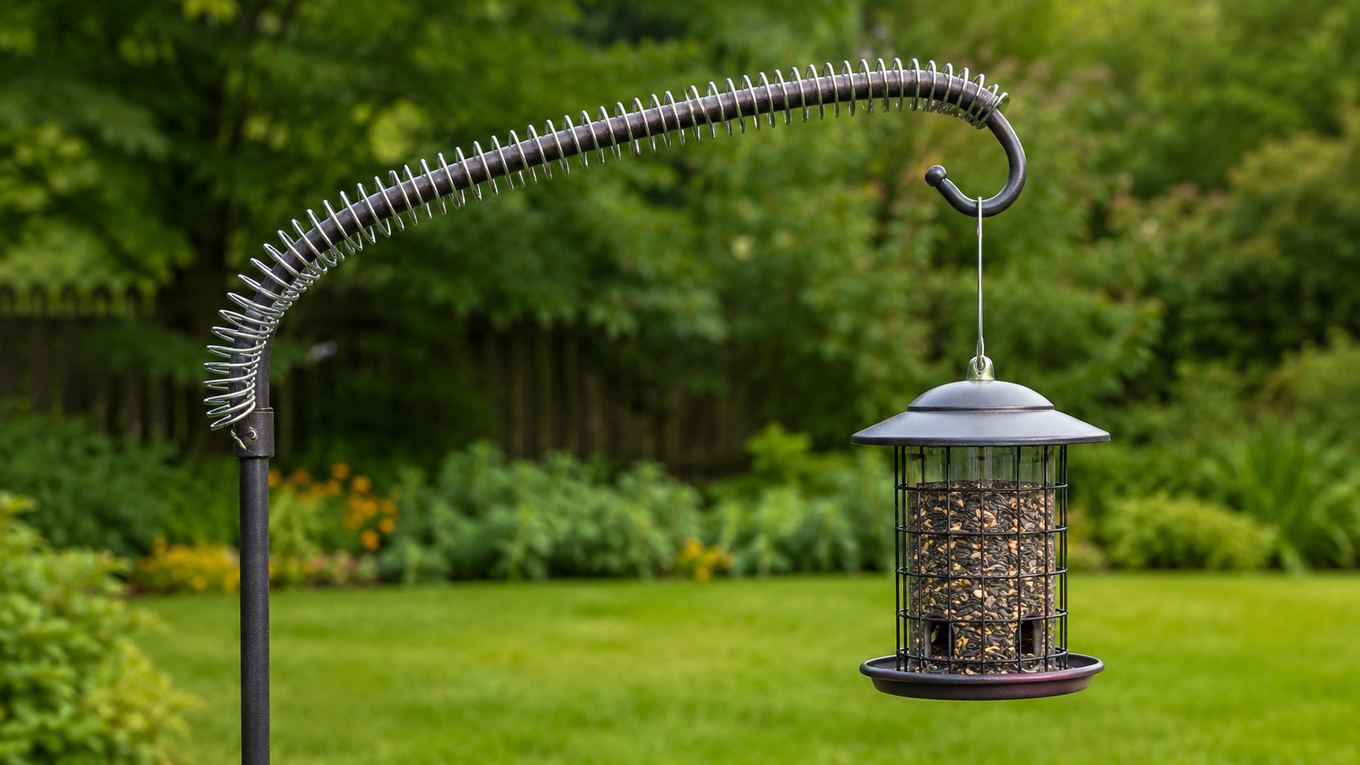
A classic, low-cost fix for a single hook or shepherd’s hook pole: stretch a metal slinky over the hook or pole above the feeder. When a squirrel grabs on and tries to climb down toward the feeder, its weight stretches the slinky’s coils, and the collapsing motion dumps it off before it reaches the food.
- Works best on smooth metal shepherd’s hooks — it’s less effective on rough wood posts, where a squirrel can grip the surface underneath the slinky.
- It’s cheap and reusable, but check it periodically; a slinky that’s rusted stiff or stretched out of shape stops collapsing properly.
Hanging-feeder squirrel-proofing methods compared
| Method | Best for | Setup effort | Watch out for |
|---|---|---|---|
| Taut fishing line between two points | Yards with two trees or posts to anchor between | Moderate — needs real tension | Line must stay taut; recheck after storms |
| Slinky on a shepherd’s hook | A single pole or hook, no second anchor point | Low | Works poorly on rough wood surfaces |
| Standard hook, no modification | Nothing reliably | None | Squirrels reach these easily — not a real solution |
Distance still matters
Even with a taut line or a slinky, position still counts:
- If you’re anchoring to or near a tree, keep the feeder at least 12 feet from the trunk and any large limb — that’s the outer edge of a typical squirrel leap from a stable branch.
- Keep the feeder at least 4 feet off the ground, the same minimum as a pole-mounted baffle, so nothing can reach it from a standing jump below.
- Recheck clearance seasonally — a sapling or shrub that was out of reach in spring can grow into jumping range by fall.
When to switch to a pole instead
If you’re regularly re-tensioning a line or find a slinky isn’t holding up, it may be worth the switch: a proper pole and baffle setup needs less ongoing maintenance than either trick here, since it relies on fixed distances rather than tension or a spring mechanism that can degrade over time. For most small patios or decks without a place to sink a pole, though, the line or slinky approach holds up fine as a permanent solution, not just a stopgap.