 Folk
FolkSummer changes the math on backyard feeding. Heat spoils food faster, mold grows overnight, and many birds reduce feeder visits because natural food is everywhere — insects, berries, and seeds are at peak abundance. The goal in summer isn’t to attract more birds; it’s to keep the food you do offer safe and the water flowing.
Pull or switch suet before it goes rancid
Suet is winter’s best feeder food and summer’s biggest problem. Standard suet cakes soften above 60–65°F and turn rancid quickly when daytime temperatures climb into the 80s and 90s. Rancid suet can coat feathers and cause digestive problems — it’s better to pull the cage entirely than to leave spoiled fat out.
| Temperature | What to do with suet |
|---|---|
| Below 60°F | Standard high-fat suet cake works fine |
| 60–75°F | Switch to no-melt or “summer blend” suet |
| 75–85°F | No-melt suet only; check daily for softening |
| Above 85°F | Remove suet feeder; switch to peanuts or sunflower |
No-melt suet cakes are rendered at higher temperatures and hold their shape better in warm weather, but they still have limits — in a sustained heat wave above 90°F, peanuts or hulled sunflower in a mesh feeder are a cleaner alternative. See our suet 101 guide for a full breakdown by season.
Recommended gearExample: no-melt summer suet cakes for warm-weather feeding
Change hummingbird nectar more often
The standard 4:1 water-to-sugar nectar ferments in 3–5 days in mild weather. In summer heat, that window collapses fast — cloudy or yellow-tinged nectar should be replaced immediately, but ideally you’re changing it before it reaches that point.
A practical schedule based on temperature:
- Below 70°F — change nectar every 4–5 days.
- 70–80°F — change every 2–3 days.
- 80–90°F — change every 1–2 days.
- Above 90°F — change daily; move the feeder to a shadier spot to slow fermentation.
- Any time the nectar looks cloudy or has visible particles — replace it immediately regardless of schedule.
Hang the feeder in dappled shade rather than full sun. It still attracts hummingbirds — they find feeders by sight from a distance and by memory — and cooler nectar stays fresh significantly longer than nectar baking in afternoon sun.
Recommended gearExample: glass hummingbird feeder with built-in ant moat
Keep feeders cleaner than you think necessary
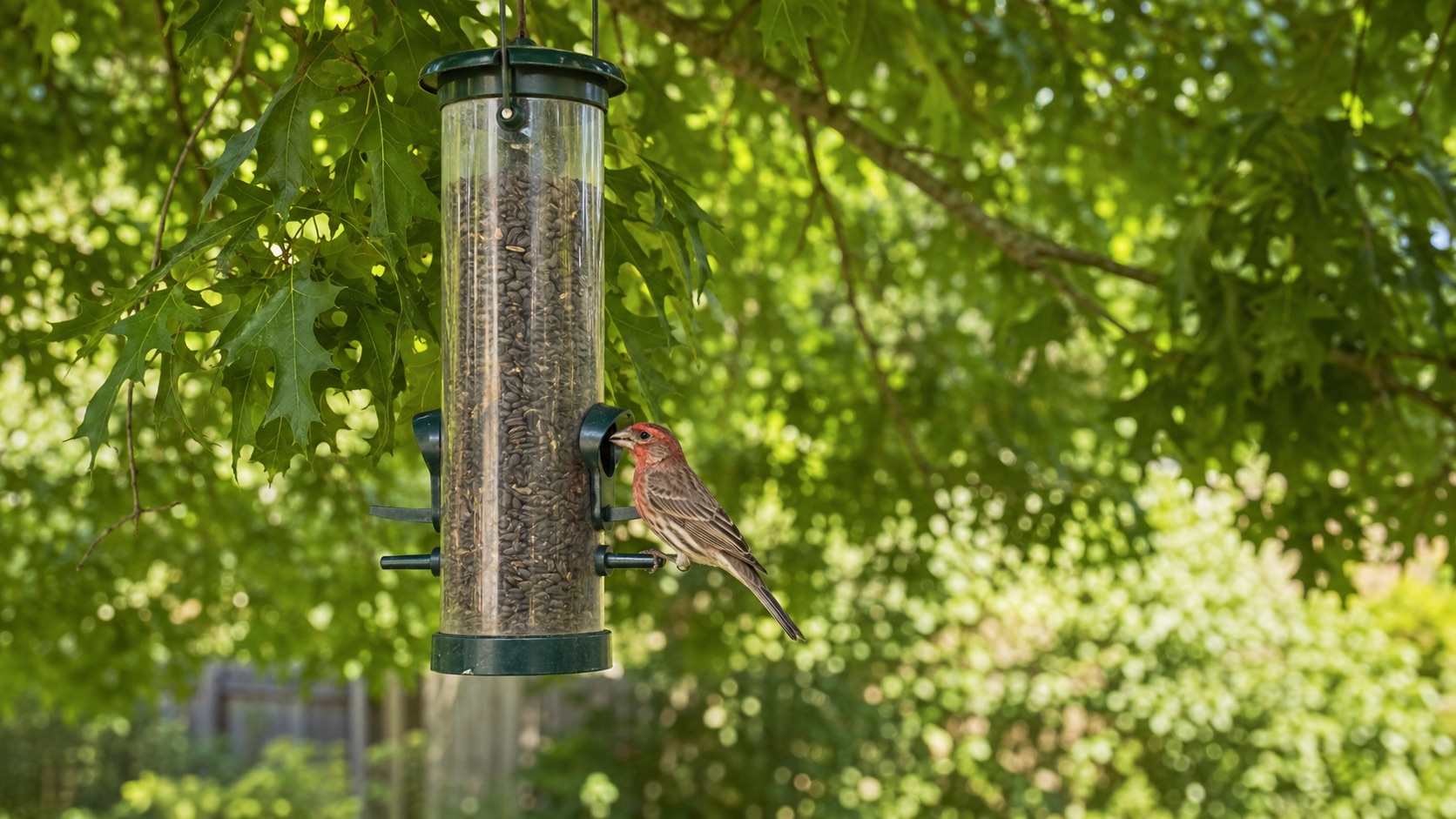
Summer heat accelerates everything that goes wrong with feeders: mold, bacterial growth, and insect activity. Seed that looks fine on the surface can be clumped and molding at the bottom of a hopper within a few days of a humid stretch.
Signs your feeder needs immediate attention:
- Seed feels damp or clumped when you try to shake it out
- Dark patches or a musty smell inside the hopper or tube
- Fewer birds visiting a feeder that was busy recently
- Bees, wasps, or ants consistently swarming a port
- Hulls piling up on the tray and starting to soak in moisture
A 1:9 bleach-to-water soak every 1–2 weeks covers the basics — full details in our feeder cleaning guide, but in peak summer heat, twice a week isn’t excessive for nectar feeders. For seed feeders, switching to smaller quantities refilled more often does more good than a deeper clean on a feeder you stuff full every two weeks.
Expect fewer visitors — and why that’s actually fine
A quiet summer feeder isn’t a broken feeder. From June through August, most of your regular visitors are:
- Raising young — adults spend most of their time foraging insects to feed nestlings, which need protein, not seeds
- Molting — birds replace their feathers in late summer and stay in cover more than usual
- Busy elsewhere — berries, insects, and wild seeds are at peak abundance, so a feeder is a supplement rather than a necessity
You’ll often see an uptick in unusual visitors in July and August: juvenile birds, still showing streaky immature plumage, showing up at feeders as they learn to forage independently. A bird that looks like a slightly wrong version of a familiar species is almost certainly a fledgling. See our species guides if you want to identify what’s coming through.
Water matters more than food in a heat wave
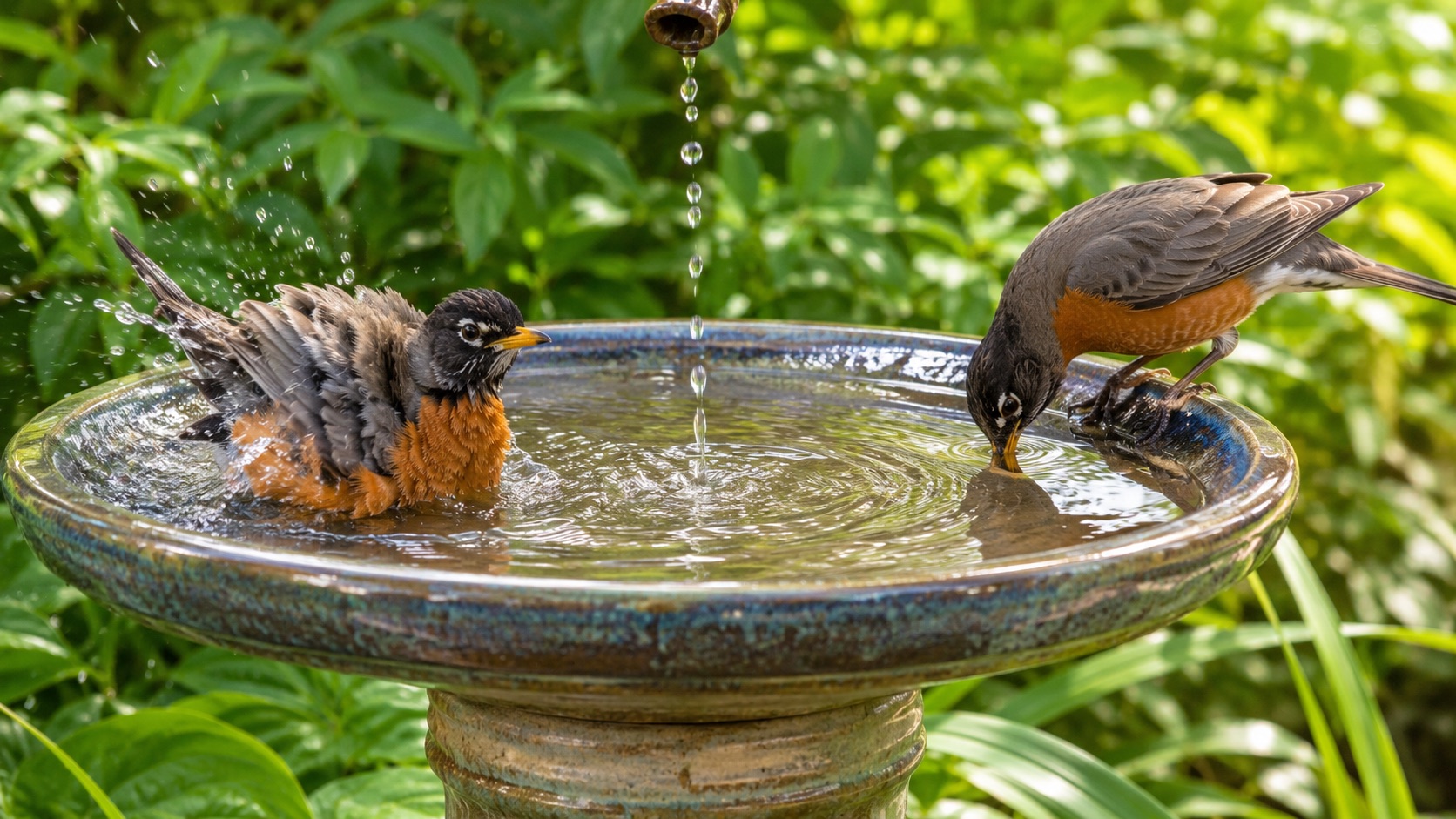
In July and August, a clean, cool birdbath does more for your yard’s birds than any feeder. Birds need water to drink and bathe year-round, but in sustained heat they seek it out actively — often from mid-morning through early afternoon when temperatures peak.
- Change birdbath water every 1–2 days to prevent mosquito larvae and bacterial growth; a quick scrub with a stiff brush takes less than a minute.
- Add a dripper, mister, or small recirculating pump — moving water attracts birds from a much greater distance than still water and stays cleaner longer.
- Place the bath in partial shade to slow evaporation and algae growth; full-sun baths in summer can lose several inches of water per day and heat to temperatures that discourage bathing.
- Keep the water depth at 1–2 inches — deep baths are used less frequently by small birds; a sloped dish or flat rock in the center gives birds a shallow wading edge.
Summer feeding at a glance
| What | Spring setup | Summer adjustment |
|---|---|---|
| Suet | No-melt formula once temps hit 65°F+ | Pull entirely above 85–90°F; switch to peanuts |
| Hummingbird nectar | Change every 3–5 days | Change every 1–2 days in heat; move to shade |
| Seed feeders | Refill as needed | Smaller fills more often; clean every 1–2 weeks |
| Water | Refill birdbath as needed | Change every 1–2 days; add movement (dripper/mister) |
| Feeder visits | Rising as migrants arrive | May drop — that’s normal through June–August |
Example: birdbath drippers and misters for summer water stations
Once summer winds down and nights start cooling in late August, feeding needs shift again — suet comes back, nectar schedules relax, and migration brings new faces through your yard. See our fall prep guide for what to do next.