 Folk
FolkSpring doesn’t flip a switch — it arrives in waves. Resident birds shift into breeding mode in March, early migrants appear in April, and hummingbirds don’t show up until May across much of the country. Each wave has a different need, and your feeding setup should move with it. Here’s what to change and when.
Deep-clean every feeder before spring traffic arrives
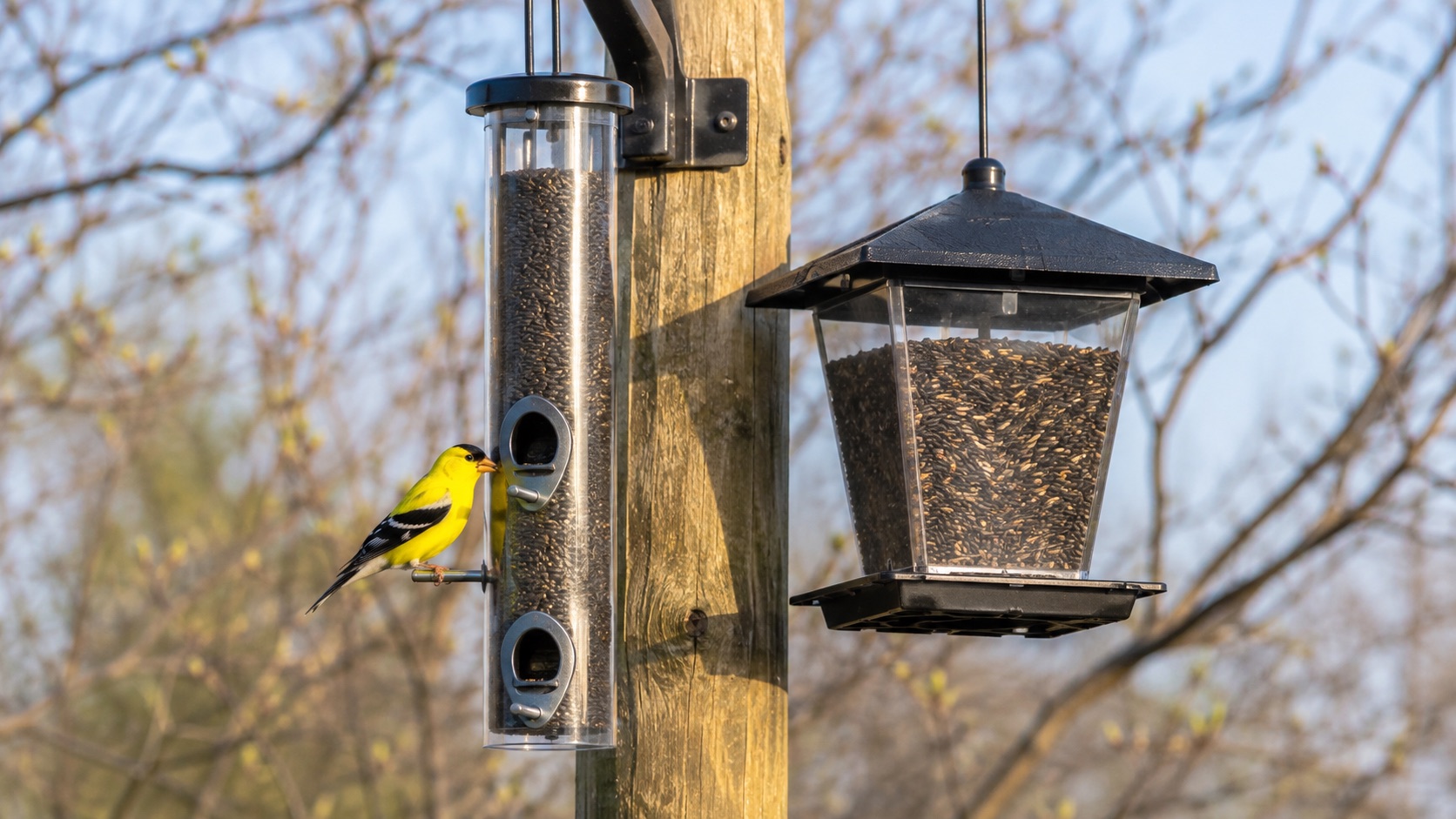
Winter feeders accumulate mold, bacteria, and compacted hulls that are easy to miss under a frozen crust. A post-winter cleaning isn’t optional — it’s the single most important thing you can do before spring bird activity picks up. For a full cleaning walkthrough, see how often to clean and refill your bird feeder.
- Empty each feeder completely and discard any leftover seed, which may have absorbed moisture or grown mold.
- Scrub all surfaces with warm water and a stiff brush, paying close attention to ports, perches, and the inside of hoppers where wet seed compacts.
- Soak the feeder in a 1:9 bleach-to-water solution for a few minutes, then rinse thoroughly — two or three full rinses until no bleach smell remains.
- Let each feeder air-dry completely in a sheltered spot before refilling. Sealing in even a little moisture creates the same mold problem you just cleaned out.
- Repeat the scrub-and-rinse every 1–2 weeks through spring, more often for feeders in shaded or damp spots.
Switch suet before it gets warm
Suet is winter’s most valuable feeder food, but the same high-fat formulas that work at 20°F become a liability at 60°F. For a full breakdown of suet types by season, see our suet 101 guide. Standard suet cakes soften, go rancid, and can smear — which wastes food, attracts insects, and can harm birds that get the rendered fat on their feathers.
| Condition | What to use |
|---|---|
| Daytime temps below 45°F | Standard high-fat suet cake |
| Temps 45–65°F, variable days | Transitional “no-melt” suet |
| Temps consistently above 65°F | No-melt suet or remove suet feeder |
| Hot spell (75°F+) | Pull the suet; switch to peanuts or sunflower |
Example: no-melt suet cakes for spring and summer feeding
The transition window for most of the continental US falls between late March and early May — earlier in the South, later in the upper Midwest and New England. Watch the forecast more than the calendar.
Put the hummingbird feeder out before they arrive
The single most common spring mistake is waiting until you see a hummingbird before setting out the feeder. For everything about attracting them, see our complete hummingbird guide. Males arrive first and move fast — if no food is available, they’ll continue to the next yard and may not come back that season.
- In the Gulf Coast and Deep South, males appear as early as late February to mid-March.
- Across the central and eastern US, expect the first males in mid-April to early May.
- In the upper Midwest, New England, and Canada, late May to early June is more typical.
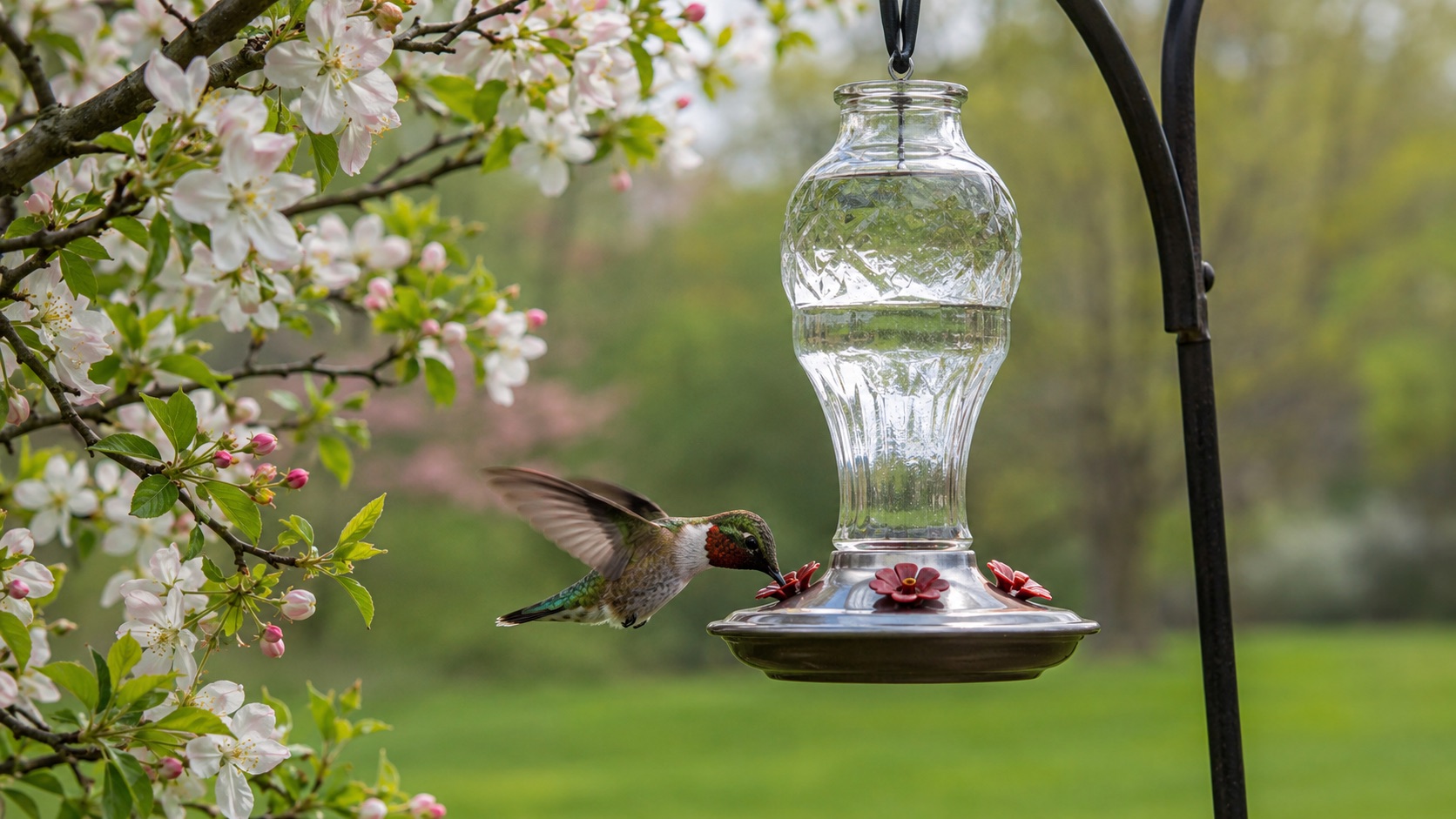
Example: glass hummingbird feeders with ant moat and bee guards
Put the feeder out one to two weeks before your expected first-sighting date. Use the standard 4:1 water-to-sugar ratio — no red dye, no honey, no artificial sweetener. Change the nectar every 3–5 days in cool spring weather, more often as temperatures climb. Once females and juveniles arrive in late spring, traffic picks up sharply and you may need to refill more frequently than you expect.
Add protein-rich foods for nesting season
Spring cleaning and feeder-switching get the most attention, but nesting season — which begins in March for some residents and runs through July — creates a need most backyard birders miss: protein. Adults building nests and feeding hatchlings burn through fat reserves fast and actively seek high-protein foods.
- Mealworms (live or dried) draw bluebirds, robins, wrens, and warblers that rarely visit seed feeders. A simple open tray feeder or a dedicated mealworm dish works fine.
- Peanuts (unsalted, in-shell or halved in a mesh feeder) attract chickadees, nuthatches, titmice, woodpeckers, and jays — species that cache for later and visit repeatedly.
- Black oil sunflower remains the most broadly useful seed through spring. Keep it stocked; it’s the fallback food for more species than any other single seed.
Example: dried mealworms for bluebirds, robins, and nesting season
- Nyjer (thistle) feeders earn their keep again in spring as goldfinches reach peak breeding plumage and visit regularly before nesting season starts.
Spring feeding changes at a glance
| What | Winter setup | Spring switch |
|---|---|---|
| Suet | Standard high-fat cake | No-melt formula once temps hit 45–65°F; remove if 75°F+ |
| Hummingbird feeder | Stored away | Out 1–2 weeks before first expected sighting |
| Seed mix | Black oil sunflower, nyjer | Continue both; add mealworms for nesting protein |
| Feeder cleaning | Every 1–2 weeks | Full post-winter deep-clean first, then 1–2 weeks through spring |
| Birdbath | May be frozen/stored | Refill and clean as soon as temps stay above freezing |
Once spring ends and summer heat arrives, feeding needs shift again — high-fat suet stays off, nectar changes become more frequent, and keeping feeders clean in the heat matters more than at any other time of year. See our winter bird feeding guide for what worked through the cold months, and the fall prep guide when migration season approaches again.