 Folk
Folk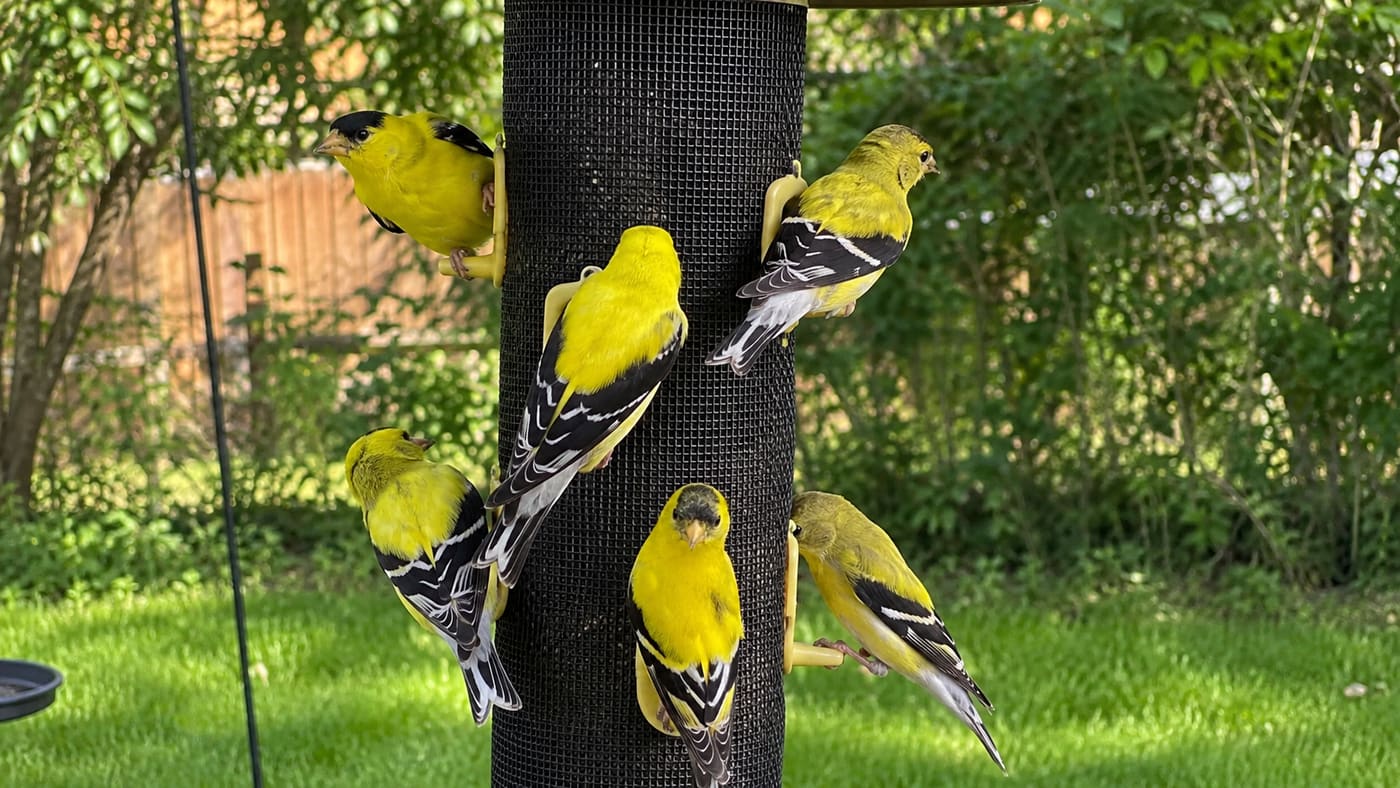
For most of the spring, my nyjer feeder hung there mostly ignored. One or two goldfinches would drop by, peck at it for a minute, and move on to the hopper feeder instead, like the tiny mesh socks weren’t quite worth the trouble. I’d more or less written it off as a bad purchase — thistle seed isn’t cheap, and watching it just sit there wasn’t doing much for my confidence.
Then, one morning in early July, I looked out and there were six of them. Not two, not three — six goldfinches, all on the same feeder at once, wings overlapping, taking turns in a way that looked almost choreographed even though I know it wasn’t. By the time I’d finished my coffee, there were eight.
I still don’t know exactly what changed. Maybe the birds that had been feeding elsewhere finished raising their broods and came looking for easier food. Maybe the seed had finally been out long enough that word — whatever the bird equivalent of word is — got around. Feeder folklore says goldfinches take a while to “find” a new feeder, sometimes weeks, and that once they do, they tend to show up in numbers rather than trickling in one at a time. Whatever the mechanism, it matched what I saw almost exactly.
What surprised me more than the number of birds was how loud it got. I’d always pictured goldfinches as fairly quiet, understated birds — that soft, up-and-down “potato chip” call in flight and not much else. A feeder full of them arguing over perches is a different experience entirely. There’s a constant low chatter, the occasional short squabble when one bird gets territorial about a perch it doesn’t actually own, and every so often a flash of that impossibly bright yellow catching the morning light. My cat, who normally treats the window like furniture, spent most of that week glued to the sill.
There was also a cost question I hadn’t fully thought through. Nyjer isn’t cheap compared to a basic mixed seed, and I’d been buying it in small bags on the assumption I’d barely use it. Eight goldfinches a morning go through a feeder considerably faster than one or two ever did, so that’s changed too — I buy it in bulk now, which actually works out cheaper per pound than I expected.
The feeder’s stayed busy since then, though never quite at that first-morning level. A few birds most mornings, a crowd every week or two, usually right after a stretch of rain. If you’ve got a nyjer feeder that seems to be doing nothing, my honestly unscientific advice is: give it longer than feels reasonable before assuming it’s not working. Mine sat there for the better part of two months before it “turned on.”
If you’re setting one up for the first time and want the actual reasoning behind the seed and feeder choice — not just my anecdote — the guide to bird seed and food types covers why nyjer works the way it does, including why it takes a specific mesh feeder to use properly.
Six months from now I’ll probably have a very different problem, which is refilling this thing more often than any other feeder I own. I’m not complaining.
Comments
Loading comments…
Leave a comment