 Folk
Folk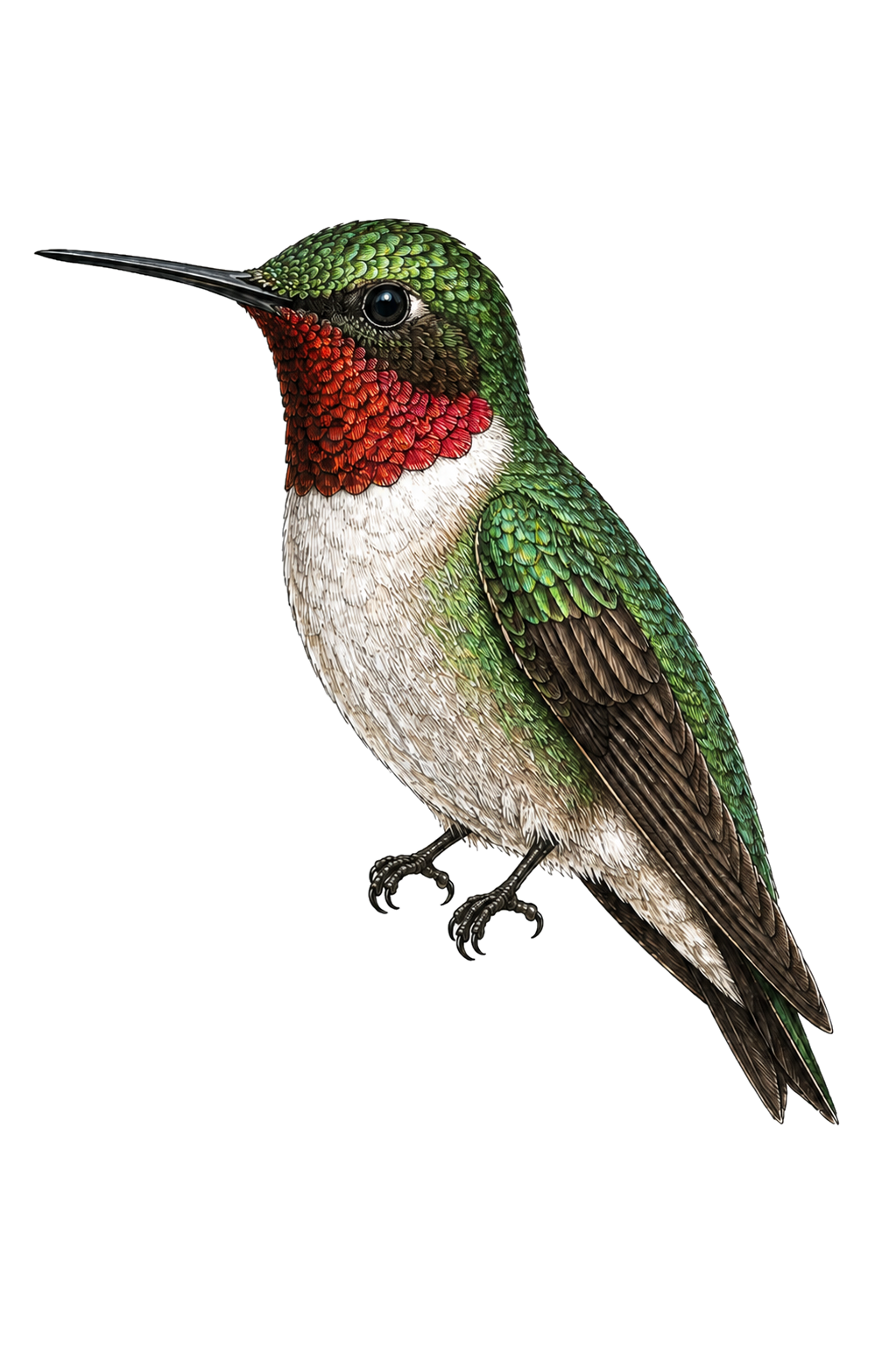
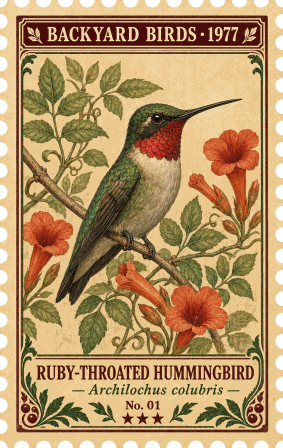
Ruby-throated Hummingbird
Archilochus colubris
The only hummingbird that breeds east of the Mississippi — a tiny, fast-moving visitor that arrives in spring and survives almost entirely on nectar and small insects.
Attracting Ruby-throated Hummingbird
Ruby-throated Hummingbirds are easy to attract with a dedicated feeder and fresh nectar. The setup is simple, but timing and cleanliness are critical — stale nectar drives hummingbirds away as quickly as fresh nectar brings them in.
Hang a Hummingbird Feeder by Mid-April
Put your feeder out by late April in most of the eastern United States — ideally a week before you expect hummingbirds to arrive in your area. Early availability matters.
Make Fresh Sugar Water
Mix one part plain white granulated sugar with four parts water. No food coloring, no honey, no artificial sweeteners. Boil briefly to help the sugar dissolve, then cool before filling.
Change the Nectar Every 2–3 Days
Nectar ferments quickly, especially in warm weather. A feeder with cloudy or yellow-tinged nectar is a health hazard — clean and refill every 2–3 days, or every day above 90°F (32°C).
Best Foods for Ruby-throated Hummingbird
- Sugar water (1:4 ratio)One part white sugar to four parts water; no dye, no honey, no additivesBest choice
- Small insectsGnats, fruit flies, and aphids caught naturally in the yardNatural food
- Tree sapOccasionally feeds at sapsucker wells in early spring; not something to provide artificiallyNatural food
Skip the seed mix
Ruby-throated Hummingbirds do not typically eat honey, red dye, or seed. Standard backyard seed blends will not do much to attract them.
Ideal Feeder Setup
Best choice
A dedicated hummingbird feeder
Hummingbirds need a feeder with tiny ports sized for their needle-like bills. A feeder with an ant moat above the port and bee guards at the feeding holes prevents insects from fouling the nectar.
- Red feeder body or red accents (hummingbirds are strongly attracted to red)
- Small feeding ports for narrow bills
- Ant moat or ant guard above the hanging hook
- Bee guards at each port
- Easy to fully disassemble for cleaning
- Positioned in partial shade to slow nectar fermentation


Make Your Yard Bird-Friendly
Do
- Plant native tubular flowers — salvia, bee balm, trumpet vine, and columbine are all strongly visited
- Hang multiple feeders in different locations if males are aggressively guarding one feeder
- Keep the feeder in dappled shade rather than full sun to slow nectar spoilage
- Leave your feeder up through September — late migrants may stop even after your local birds have departed
Avoid
- Using honey, artificial sweeteners, or red food dye — these are harmful or simply unnecessary
- Letting nectar go cloudy or grow visible mold — clean and refill before this happens
- Using a feeder with large ports that admit bees and wasps freely
- Taking the feeder down too early — a clean feeder will not prevent hummingbirds from migrating on schedule
When You'll See Them
Ruby-throated Hummingbirds are seasonal visitors across the eastern United States, typically arriving in late April or early May and departing by September or October. Males arrive first and leave first; females and juveniles follow. Peak activity at feeders is usually August, just before fall migration begins.